
Pentagon pulls 25 years of weapons testing data from public access to block AI-powered espionage

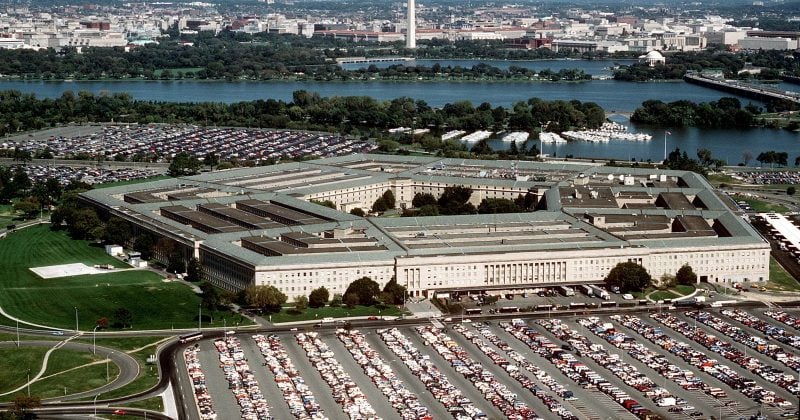
Photo: Hammond, Ken/Master Sgt. / en.wikipedia.org

Pentagon pulls 25 years of weapons testing data from public access to block AI-powered espionage

The Defense Department says unclassified reports can become classified-grade intelligence when an adversary runs them through AI.

The Pentagon quietly removed decades of weapons testing publications from its public website on July 30, 2026. The rationale: unclassified data, when fed into modern AI systems, can become something that looks a lot like classified intelligence.

Amy Henninger, the Pentagon’s Director of the Weapons Testing Office, framed the decision as a straightforward operational security call. Foreign adversaries now have the tools to aggregate seemingly harmless public documents and extract insights that the U.S. never intended to share.

The aggregation problem, explained

The pulled material comes from the Director of Operational Test and Evaluation office, known as DOT&E. That office produces annual reports on weapons programs that have historically been available to the public, to Congress, and to defense researchers. Twenty-five years of those reports are now offline.

Advertisement

The department characterized its move as proactive rather than reactive, suggesting it acted before a known breach rather than after one.

Transparency concerns are already surfacing

Critics aren’t buying the security framing entirely. The restriction lands at an awkward moment: the DOT&E office has also seen staffing reductions in recent months, thinning out the oversight capacity that watchdog groups and lawmakers rely on to evaluate whether military programs are working as advertised.

Pulling the public data while simultaneously reducing internal oversight staffing creates a visibility gap that runs in both directions. Adversaries can’t see in, but neither can Congress, independent researchers, or the American public.

What this means for defense and AI investors

Defense contractors whose programs were documented in those pulled reports face a new kind of opacity. Investors and analysts who relied on DOT&E publications to independently assess whether a weapons system was actually performing had a tool, and now they don’t.

The broader implication is a tightening information environment around U.S. defense spending at a time when that spending is growing. Less visibility into how programs perform, combined with reduced oversight staffing, raises the baseline uncertainty for anyone trying to assess defense sector equities from the outside.

Disclosure: This article was edited by Editorial Team. For more information on how we create and review content, see our Editorial Policy.

Pentagon pulls 25 years of weapons testing data from public access to block AI-powered espionage

Pentagon pulls 25 years of weapons testing data from public access to block AI-powered espionage

The Defense Department says unclassified reports can become classified-grade intelligence when an adversary runs them through AI.

Photo: Hammond, Ken/Master Sgt. / en.wikipedia.org

The Pentagon quietly removed decades of weapons testing publications from its public website on July 30, 2026. The rationale: unclassified data, when fed into modern AI systems, can become something that looks a lot like classified intelligence.

Amy Henninger, the Pentagon’s Director of the Weapons Testing Office, framed the decision as a straightforward operational security call. Foreign adversaries now have the tools to aggregate seemingly harmless public documents and extract insights that the U.S. never intended to share.

The aggregation problem, explained

The pulled material comes from the Director of Operational Test and Evaluation office, known as DOT&E. That office produces annual reports on weapons programs that have historically been available to the public, to Congress, and to defense researchers. Twenty-five years of those reports are now offline.

Advertisement

The department characterized its move as proactive rather than reactive, suggesting it acted before a known breach rather than after one.

Transparency concerns are already surfacing

Critics aren’t buying the security framing entirely. The restriction lands at an awkward moment: the DOT&E office has also seen staffing reductions in recent months, thinning out the oversight capacity that watchdog groups and lawmakers rely on to evaluate whether military programs are working as advertised.

Pulling the public data while simultaneously reducing internal oversight staffing creates a visibility gap that runs in both directions. Adversaries can’t see in, but neither can Congress, independent researchers, or the American public.

What this means for defense and AI investors

Defense contractors whose programs were documented in those pulled reports face a new kind of opacity. Investors and analysts who relied on DOT&E publications to independently assess whether a weapons system was actually performing had a tool, and now they don’t.

The broader implication is a tightening information environment around U.S. defense spending at a time when that spending is growing. Less visibility into how programs perform, combined with reduced oversight staffing, raises the baseline uncertainty for anyone trying to assess defense sector equities from the outside.

Disclosure: This article was edited by Editorial Team. For more information on how we create and review content, see our Editorial Policy.