
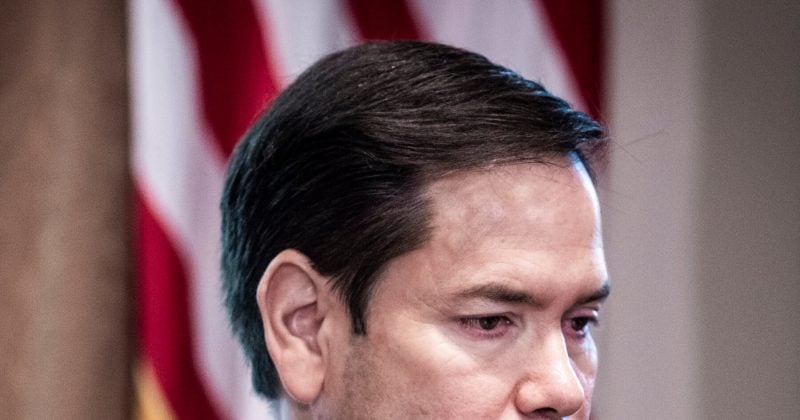
Marco Rubio tells US diplomats to downplay AI ‘kill switch’ narrative, and crypto should be paying attention

Marco Rubio tells US diplomats to downplay AI ‘kill switch’ narrative, and crypto should be paying attention

A State Department cable rejecting claims of centralized AI control carries implications far beyond artificial intelligence, touching on digital sovereignty debates that mirror crypto's core tensions.

Secretary of State Marco Rubio sent a cable to American diplomats worldwide on July 16, instructing them to push back against a growing international narrative: that the US government has a “kill switch” for advanced AI technology. The directive came roughly a month after the Trump administration temporarily blocked foreign access to Anthropic’s frontier AI models, an episode that spooked allies and gave ammunition to every foreign policymaker arguing for digital independence from American systems.

The cable’s core message is straightforward. A 30-day cybersecurity testing requirement before releasing powerful AI models does not amount to a centralized government control button. There is, Rubio’s office insists, no magic button for remotely disabling AI technology.

What actually happened with Anthropic

On June 12, the Trump administration imposed restrictions on foreign access to Anthropic’s frontier AI models, known as Mythos and Fable, citing national security concerns. The restrictions were lifted later that month, making the whole episode a brief but politically explosive affair.

Advertisement

European lawmakers seized on the incident as Exhibit A in their case for building AI infrastructure outside America’s orbit. Rubio’s cable attempts to reframe the conversation. US diplomats are being told to promote American AI products as superior while simultaneously discouraging foreign efforts toward “digital sovereignty,” which the State Department characterizes as inefficient.

Why the crypto world should care deeply about this

The research notes correctly point out that no cryptocurrency or blockchain elements were mentioned in the cable. But the underlying debate, whether any single government should have centralized control over critical digital infrastructure, is the founding question of the entire crypto industry.

The European response is particularly telling. Calls for “digital sovereignty” in AI mirror the same impulse driving central bank digital currency development, blockchain-based settlement systems, and the broader push for technological self-sufficiency.

The growing use of economic instruments like tariffs and sanctions by the US has contributed to what observers describe as mounting mistrust among international partners in technology and trade relations.

Market implications and what to watch

For traditional tech markets, the Rubio cable is an attempt at damage control. If the State Department succeeds in neutralizing the kill switch narrative, US AI companies stand to maintain their dominant market position internationally. Investor confidence in firms like Anthropic depends partly on the perception that their products won’t be subject to unpredictable government interference.

European lawmakers aren’t simply reacting to rhetoric. They watched the US government restrict access to frontier AI models and then reverse course within weeks.

If the US government is willing to impose temporary controls on AI exports for national security reasons, the same logic could be applied more aggressively to crypto infrastructure, particularly around stablecoin rails and DeFi protocols that handle significant cross-border capital flows.

Disclosure: This article was edited by Editorial Team. For more information on how we create and review content, see our Editorial Policy.

Marco Rubio tells US diplomats to downplay AI ‘kill switch’ narrative, and crypto should be paying attention

Marco Rubio tells US diplomats to downplay AI ‘kill switch’ narrative, and crypto should be paying attention

A State Department cable rejecting claims of centralized AI control carries implications far beyond artificial intelligence, touching on digital sovereignty debates that mirror crypto's core tensions.

Secretary of State Marco Rubio sent a cable to American diplomats worldwide on July 16, instructing them to push back against a growing international narrative: that the US government has a “kill switch” for advanced AI technology. The directive came roughly a month after the Trump administration temporarily blocked foreign access to Anthropic’s frontier AI models, an episode that spooked allies and gave ammunition to every foreign policymaker arguing for digital independence from American systems.

The cable’s core message is straightforward. A 30-day cybersecurity testing requirement before releasing powerful AI models does not amount to a centralized government control button. There is, Rubio’s office insists, no magic button for remotely disabling AI technology.

What actually happened with Anthropic

On June 12, the Trump administration imposed restrictions on foreign access to Anthropic’s frontier AI models, known as Mythos and Fable, citing national security concerns. The restrictions were lifted later that month, making the whole episode a brief but politically explosive affair.

Advertisement

European lawmakers seized on the incident as Exhibit A in their case for building AI infrastructure outside America’s orbit. Rubio’s cable attempts to reframe the conversation. US diplomats are being told to promote American AI products as superior while simultaneously discouraging foreign efforts toward “digital sovereignty,” which the State Department characterizes as inefficient.

Why the crypto world should care deeply about this

The research notes correctly point out that no cryptocurrency or blockchain elements were mentioned in the cable. But the underlying debate, whether any single government should have centralized control over critical digital infrastructure, is the founding question of the entire crypto industry.

The European response is particularly telling. Calls for “digital sovereignty” in AI mirror the same impulse driving central bank digital currency development, blockchain-based settlement systems, and the broader push for technological self-sufficiency.

The growing use of economic instruments like tariffs and sanctions by the US has contributed to what observers describe as mounting mistrust among international partners in technology and trade relations.

Market implications and what to watch

For traditional tech markets, the Rubio cable is an attempt at damage control. If the State Department succeeds in neutralizing the kill switch narrative, US AI companies stand to maintain their dominant market position internationally. Investor confidence in firms like Anthropic depends partly on the perception that their products won’t be subject to unpredictable government interference.

European lawmakers aren’t simply reacting to rhetoric. They watched the US government restrict access to frontier AI models and then reverse course within weeks.

If the US government is willing to impose temporary controls on AI exports for national security reasons, the same logic could be applied more aggressively to crypto infrastructure, particularly around stablecoin rails and DeFi protocols that handle significant cross-border capital flows.

Disclosure: This article was edited by Editorial Team. For more information on how we create and review content, see our Editorial Policy.