
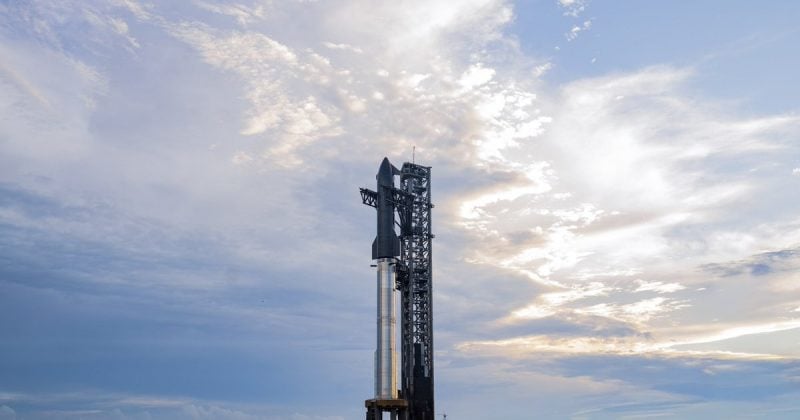
Via space.com
SpaceX resolves Starship’s biggest problem, plans daily launches next year
Elon Musk says the heat shield issue is fixed, projecting at least one Starship flight per day within 12 months as the company eyes Starlink V3 deployments and beyond
Elon Musk told investors on August 4 that SpaceX has solved Starship’s most persistent engineering headache: the heat shield. The fix, if it holds up in flight, removes the single biggest obstacle between SpaceX and its vision of rockets that operate more like commercial airliners than one-shot fireworks.
Musk went further, projecting at least one Starship launch per day within the next year. That’s not a typo. Daily orbital-class launches from a vehicle taller than the Statue of Liberty.
What actually changed
Starship’s heat shield tiles have been a recurring nightmare since the program’s earliest orbital attempts. The tiles protect the spacecraft from temperatures exceeding thousands of degrees during atmospheric reentry. Losing even a few of them can be catastrophic.
Musk’s declaration that this problem is now “solved” came during what was described as an earnings call. SpaceX’s next test flight is targeted for late August 2026.
That upcoming flight carries extra significance. SpaceX plans to attempt something never done before: catching the Starship upper stage using the launch tower’s massive mechanical arms. The company already demonstrated this catch maneuver with Starship’s Super Heavy booster in previous flights. Doing it with the upper stage would require the ship to survive reentry intact, which is exactly where the heat shield fix becomes critical.
The last attempt didn’t go as planned. Starship Flight 13 aborted on July 16, 2026, due to engine ignition issues in the final seconds before launch.
AI, tech, and the markets they move—in one daily briefing.
Daily. Free. Join 34,000+ readers across crypto, finance, and policy.
Why crypto and tech investors should care
SpaceX is a private company, so you can’t buy its stock on a public exchange. Starlink V3 satellite deployments, which SpaceX is actively working toward, would be the immediate beneficiary of increased launch cadence. More launches means faster constellation buildout, which means faster global broadband coverage, which means more revenue for a company already valued in the hundreds of billions.
The satellite internet business connects directly to decentralized infrastructure narratives that have driven significant investment in crypto projects focused on decentralized physical infrastructure networks, commonly called DePIN. A SpaceX that can launch daily makes the competitive landscape for these projects considerably more challenging.
The credibility question
Musk’s timelines deserve scrutiny. SpaceX has conducted 13 Starship test flights total, with the most recent aborting seconds before launch. Going from that to 365 flights per year requires not just technical breakthroughs but regulatory approvals, manufacturing scale-up, and launch site infrastructure that doesn’t currently exist.
The Federal Aviation Administration has been a recurring bottleneck for Starship launches, with environmental reviews and licensing processes that were not designed for daily orbital operations from a single site.
That said, Falcon 9 now launches roughly every three days, a cadence that seemed equally impossible a decade ago.
For investors in the broader tech and crypto ecosystem, the signal to watch isn’t whether SpaceX hits exactly one flight per day by August 2027. It’s whether the heat shield fix holds during the late August test flight and whether the upper stage catch succeeds. Those two milestones would validate that the core reusability architecture works.