
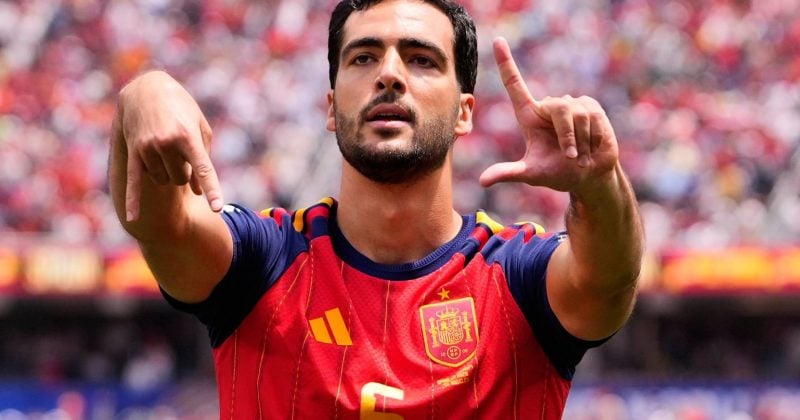
Spain’s World Cup goal disallowed after Merino foul on Otamendi changes the game

Spain’s World Cup goal disallowed after Merino foul on Otamendi changes the game

A pivotal moment in Spain's 2026 World Cup run sees a goal chalked off for a foul on the Argentine defender, reigniting debates about officiating in high-stakes soccer

During Spain’s 2026 FIFA World Cup match, a seemingly valid Spanish goal was ruled out after officials determined Merino had fouled Otamendi in the build-up. The decision swung the momentum of the match and immediately became the talking point of the tournament.

What actually happened

Mikel Merino, the Arsenal midfielder, was ruled to have committed a foul on Argentine defender Nicolás Otamendi before the ball crossed the line. Otamendi, a veteran center-back with a long association with Benfica and a cornerstone of Argentina’s national team, was on the receiving end of what officials judged to be illegal contact. The goal was disallowed.

Advertisement

For Spanish fans, this was especially bitter. Merino had been one of the defining players of their 2026 tournament run, scoring late, decisive goals against both Portugal and Belgium in knockout rounds.

Merino’s tournament before this moment

This is not the first time Merino has found himself on the wrong side of a disallowed goal call. In 2025, during Arsenal’s Champions League campaign against PSG, a goal involving Merino was ruled out due to an alleged foul or offside.

Why this matters beyond the match result

VAR was supposed to resolve this kind of controversy. In practice, it has often deepened it. The technology reveals detail that the human eye cannot catch in real time, but more detail does not always produce more clarity.

Look at the Otamendi foul call: if you slow the footage down enough, you can probably find a moment where Merino’s arm or body makes contact with Otamendi. Whether that contact is a foul, whether it materially affected Otamendi’s ability to contest the ball, and whether it directly caused the goal to be scored, those are three separate questions. Officials have to answer all three in a short window.

Disclosure: This article was edited by Editorial Team. For more information on how we create and review content, see our Editorial Policy.

Spain’s World Cup goal disallowed after Merino foul on Otamendi changes the game

Spain’s World Cup goal disallowed after Merino foul on Otamendi changes the game

A pivotal moment in Spain's 2026 World Cup run sees a goal chalked off for a foul on the Argentine defender, reigniting debates about officiating in high-stakes soccer

During Spain’s 2026 FIFA World Cup match, a seemingly valid Spanish goal was ruled out after officials determined Merino had fouled Otamendi in the build-up. The decision swung the momentum of the match and immediately became the talking point of the tournament.

What actually happened

Mikel Merino, the Arsenal midfielder, was ruled to have committed a foul on Argentine defender Nicolás Otamendi before the ball crossed the line. Otamendi, a veteran center-back with a long association with Benfica and a cornerstone of Argentina’s national team, was on the receiving end of what officials judged to be illegal contact. The goal was disallowed.

Advertisement

For Spanish fans, this was especially bitter. Merino had been one of the defining players of their 2026 tournament run, scoring late, decisive goals against both Portugal and Belgium in knockout rounds.

Merino’s tournament before this moment

This is not the first time Merino has found himself on the wrong side of a disallowed goal call. In 2025, during Arsenal’s Champions League campaign against PSG, a goal involving Merino was ruled out due to an alleged foul or offside.

Why this matters beyond the match result

VAR was supposed to resolve this kind of controversy. In practice, it has often deepened it. The technology reveals detail that the human eye cannot catch in real time, but more detail does not always produce more clarity.

Look at the Otamendi foul call: if you slow the footage down enough, you can probably find a moment where Merino’s arm or body makes contact with Otamendi. Whether that contact is a foul, whether it materially affected Otamendi’s ability to contest the ball, and whether it directly caused the goal to be scored, those are three separate questions. Officials have to answer all three in a short window.

Disclosure: This article was edited by Editorial Team. For more information on how we create and review content, see our Editorial Policy.