
Former Trump and Obama advisers propose bipartisan data center rules

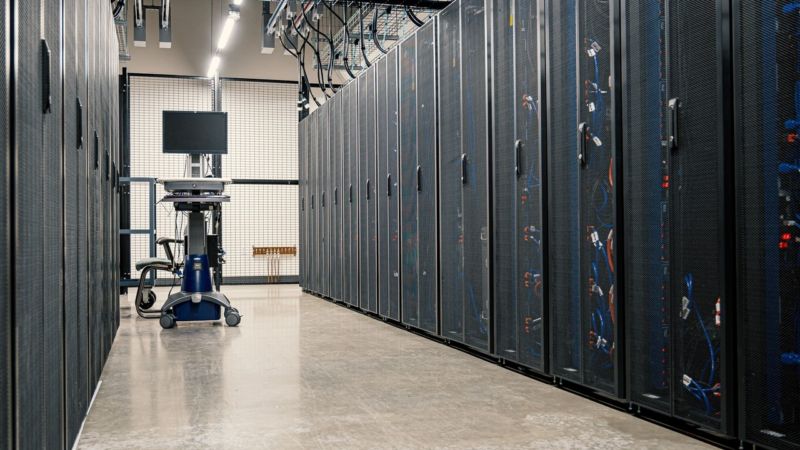
Photo: Brett Sayles / Pexels

Former Trump and Obama advisers propose bipartisan data center rules

Robert Wolf and Stephen Moore want federal guidelines that protect ratepayers and leave land-use decisions to local communities

A Democrat and a Republican walked into a policy debate and came out with a joint plan. Robert Wolf and Stephen Moore, former economic advisers from the Obama and Trump administrations respectively, have released a framework for how America should handle the wave of AI data center construction.

Their pitch is a middle path. They reject both a free-for-all approach and outright bans, and they call for federal guidelines built around five priority areas.

What the framework actually proposes

The paper carries a title that does most of the summarizing on its own: “Beyond the ‘Wild West’ and Moratorium: A Bipartisan Framework for Smart and Responsible Data Center Investment.”

It was published by Unleash Prosperity Now and released around October 22-23, 2026. The core idea is coordinated federal standards, paired with local control over where facilities can actually be built.

The five areas the authors want federal guidelines to cover are:

Ratepayer protection. Developers would pay for the incremental infrastructure costs their projects create. Put simply, the company building the server farm picks up the bill for the extra grid capacity, not the family down the road.

Energy security and grid reliability. The framework calls for transparency in planning so grid operators and the public can see what a new facility means for the power system.

Advertisement

Environmental stewardship. Projects would face comprehensive assessments of their water and energy use.

Transparency and community engagement. Developers would need to give advance notice and disclose potential impacts before breaking ground.

Local flexibility. States could adapt the federal standards to their own conditions while keeping their authority over siting decisions.

Why this is landing now

Data centers have quietly turned into one of the more contentious local issues in American politics. The appetite of AI for computing power has pushed developers to propose ever-larger facilities, and communities have started pushing back.

The volume of legislative activity tells the story. More than 300 state-level bills related to data centers were proposed in 2026 alone, driven by local concerns.

Washington has also started paying attention. On September 30, 2026, senators announced the American Affordability and Jobs Act, a bipartisan bill that seeks to shift the financial burden of grid upgrades away from ordinary ratepayers and onto large consumers, including data centers.

The overlap with the Wolf and Moore framework is hard to miss. Both put the question of who pays for grid expansion at the center of the debate.

Wolf and Moore frame their proposal as a way to keep the US competitive in AI without trampling community interests. They also position it as a way to avoid ceding ground to international rivals like China.

What this means for developers, utilities, and communities

For data center developers, the framework is a mixed bag with a potential silver lining. Paying for incremental grid costs and running comprehensive environmental assessments would add expense and time to projects.

For utilities, the ratepayer protection piece is the headline. If developers fund the infrastructure their facilities require, utilities avoid the awkward position of passing those costs on to residential customers who never asked for a hyperscale campus in their county.

The grid transparency provisions would also give utilities and regulators more visibility into what is coming.

For communities, the advance notice and disclosure requirements are arguably the most tangible change. Much of the local backlash against data centers stems from residents feeling blindsided by projects approved before they knew the details.

The local flexibility clause keeps final siting authority where it already sits. That means a town that does not want a facility could still say no, even under federal guidelines.

Disclosure: This article was edited by Diego Almada Lopez. For more information on how we create and review content, see our Editorial Policy.
Former Trump and Obama advisers propose bipartisan data center rules

Robert Wolf and Stephen Moore want federal guidelines that protect ratepayers and leave land-use decisions to local communities

Photo: Brett Sayles / Pexels

A Democrat and a Republican walked into a policy debate and came out with a joint plan. Robert Wolf and Stephen Moore, former economic advisers from the Obama and Trump administrations respectively, have released a framework for how America should handle the wave of AI data center construction.

Their pitch is a middle path. They reject both a free-for-all approach and outright bans, and they call for federal guidelines built around five priority areas.

What the framework actually proposes

The paper carries a title that does most of the summarizing on its own: “Beyond the ‘Wild West’ and Moratorium: A Bipartisan Framework for Smart and Responsible Data Center Investment.”

It was published by Unleash Prosperity Now and released around October 22-23, 2026. The core idea is coordinated federal standards, paired with local control over where facilities can actually be built.

The five areas the authors want federal guidelines to cover are:

Ratepayer protection. Developers would pay for the incremental infrastructure costs their projects create. Put simply, the company building the server farm picks up the bill for the extra grid capacity, not the family down the road.

Energy security and grid reliability. The framework calls for transparency in planning so grid operators and the public can see what a new facility means for the power system.

Advertisement

Environmental stewardship. Projects would face comprehensive assessments of their water and energy use.

Transparency and community engagement. Developers would need to give advance notice and disclose potential impacts before breaking ground.

Local flexibility. States could adapt the federal standards to their own conditions while keeping their authority over siting decisions.

Why this is landing now

Data centers have quietly turned into one of the more contentious local issues in American politics. The appetite of AI for computing power has pushed developers to propose ever-larger facilities, and communities have started pushing back.

The volume of legislative activity tells the story. More than 300 state-level bills related to data centers were proposed in 2026 alone, driven by local concerns.

Washington has also started paying attention. On September 30, 2026, senators announced the American Affordability and Jobs Act, a bipartisan bill that seeks to shift the financial burden of grid upgrades away from ordinary ratepayers and onto large consumers, including data centers.

The overlap with the Wolf and Moore framework is hard to miss. Both put the question of who pays for grid expansion at the center of the debate.

Wolf and Moore frame their proposal as a way to keep the US competitive in AI without trampling community interests. They also position it as a way to avoid ceding ground to international rivals like China.

What this means for developers, utilities, and communities

For data center developers, the framework is a mixed bag with a potential silver lining. Paying for incremental grid costs and running comprehensive environmental assessments would add expense and time to projects.

For utilities, the ratepayer protection piece is the headline. If developers fund the infrastructure their facilities require, utilities avoid the awkward position of passing those costs on to residential customers who never asked for a hyperscale campus in their county.

The grid transparency provisions would also give utilities and regulators more visibility into what is coming.

For communities, the advance notice and disclosure requirements are arguably the most tangible change. Much of the local backlash against data centers stems from residents feeling blindsided by projects approved before they knew the details.

The local flexibility clause keeps final siting authority where it already sits. That means a town that does not want a facility could still say no, even under federal guidelines.

Disclosure: This article was edited by Diego Almada Lopez. For more information on how we create and review content, see our Editorial Policy.