
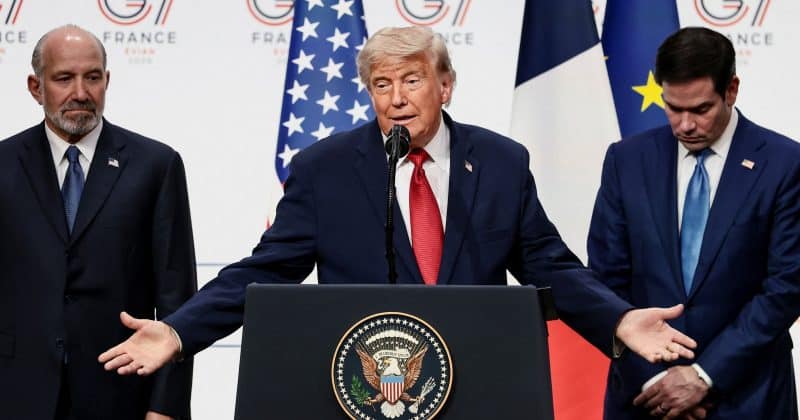
Donald Trump signs Iran memorandum of understanding at Versailles
The agreement aims to reopen the Strait of Hormuz and sets a 60-day window for nuclear negotiations, with crypto markets watching for sanctions implications
President Donald Trump signed a Memorandum of Understanding with Iran at the Palace of Versailles on June 17, 2026, capping months of conflict with what amounts to the most significant US-Iran diplomatic breakthrough in decades. The signing took place during a dinner with French President Emmanuel Macron, lending the kind of cinematic backdrop that only a 17th-century French palace can provide.
The MOU, which took immediate effect, commits both nations to ending hostilities and reopening the Strait of Hormuz, one of the world’s most critical oil shipping chokepoints, without tolls. Iranian President Masoud Pezeshkian was among the signatories, confirming Iran’s commitment to cease military operations and pursue peace talks.
What the deal actually says
The agreement includes a 60-day extension period for negotiations specifically focused on nuclear issues and sanctions relief. Iran’s commitment not to pursue nuclear weapons sits at the center of the MOU, a stipulation that will sound familiar to anyone who followed the original Iran nuclear deal saga from the Obama era.
The signing replaced what had been a planned formal ceremony in Geneva, suggesting the parties wanted to move faster than scheduled. Timing it alongside the G7 Summit at Versailles gave the moment additional diplomatic weight, turning what could have been a bilateral footnote into a multilateral spectacle.
Mediators from Pakistan and Qatar helped facilitate the background discussions leading to the agreement. Their involvement built on a ceasefire that had been in place since approximately April 7, 2026, which managed to prevent what many feared could spiral into broader regional instability.
The news moving money, markets, and the world—before your day starts.
Daily. Free. Join 34,000+ readers across crypto, finance, and policy.
The crypto angle, and why it mostly doesn’t exist
In the hours following the signing, speculation swirled in crypto market commentary about whether digital assets might play a role in funding reconstruction efforts tied to the agreement. Trump himself has publicly refuted those claims as false news.
The MOU itself contains zero references to cryptocurrencies, digital tokens, or blockchain-based financial infrastructure. Ongoing US sanctions against Iranian digital asset exchanges remain fully enforced. The Office of Foreign Assets Control has repeatedly targeted Iranian-linked wallet addresses and exchanges. Nothing in this MOU changes that enforcement regime.
What this means for crypto investors
The most immediate market implication is actually about oil, not tokens. The Strait of Hormuz handles roughly a fifth of global oil transit. Its reopening should reduce geopolitical risk premiums that have been baked into energy prices since conflict escalated earlier this year.
For crypto-specific implications, the continued enforcement of sanctions on Iranian digital asset exchanges signals that the US government views these restrictions as separate from broader diplomatic progress.