
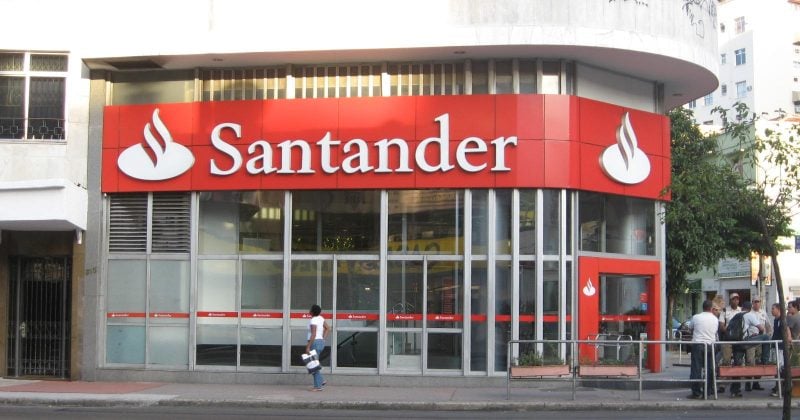
Banco Santander discloses $4.3 million position in spot Bitcoin ETFs

Via en.wikipedia.org

Banco Santander discloses $4.3 million position in spot Bitcoin ETFs

Spain's largest bank joins the growing list of traditional financial institutions quietly building Bitcoin exposure through regulated channels

Banco Santander, the eurozone’s largest bank by market capitalization, has reported owning approximately $4.3 million in US spot Bitcoin ETFs. It’s not exactly a whale-sized position for a bank managing well over a trillion dollars in assets, but the signal matters more than the size.

The $4.3 million position shows up in Santander’s regulatory filings as exposure to US-listed spot Bitcoin ETFs. The bank scored around 35% on the 2026 Bitcoin Bank Adoption Index, placing it in what researchers categorize as the middle tier. That puts it alongside institutions like Société Générale, well behind crypto-forward firms like Fidelity but meaningfully ahead of the many banks still treating digital assets like radioactive waste.

This isn’t Santander’s first dance with crypto either. Executive Chair Ana Botín has been publicly discussing potential Bitcoin products since 2021, long before spot ETFs even existed in the US. The bank has been building crypto custody and digital asset capabilities across Europe for years.

Advertisement

The broader Santander crypto strategy

The ETF disclosure fits into a pattern of deliberate, measured crypto integration at Santander. The bank’s digital subsidiary, Openbank, began offering crypto trading services to clients in Germany in September 2025. An expansion to Spain is planned as the next step.

By holding spot Bitcoin ETFs on its own balance sheet while simultaneously offering crypto trading to retail clients through Openbank, Santander is building expertise on both sides of the business.

This mirrors what several major US banks have done after the SEC approved spot Bitcoin ETFs in January 2024.

Why a $4.3 million position matters more than it should

The timing also matters. Santander’s disclosure comes during a period of accelerating institutional adoption across Europe. The bank has engaged in various crypto custody and digital asset initiatives throughout the continent, positioning itself to capture demand as regulatory frameworks like MiCA provide clearer guidelines for crypto services.

The risk worth monitoring is whether Santander’s mid-tier adoption score reflects genuine caution or structural limitations. Banks with higher integration scores tend to benefit from first-mover advantages in attracting crypto-curious wealthy clients.

Disclosure: This article was edited by Editorial Team. For more information on how we create and review content, see our Editorial Policy.

Banco Santander discloses $4.3 million position in spot Bitcoin ETFs

Banco Santander discloses $4.3 million position in spot Bitcoin ETFs

Spain's largest bank joins the growing list of traditional financial institutions quietly building Bitcoin exposure through regulated channels

Via en.wikipedia.org

Banco Santander, the eurozone’s largest bank by market capitalization, has reported owning approximately $4.3 million in US spot Bitcoin ETFs. It’s not exactly a whale-sized position for a bank managing well over a trillion dollars in assets, but the signal matters more than the size.

The $4.3 million position shows up in Santander’s regulatory filings as exposure to US-listed spot Bitcoin ETFs. The bank scored around 35% on the 2026 Bitcoin Bank Adoption Index, placing it in what researchers categorize as the middle tier. That puts it alongside institutions like Société Générale, well behind crypto-forward firms like Fidelity but meaningfully ahead of the many banks still treating digital assets like radioactive waste.

This isn’t Santander’s first dance with crypto either. Executive Chair Ana Botín has been publicly discussing potential Bitcoin products since 2021, long before spot ETFs even existed in the US. The bank has been building crypto custody and digital asset capabilities across Europe for years.

Advertisement

The broader Santander crypto strategy

The ETF disclosure fits into a pattern of deliberate, measured crypto integration at Santander. The bank’s digital subsidiary, Openbank, began offering crypto trading services to clients in Germany in September 2025. An expansion to Spain is planned as the next step.

By holding spot Bitcoin ETFs on its own balance sheet while simultaneously offering crypto trading to retail clients through Openbank, Santander is building expertise on both sides of the business.

This mirrors what several major US banks have done after the SEC approved spot Bitcoin ETFs in January 2024.

Why a $4.3 million position matters more than it should

The timing also matters. Santander’s disclosure comes during a period of accelerating institutional adoption across Europe. The bank has engaged in various crypto custody and digital asset initiatives throughout the continent, positioning itself to capture demand as regulatory frameworks like MiCA provide clearer guidelines for crypto services.

The risk worth monitoring is whether Santander’s mid-tier adoption score reflects genuine caution or structural limitations. Banks with higher integration scores tend to benefit from first-mover advantages in attracting crypto-curious wealthy clients.

Disclosure: This article was edited by Editorial Team. For more information on how we create and review content, see our Editorial Policy.