
Bank of England slows quantitative tightening pace, aligning with market expectations

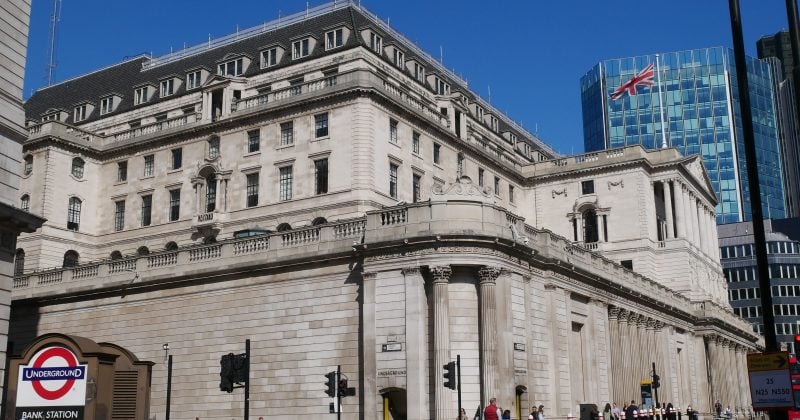
Photo: Doyle of London / Wikimedia Commons / CC BY-SA 4.0 (https://creativecommons.org/licenses/by-sa/4.0)

Bank of England slows quantitative tightening pace, aligning with market expectations

The BoE's decision to reduce its annual gilt-selling target from £100 billion to £70 billion could ease global liquidity pressure, with implications rippling into crypto markets.

The Bank of England has recalibrated its quantitative tightening strategy, cutting its annual gilt-selling target from £100 billion to £70 billion, with an acceptable range of £65-75 billion starting September 2025.

The Bank of England kicked off active quantitative tightening in February 2022, selling gilts, which are UK government bonds, to unwind the massive pile of assets it had accumulated during years of quantitative easing. At its peak, the BoE’s gilt holdings sat at roughly £895 billion. As of early 2024, gilt holdings had been trimmed to approximately £738 billion. Under the new framework, the expected stock of gilt purchases will range from £488 to £650 billion over the coming year.

Advertisement

Governor Andrew Bailey framed the adjustment as a move toward better alignment with market expectations and economic stability. The decision comes against a backdrop of growing gilt issuance from the UK government and rising debt servicing costs. QT is estimated to have pushed gilt yields up by approximately 0.4%. BoE Deputy Governor Ramsden has described QT’s market impact as “very limited” compared to the effects of QE on the way in.

The BoE isn’t the Federal Reserve, and sterling liquidity doesn’t drive crypto markets the way dollar liquidity does. But a slower QT pace means fewer gilts being dumped into the market, which means less upward pressure on yields. For Bitcoin, which has increasingly traded like a macro asset correlated with liquidity cycles, that’s a marginal tailwind.

This adjustment arrives as political figures in the UK, including Nigel Farage, have been pushing for more accommodating cryptocurrency regulations.

The gap between the BoE’s previous £100 billion annual target and the new £70 billion figure represents £30 billion in gilts that won’t be hitting the market each year. Traders should watch the £65-75 billion range closely. If actual gilt sales come in near the bottom of that range, it would suggest the BoE is more concerned about market absorption than the headline target implies. Conversely, sales near the top would signal confidence that the recalibration was purely technical rather than stress-driven.

Disclosure: This article was edited by Editorial Team. For more information on how we create and review content, see our Editorial Policy.

Bank of England slows quantitative tightening pace, aligning with market expectations

Bank of England slows quantitative tightening pace, aligning with market expectations

The BoE's decision to reduce its annual gilt-selling target from £100 billion to £70 billion could ease global liquidity pressure, with implications rippling into crypto markets.

Photo: Doyle of London / Wikimedia Commons / CC BY-SA 4.0 (https://creativecommons.org/licenses/by-sa/4.0)

The Bank of England has recalibrated its quantitative tightening strategy, cutting its annual gilt-selling target from £100 billion to £70 billion, with an acceptable range of £65-75 billion starting September 2025.

The Bank of England kicked off active quantitative tightening in February 2022, selling gilts, which are UK government bonds, to unwind the massive pile of assets it had accumulated during years of quantitative easing. At its peak, the BoE’s gilt holdings sat at roughly £895 billion. As of early 2024, gilt holdings had been trimmed to approximately £738 billion. Under the new framework, the expected stock of gilt purchases will range from £488 to £650 billion over the coming year.

Advertisement

Governor Andrew Bailey framed the adjustment as a move toward better alignment with market expectations and economic stability. The decision comes against a backdrop of growing gilt issuance from the UK government and rising debt servicing costs. QT is estimated to have pushed gilt yields up by approximately 0.4%. BoE Deputy Governor Ramsden has described QT’s market impact as “very limited” compared to the effects of QE on the way in.

The BoE isn’t the Federal Reserve, and sterling liquidity doesn’t drive crypto markets the way dollar liquidity does. But a slower QT pace means fewer gilts being dumped into the market, which means less upward pressure on yields. For Bitcoin, which has increasingly traded like a macro asset correlated with liquidity cycles, that’s a marginal tailwind.

This adjustment arrives as political figures in the UK, including Nigel Farage, have been pushing for more accommodating cryptocurrency regulations.

The gap between the BoE’s previous £100 billion annual target and the new £70 billion figure represents £30 billion in gilts that won’t be hitting the market each year. Traders should watch the £65-75 billion range closely. If actual gilt sales come in near the bottom of that range, it would suggest the BoE is more concerned about market absorption than the headline target implies. Conversely, sales near the top would signal confidence that the recalibration was purely technical rather than stress-driven.

Disclosure: This article was edited by Editorial Team. For more information on how we create and review content, see our Editorial Policy.