
China launches ballistic missile from submarine in Pacific, rattling regional allies and global markets

China launches ballistic missile from submarine in Pacific, rattling regional allies and global markets

The first submarine-launched ballistic missile test in the South Pacific in roughly two years has drawn condemnation from Australia, Japan, New Zealand, and Taiwan, adding another layer of geopolitical risk for investors to price in.

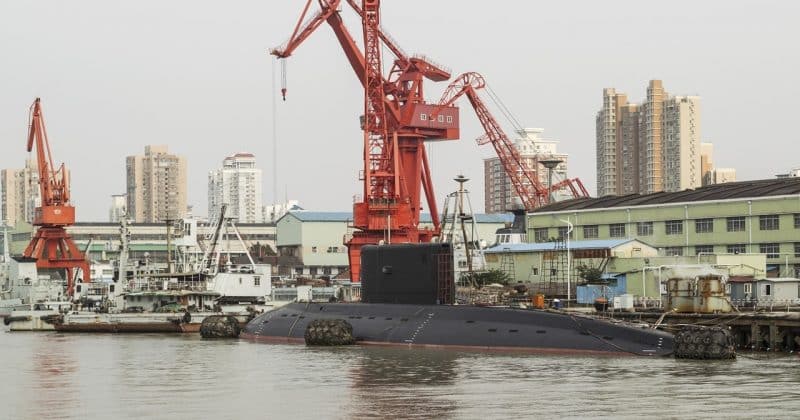
China fired a ballistic missile from a nuclear-powered submarine into the South Pacific on July 6, marking the first test of its kind in the region in approximately two years. The launch, which took place at 12:01 p.m. local time from what is believed to be a Type 094 Jin-class submarine, carried a dummy warhead that landed in designated international waters.

The response from the neighborhood was swift and negative. Australia, Japan, New Zealand, and Taiwan all condemned the test as a destabilizing act for the Indo-Pacific region.

Advertisement

What happened and why it matters beyond missiles

China issued overseas notifications of the launch shortly before it happened, giving some nations only hours of advance warning. The timing wasn’t accidental. The test coincided with a recently signed defense pact between Australia and Fiji, a move that Beijing has watched with considerable displeasure.

The missile variant involved is potentially a JL-2 or JL-3 SLBM, both of which represent key pillars of China’s ongoing naval expansion and ballistic-missile submarine development program.

The geopolitical risk premium crypto can’t ignore

For crypto markets, the variables to monitor are second-order effects. Watch the US dollar index, which tends to strengthen during geopolitical uncertainty and puts pressure on Bitcoin. Watch Treasury yields, which reflect risk appetite. Watch whether this test triggers any retaliatory military exercises from the US or its allies, which would signal a genuine escalation cycle rather than a one-off demonstration.

The defense pact between Australia and Fiji is worth tracking too. It signals that smaller Pacific nations are being drawn into great power competition, which increases the surface area for potential flashpoints.

Disclosure: This article was edited by Editorial Team. For more information on how we create and review content, see our Editorial Policy.

China launches ballistic missile from submarine in Pacific, rattling regional allies and global markets

China launches ballistic missile from submarine in Pacific, rattling regional allies and global markets

The first submarine-launched ballistic missile test in the South Pacific in roughly two years has drawn condemnation from Australia, Japan, New Zealand, and Taiwan, adding another layer of geopolitical risk for investors to price in.

China fired a ballistic missile from a nuclear-powered submarine into the South Pacific on July 6, marking the first test of its kind in the region in approximately two years. The launch, which took place at 12:01 p.m. local time from what is believed to be a Type 094 Jin-class submarine, carried a dummy warhead that landed in designated international waters.

The response from the neighborhood was swift and negative. Australia, Japan, New Zealand, and Taiwan all condemned the test as a destabilizing act for the Indo-Pacific region.

Advertisement

What happened and why it matters beyond missiles

China issued overseas notifications of the launch shortly before it happened, giving some nations only hours of advance warning. The timing wasn’t accidental. The test coincided with a recently signed defense pact between Australia and Fiji, a move that Beijing has watched with considerable displeasure.

The missile variant involved is potentially a JL-2 or JL-3 SLBM, both of which represent key pillars of China’s ongoing naval expansion and ballistic-missile submarine development program.

The geopolitical risk premium crypto can’t ignore

For crypto markets, the variables to monitor are second-order effects. Watch the US dollar index, which tends to strengthen during geopolitical uncertainty and puts pressure on Bitcoin. Watch Treasury yields, which reflect risk appetite. Watch whether this test triggers any retaliatory military exercises from the US or its allies, which would signal a genuine escalation cycle rather than a one-off demonstration.

The defense pact between Australia and Fiji is worth tracking too. It signals that smaller Pacific nations are being drawn into great power competition, which increases the surface area for potential flashpoints.

Disclosure: This article was edited by Editorial Team. For more information on how we create and review content, see our Editorial Policy.