
Google DeepMind CEO predicts AGI arrival by 2030

Google DeepMind CEO predicts AGI arrival by 2030

Nobel Prize-winning researcher Demis Hassabis says humanity is in the 'foothills of the singularity' and has only a few years to get ready.


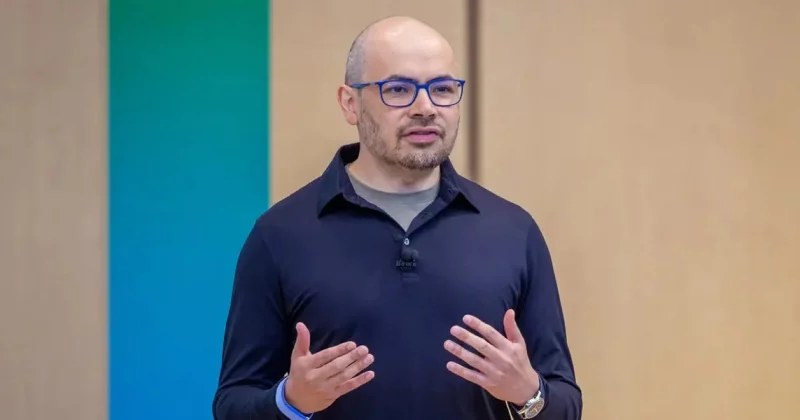
Demis Hassabis says artificial general intelligence could arrive around 2030, giving society only a few years to prepare for what the Google DeepMind CEO described as a new human era.

Hassabis, who won the 2024 Nobel Prize in Chemistry alongside John Jumper and David Baker for work tied to protein structure prediction, said AGI could emerge by 2030, plus or minus one year. 

Advertisement

He has also described the current moment as the foothills of the singularity, arguing that today’s AI agents are an early preview of more capable systems.

The timeline marks a more urgent framing from one of the most influential figures in AI. Hassabis has previously said AGI could arrive within five to 10 years, but his latest comments place the window closer to the end of this decade.

He also acknowledged that current systems still fall short of true general intelligence. Key gaps include continual learning, long term planning, memory, and consistency, areas where today’s models can still perform unevenly or fail to adapt over time.

Hassabis has pointed to scientific discovery and drug development as areas where AGI could have the largest impact. AlphaFold showed how AI can accelerate biological research by predicting protein structures, and Hassabis has argued that more advanced systems could compress parts of drug discovery that currently take years.

Disclosure: This article was edited by Editorial Team. For more information on how we create and review content, see our Editorial Policy.

Google DeepMind CEO predicts AGI arrival by 2030

Google DeepMind CEO predicts AGI arrival by 2030

Nobel Prize-winning researcher Demis Hassabis says humanity is in the 'foothills of the singularity' and has only a few years to get ready.

Share

Add us on Google

Demis Hassabis says artificial general intelligence could arrive around 2030, giving society only a few years to prepare for what the Google DeepMind CEO described as a new human era.

Hassabis, who won the 2024 Nobel Prize in Chemistry alongside John Jumper and David Baker for work tied to protein structure prediction, said AGI could emerge by 2030, plus or minus one year. 

Advertisement

He has also described the current moment as the foothills of the singularity, arguing that today’s AI agents are an early preview of more capable systems.

The timeline marks a more urgent framing from one of the most influential figures in AI. Hassabis has previously said AGI could arrive within five to 10 years, but his latest comments place the window closer to the end of this decade.

He also acknowledged that current systems still fall short of true general intelligence. Key gaps include continual learning, long term planning, memory, and consistency, areas where today’s models can still perform unevenly or fail to adapt over time.

Hassabis has pointed to scientific discovery and drug development as areas where AGI could have the largest impact. AlphaFold showed how AI can accelerate biological research by predicting protein structures, and Hassabis has argued that more advanced systems could compress parts of drug discovery that currently take years.

Disclosure: This article was edited by Editorial Team. For more information on how we create and review content, see our Editorial Policy.