
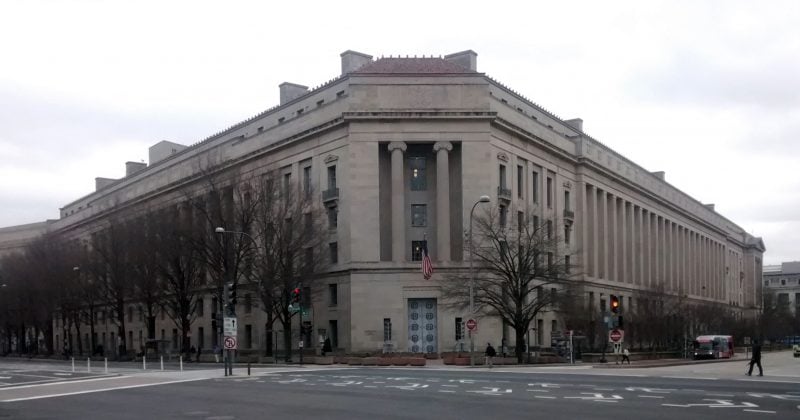
Department of Justice launches new trade fraud enforcement unit with criminal prosecution focus

Department of Justice launches new trade fraud enforcement unit with criminal prosecution focus

The new section within the DOJ's National Fraud Division targets customs fraud, forced labor violations, and tariff evasion, building on a task force that already recovered over $1 billion.

The US Department of Justice just made it clear that trade fraud is no longer a pay-the-fine-and-move-on kind of problem. It’s now a go-to-jail kind of problem.

On July 14, the DOJ announced a new global trade enforcement section within its National Fraud Division, specifically designed to pursue criminal prosecutions against importers who skirt tariffs, violate product safety regulations, or breach anti-forced labor laws. The announcement was made at a US Customs and Border Protection facility at Chicago’s O’Hare International Airport.

From slaps on the wrist to criminal charges

Trade fraud enforcement in the US has historically lived in the world of civil penalties and administrative fines. Companies caught underreporting import values or dodging duties would face financial consequences, but rarely the kind that involve handcuffs.

Advertisement

That’s changing. Assistant Attorney General Colin McDonald emphasized that the DOJ is now classifying trade fraud violations as serious economic crimes, treating tariff evasion and customs fraud with the same gravity it treats securities fraud or money laundering.

This new enforcement section builds on the Trade Fraud Task Force launched on August 29, 2025, which has already generated more than $1 billion in recoveries through a combination of civil and criminal penalties.

To illustrate the kind of cases they’re going after, the DOJ pointed to two recent Chicago-based prosecutions involving gold jewelry imports. In those cases, importers allegedly declared false values on shipments totaling $933 million, evading approximately $51.6 million in duties.

What importers and investors should watch

The immediate practical impact falls on importers. The DOJ’s new posture means increased scrutiny, more frequent audits, and a heightened risk of criminal charges for practices that previously might have drawn only administrative penalties. Companies that self-disclose violations may receive more lenient treatment.

For investors evaluating companies with significant import exposure, compliance costs are about to go up. Firms that have been cutting corners on tariff declarations or sourcing from regions with forced labor concerns face not just financial penalties but reputational damage and potential criminal liability for executives.

Disclosure: This article was edited by Editorial Team. For more information on how we create and review content, see our Editorial Policy.

Department of Justice launches new trade fraud enforcement unit with criminal prosecution focus

Department of Justice launches new trade fraud enforcement unit with criminal prosecution focus

The new section within the DOJ's National Fraud Division targets customs fraud, forced labor violations, and tariff evasion, building on a task force that already recovered over $1 billion.

The US Department of Justice just made it clear that trade fraud is no longer a pay-the-fine-and-move-on kind of problem. It’s now a go-to-jail kind of problem.

On July 14, the DOJ announced a new global trade enforcement section within its National Fraud Division, specifically designed to pursue criminal prosecutions against importers who skirt tariffs, violate product safety regulations, or breach anti-forced labor laws. The announcement was made at a US Customs and Border Protection facility at Chicago’s O’Hare International Airport.

From slaps on the wrist to criminal charges

Trade fraud enforcement in the US has historically lived in the world of civil penalties and administrative fines. Companies caught underreporting import values or dodging duties would face financial consequences, but rarely the kind that involve handcuffs.

Advertisement

That’s changing. Assistant Attorney General Colin McDonald emphasized that the DOJ is now classifying trade fraud violations as serious economic crimes, treating tariff evasion and customs fraud with the same gravity it treats securities fraud or money laundering.

This new enforcement section builds on the Trade Fraud Task Force launched on August 29, 2025, which has already generated more than $1 billion in recoveries through a combination of civil and criminal penalties.

To illustrate the kind of cases they’re going after, the DOJ pointed to two recent Chicago-based prosecutions involving gold jewelry imports. In those cases, importers allegedly declared false values on shipments totaling $933 million, evading approximately $51.6 million in duties.

What importers and investors should watch

The immediate practical impact falls on importers. The DOJ’s new posture means increased scrutiny, more frequent audits, and a heightened risk of criminal charges for practices that previously might have drawn only administrative penalties. Companies that self-disclose violations may receive more lenient treatment.

For investors evaluating companies with significant import exposure, compliance costs are about to go up. Firms that have been cutting corners on tariff declarations or sourcing from regions with forced labor concerns face not just financial penalties but reputational damage and potential criminal liability for executives.

Disclosure: This article was edited by Editorial Team. For more information on how we create and review content, see our Editorial Policy.