
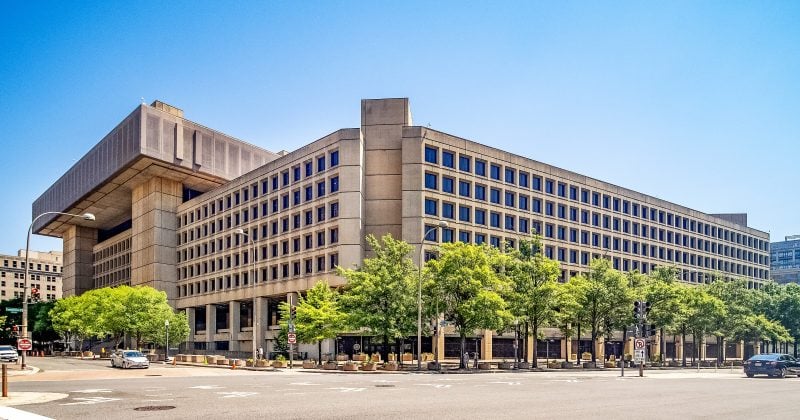
Photo: File:FBI Headquarters - J. Edgar Hoover Building (53840035941).jpg : ajay_suresh derivative work: Georgfotoart / Wikimedia Commons / CC BY 2.0 (https://creativecommons.org/licenses/by/2.0)
FBI agent charged with stealing $1 million in crypto from foreign adversarial wallets
Patrick Steven Yaroch allegedly used top-secret clearance to access passphrases and siphon digital assets, then asked ChatGPT how to flee the country
An FBI employee with top-secret security clearance has been arrested and charged with stealing approximately $1 million in cryptocurrency from wallets belonging to foreign adversaries, using sensitive intelligence he accessed through bureau systems.
Patrick Steven Yaroch, stationed in Ashburn, Virginia, allegedly executed 10 to 12 transactions beginning in late 2024 to move digital assets from foreign adversarial wallets into his own accounts. His scheme unraveled when he confessed to a colleague on July 28, 2026.
The inside job
Yaroch worked extensively in national security and counterintelligence, giving him precisely the kind of access that made this theft possible. According to the charges, he leveraged FBI intelligence systems to obtain passphrases for the targeted wallets.
On August 3, 2026, law enforcement agents conducted a search of Yaroch’s residence and seized $925,426.07 from his various wallets and accounts. That’s roughly 92.5% of the estimated $1 million he allegedly stole.
Yaroch was terminated from his FBI position and arrested the same day. He now faces federal charges including interstate transportation and receipt of stolen goods, securities, and monies.
The news moving money, markets, and the world—before your day starts.
Daily. Free. Join 34,000+ readers across crypto, finance, and policy.
The ChatGPT angle
Investigators discovered Yaroch’s search history, which included multiple queries to ChatGPT about relocating abroad with his ill-gotten gains. The destinations he was researching: Portugal, Greece, and Turkey.
What this means for the crypto enforcement landscape
The wallets Yaroch allegedly stole from belonged to foreign adversaries that the FBI was actively monitoring. The theft didn’t just enrich one corrupt agent; it potentially compromised ongoing intelligence operations and tipped off targets that their wallets had been accessed.
The incident is likely to intensify calls for stronger internal controls at agencies handling seized digital assets. Law enforcement agencies across the US manage billions of dollars in seized crypto, often with custodial practices that lack the transparency of a public blockchain.