
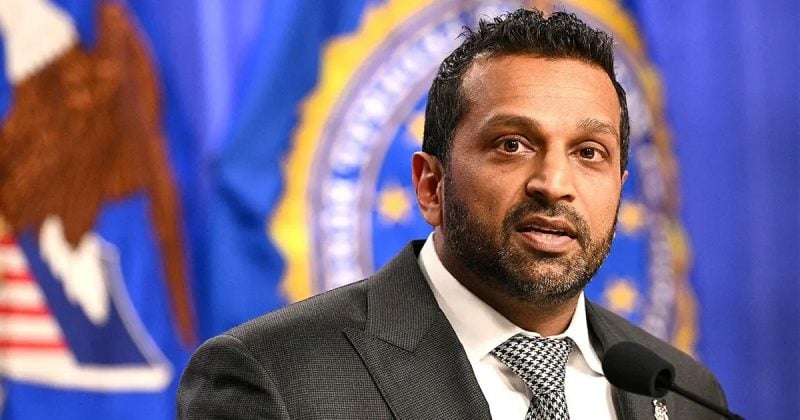
Via foxnews.com
FBI Director Kash Patel forges new law enforcement partnerships with China and Russia
The first FBI director visit to Beijing since 2016 signals a new era of cross-border crime fighting, with potential ripple effects for crypto regulation
FBI Director Kash Patel has quietly built law enforcement bridges with two of America’s most complicated geopolitical counterparts. His outreach to both China and Russia on transnational crime represents a significant shift in how the Bureau approaches international cooperation.
Patel, who was sworn in as the ninth FBI Director on February 20, 2025, made his first official trip to Beijing in November 2025. That visit marked the first time an FBI Director had set foot in China since 2016.
What the China partnership actually looks like
The Beijing trip didn’t happen in a vacuum. It followed a high-profile summit between President Trump and President Xi Jinping held in South Korea on October 30, 2025, where both leaders set the stage for deeper cooperation on fentanyl trafficking and cross-border crime.
Patel’s visit built on that diplomatic groundwork, focusing on two specific issues: fentanyl precursor chemicals flowing out of China, and sophisticated cyber scam operations that exploit victims across borders.
The relationship deepened further in July 2026. Patel met with Wang Xiaohong, China’s Minister of Public Security, on July 24-25 for discussions that both sides described as emphasizing collaboration on combating narcotics trafficking and protecting children against exploitation.
The news moving money, markets, and the world—before your day starts.
Daily. Free. Join 34,000+ readers across crypto, finance, and policy.
Russia is next on the list
Patel is planning a visit to Russia for mid-October 2026. As of early August 2026, no new agreements have been confirmed stemming from Patel’s interactions with Russian officials.
What this means for crypto markets
None of these law enforcement partnerships have explicitly mentioned cryptocurrency, blockchain technology, or digital assets. Transnational crime and crypto are deeply intertwined in areas where digital assets play a documented role: ransomware payments, money laundering through mixers, and fentanyl sales on darknet markets. The fact that the FBI’s new international partnerships haven’t publicly incorporated crypto enforcement suggests either that digital asset crime is being discussed behind closed doors without public acknowledgment, or that these partnerships are deliberately narrowing their scope.
It’s worth noting that Patel himself has personal investments in Bitcoin-related equities. An FBI Director with skin in the crypto game who is simultaneously building law enforcement frameworks with countries that have taken vastly different approaches to digital assets: China banned crypto trading entirely while Russia has oscillated between hostility and grudging acceptance.