
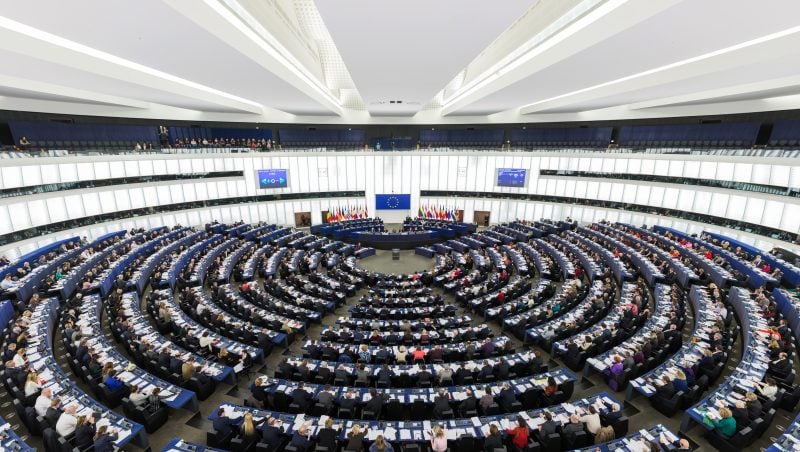
Diliff
France pushes budget vote on stablecoin swap tax to November 3
A proposal that would end tax deferral on crypto swaps into single-currency stablecoins from 2027 still faces more votes in parliament
France’s plan to tax crypto-to-stablecoin swaps has a new date on the calendar. According to The Defiant, the budget vote tied to the measure has been moved to November 3.
The proposal would end tax deferral on gains from swaps into single-currency stablecoins starting in January 2027. It is not law yet, and it still has to clear further parliamentary votes.
What the amendment actually does
The measure is known as amendment I-3898 to France’s 2027 budget. On October 16, 2026, the French National Assembly approved it by the narrowest possible margin: 38 votes to 37.
Another 25 deputies abstained. Out of 577 deputies in total, only approximately 100 took part in the key vote.
The amendment targets swaps into electronic money tokens, a category defined under the EU’s Markets in Crypto-Assets regulation, better known as MiCA. Electronic money tokens are stablecoins pegged to a single official currency.
Notably, the text does not name any individual stablecoins. It applies to the whole MiCA-defined category, which means its reach covers every token that fits the electronic money definition.
The 31.4% question
If the measure is enacted, swaps into these tokens would count as taxable events from January 1, 2027. Gains would be hit with France’s existing flat tax rate of 31.4%.
That figure breaks down into two pieces: 12.8% in income tax and 18.6% in social contributions.
The news moving money, markets, and the world—before your day starts.
Daily. Free. Join 34,000+ readers across crypto, finance, and policy.
Under current French rules, tax on crypto-to-crypto exchanges is generally deferred. The bill typically comes due only when a holder converts to fiat currency or uses crypto to make a purchase.
The amendment would remove that option for single-currency stablecoins. Moving into one would be treated much like cashing out, at least from the tax authority’s perspective.
The French government itself has voiced reservations about the measure. Its concerns center on implementation, specifically how complicated it would be to track these transactions.
The road from here
The October vote was a first step, not a finish line. The measure still has to pass additional parliamentary stages.
Those include a solemn vote on the budget’s revenue section. The Defiant reports that the budget vote has been moved to November 3, while a full Assembly vote has been scheduled for November 17, 2026.
The stablecoin swap tax is also not the only crypto item in play. Proposed reforms may include new taxes on large crypto holdings and mandatory reporting for self-custodial wallets.
Meanwhile, one measure that would have helped investors did not make it through. A loss carryforward provision, which would have let traders offset future gains with past losses, was rejected.
What this means for traders and the wider market
For French crypto investors, the most immediate issue is strategy. If swapping into a stablecoin becomes a taxable event, the classic move of locking in gains by rotating into a pegged token stops being tax-neutral, and every rotation into a single-currency stablecoin could carry a 31.4% bill on any gain.
The government’s own doubts about tracking add another layer of uncertainty. A rule that is hard to enforce can create headaches for exchanges, tax advisers, and individual filers alike.
For now, the things to watch are the November 3 budget vote and the full Assembly vote slated for November 17. With the first round decided 38 to 37, attendance alone could prove decisive.
Traders with exposure to French tax rules may want to keep the January 1, 2027 start date in mind. Nothing is final yet, but the window between a passed budget and an active tax would not be a long one.