
Hegseth taps Musk, Luckey and Gingrich to lead Pentagon warfare study

U.S. Secretary of Defense

Hegseth taps Musk, Luckey and Gingrich to lead Pentagon warfare study

Project Meridian gets 120 days to map future battlefields as the Pentagon unveils a new autonomous warfare command

The Pentagon has a new homework assignment, and it handed the group project to Elon Musk, Palmer Luckey and Newt Gingrich.

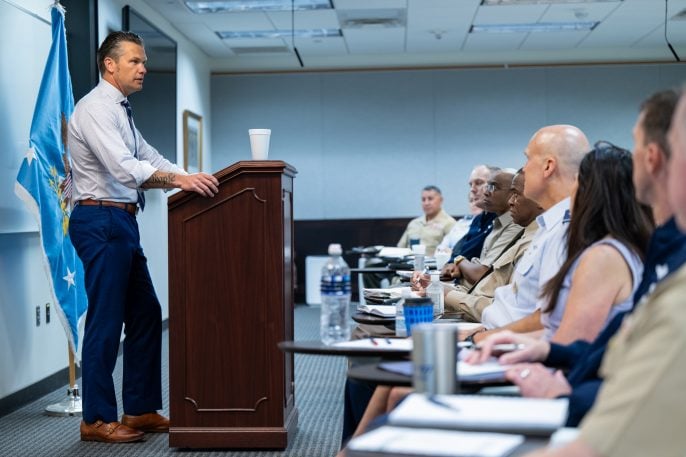
On September 30, 2026, US Secretary of Defense Pete Hegseth used a “State of the Force” address at Marine Corps Base Quantico to unveil a set of modernization moves. The headliner was Project Meridian, a 120-day study meant to chart where warfare is heading and where the US military is falling short.

What Hegseth announced

Project Meridian will be co-led by Musk of SpaceX, Luckey of Anduril and former House Speaker Gingrich. Pentagon Chief Technology Officer Emil Michael will oversee the effort.

The mandate is broad. The group is tasked with mapping future warfare domains, identifying capability gaps and proposing actionable solutions for advanced military capabilities.

The second major announcement was the Autonomous Warfare Command, or AUTOWARCOM. The new organization is anticipated to become a four-star combatant command by October 1, 2027.

Advertisement

AUTOWARCOM’s job is to speed up the integration of autonomous and robotic systems across the US military. That means drones, uncrewed vehicles and other machines that can operate with limited or no direct human piloting.

A four-star combatant command is not a minor designation. It puts the new unit in the same organizational tier as the Pentagon’s top warfighting commands, signaling that autonomy is being treated as a core mission rather than a side project.

A leaner brass, a louder tech voice

The restructuring lands alongside reductions in the ranks of general and flag officers. Fewer senior officers at the top, more outside technologists shaping the strategy.

The choice of leaders reinforces that point. Musk runs SpaceX. Luckey founded Anduril. Gingrich brings decades of political and policy experience from his time leading the House.

The contractor question

There is an obvious wrinkle. Both Musk’s and Luckey’s companies currently hold extensive contracts with the Department of Defense.

That means two of the three people tasked with identifying the military’s capability gaps run businesses that sell capabilities to the military. The overlap does not by itself imply any wrongdoing, but it is the kind of arrangement that tends to attract scrutiny.

What this means

For defense watchers, the most concrete date on the calendar is the end of Project Meridian’s 120-day window. Whatever the group recommends will offer a preview of where the Pentagon may direct attention and, potentially, spending in the years ahead.

There is also the timeline gap to consider. Meridian reports out in about four months, while AUTOWARCOM is not slated to reach combatant command status for roughly a year after the announcement. That leaves room for the study’s findings to shape how the new command is built, assuming the Pentagon actually acts on them.

Hegseth framed the moves as a push to adapt the force for future conflict.

Disclosure: This article was edited by Diego Almada Lopez. For more information on how we create and review content, see our Editorial Policy.
Hegseth taps Musk, Luckey and Gingrich to lead Pentagon warfare study

Project Meridian gets 120 days to map future battlefields as the Pentagon unveils a new autonomous warfare command

U.S. Secretary of Defense

The Pentagon has a new homework assignment, and it handed the group project to Elon Musk, Palmer Luckey and Newt Gingrich.

On September 30, 2026, US Secretary of Defense Pete Hegseth used a “State of the Force” address at Marine Corps Base Quantico to unveil a set of modernization moves. The headliner was Project Meridian, a 120-day study meant to chart where warfare is heading and where the US military is falling short.

What Hegseth announced

Project Meridian will be co-led by Musk of SpaceX, Luckey of Anduril and former House Speaker Gingrich. Pentagon Chief Technology Officer Emil Michael will oversee the effort.

The mandate is broad. The group is tasked with mapping future warfare domains, identifying capability gaps and proposing actionable solutions for advanced military capabilities.

The second major announcement was the Autonomous Warfare Command, or AUTOWARCOM. The new organization is anticipated to become a four-star combatant command by October 1, 2027.

Advertisement

AUTOWARCOM’s job is to speed up the integration of autonomous and robotic systems across the US military. That means drones, uncrewed vehicles and other machines that can operate with limited or no direct human piloting.

A four-star combatant command is not a minor designation. It puts the new unit in the same organizational tier as the Pentagon’s top warfighting commands, signaling that autonomy is being treated as a core mission rather than a side project.

A leaner brass, a louder tech voice

The restructuring lands alongside reductions in the ranks of general and flag officers. Fewer senior officers at the top, more outside technologists shaping the strategy.

The choice of leaders reinforces that point. Musk runs SpaceX. Luckey founded Anduril. Gingrich brings decades of political and policy experience from his time leading the House.

The contractor question

There is an obvious wrinkle. Both Musk’s and Luckey’s companies currently hold extensive contracts with the Department of Defense.

That means two of the three people tasked with identifying the military’s capability gaps run businesses that sell capabilities to the military. The overlap does not by itself imply any wrongdoing, but it is the kind of arrangement that tends to attract scrutiny.

What this means

For defense watchers, the most concrete date on the calendar is the end of Project Meridian’s 120-day window. Whatever the group recommends will offer a preview of where the Pentagon may direct attention and, potentially, spending in the years ahead.

There is also the timeline gap to consider. Meridian reports out in about four months, while AUTOWARCOM is not slated to reach combatant command status for roughly a year after the announcement. That leaves room for the study’s findings to shape how the new command is built, assuming the Pentagon actually acts on them.

Hegseth framed the moves as a push to adapt the force for future conflict.

Disclosure: This article was edited by Diego Almada Lopez. For more information on how we create and review content, see our Editorial Policy.