
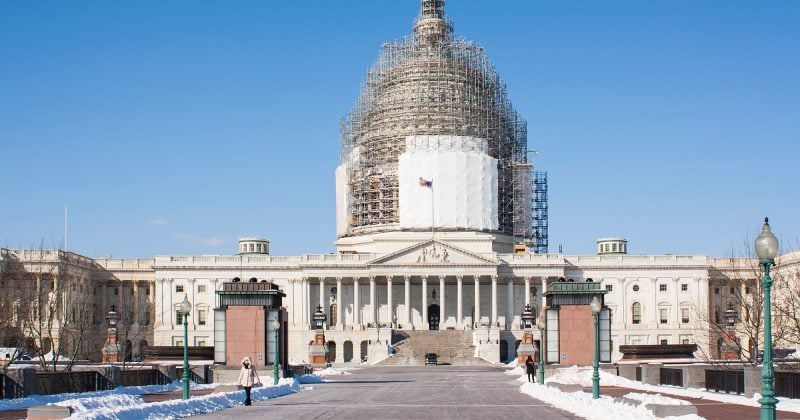
https://commons.wikimedia.org/wiki/United_States_Capitol
House passes $95B budget prioritizing Iran conflict, Trump agenda
US-Iran deal in 2026
The U.S. House of Representatives, led by Speaker Mike Johnson and the Republican majority, has passed a $95 billion budget proposal that aligns with former President Donald Trump’s priorities, including funding for the ongoing conflict with Iran. The proposal seeks to allocate substantial financial resources for defense and intelligence operations, as well as other initiatives such as farm aid and election-related changes. The bill passed along party lines, underscoring the political divide in Congress and the challenges it may face in the Senate, where bipartisan support is necessary to navigate procedural hurdles.
This budget comes as part of a broader U.S. congressional response to the Iran conflict, with approximately $60 to $73 billion earmarked for military activities. The funding is intended to support ongoing operations rather than new military authorizations, indicating a continued commitment to a military strategy over diplomatic solutions. The proposal also includes measures related to voter ID laws and agricultural assistance, which have been key elements of Trump’s policy agenda.
Market participants appear to interpret the passage of this budget as reducing the likelihood of a U.S.-Iran deal incorporating reconstruction funding in 2026. The pricing in related prediction markets reflects a decreased probability of diplomatic breakthroughs, with the budget’s focus on military engagement suggesting a potential delay in negotiations or resolution.
Key Takeaways
- Passage of the budget proposal appears to decrease the likelihood of a U.S.-Iran deal, as it emphasizes military funding.
- The budget aligns with Trump’s priorities, including military engagement, voter ID laws, and agricultural aid.
- Market pricing suggests participants view continued military operations as less conducive to reaching a diplomatic agreement with Iran.
What to Watch
Observers will be looking to the Senate’s response to the budget proposal, as its passage is not guaranteed. The reconciliation process could bypass a filibuster, but bipartisan support is crucial. Any developments in U.S.-Iran diplomatic relations, particularly those involving negotiation teams or mediators, could impact market pricing. Additionally, shifts in military actions or statements from key actors like President Trump or Iranian officials may further influence the perceived likelihood of a future deal.