
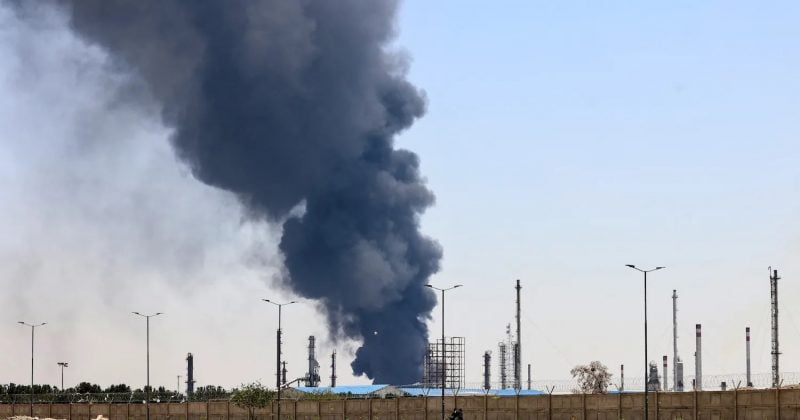
Iran damages Israel’s refineries, radar; airspace closure possible

https://foreignpolicy.com/2025/06/20/iran-israel-oil-global-economy/

Iran damages Israel’s refineries, radar; airspace closure possible

Israel airspace closure

A recent report suggests that Iran has damaged Israel’s fuel refineries and radar systems, impacting Israel’s airpower and U.S. surveillance capabilities. The claim, disseminated via social media, indicates a significant escalation in the ongoing Israel-Iran conflict, which has seen both nations targeting each other’s energy infrastructure. This development raises concerns about Israel’s operational capacity, particularly regarding its fleet of F-35 fighter jets. While the specific claim that refinery damage could ground every F-35 has not been independently verified, it underscores the potential logistical challenges facing Israel’s military operations.

The conflict has seen mutual strikes on energy and military infrastructure, marking a shift to targeting logistics and support systems. Such actions typically aim to weaken adversary capabilities by disrupting supply chains and reducing operational readiness. The damage to radar systems further suggests attempts to compromise Israel’s air defense and intelligence-gathering capacity, which are critical for maintaining situational awareness and strategic advantage.

Advertisement

Market participants appear to interpret these developments as increasing the likelihood of Israel closing its airspace. Pricing on prediction markets reflects heightened expectations for such a move, with the probability of airspace closure by specific dates showing notable increases.

Key Takeaways

  • Recent damage to Israel’s fuel refineries and radar systems suggests a significant escalation in the Israel-Iran conflict.
  • Market pricing appears consistent with increased expectations for Israel potentially closing its airspace due to heightened security threats.
  • The claim that refinery damage could ground Israel’s F-35 fleet, though unverified, highlights logistical concerns in military operations.

What to Watch

Observers should monitor statements from Israeli defense and transportation officials for any indications of airspace closure. The actions of key actors, such as Miri Regev and Yoav Gallant, could provide further insights into Israel’s strategic response. Additionally, any new military actions or retaliatory strikes in the region may influence market expectations and the likelihood of airspace closure. Continued escalation could support scenarios where Israel implements more stringent security measures.

Get live prediction-market analysis, powered by Vera. Sign up for Vera.

Disclosure: This article was edited by Estefano Gomez. For more information on how we create and review content, see our Editorial Policy.

Iran damages Israel’s refineries, radar; airspace closure possible

Iran damages Israel’s refineries, radar; airspace closure possible

Israel airspace closure

https://foreignpolicy.com/2025/06/20/iran-israel-oil-global-economy/

A recent report suggests that Iran has damaged Israel’s fuel refineries and radar systems, impacting Israel’s airpower and U.S. surveillance capabilities. The claim, disseminated via social media, indicates a significant escalation in the ongoing Israel-Iran conflict, which has seen both nations targeting each other’s energy infrastructure. This development raises concerns about Israel’s operational capacity, particularly regarding its fleet of F-35 fighter jets. While the specific claim that refinery damage could ground every F-35 has not been independently verified, it underscores the potential logistical challenges facing Israel’s military operations.

The conflict has seen mutual strikes on energy and military infrastructure, marking a shift to targeting logistics and support systems. Such actions typically aim to weaken adversary capabilities by disrupting supply chains and reducing operational readiness. The damage to radar systems further suggests attempts to compromise Israel’s air defense and intelligence-gathering capacity, which are critical for maintaining situational awareness and strategic advantage.

Advertisement

Market participants appear to interpret these developments as increasing the likelihood of Israel closing its airspace. Pricing on prediction markets reflects heightened expectations for such a move, with the probability of airspace closure by specific dates showing notable increases.

Key Takeaways

  • Recent damage to Israel’s fuel refineries and radar systems suggests a significant escalation in the Israel-Iran conflict.
  • Market pricing appears consistent with increased expectations for Israel potentially closing its airspace due to heightened security threats.
  • The claim that refinery damage could ground Israel’s F-35 fleet, though unverified, highlights logistical concerns in military operations.

What to Watch

Observers should monitor statements from Israeli defense and transportation officials for any indications of airspace closure. The actions of key actors, such as Miri Regev and Yoav Gallant, could provide further insights into Israel’s strategic response. Additionally, any new military actions or retaliatory strikes in the region may influence market expectations and the likelihood of airspace closure. Continued escalation could support scenarios where Israel implements more stringent security measures.

Get live prediction-market analysis, powered by Vera. Sign up for Vera.

Disclosure: This article was edited by Estefano Gomez. For more information on how we create and review content, see our Editorial Policy.