
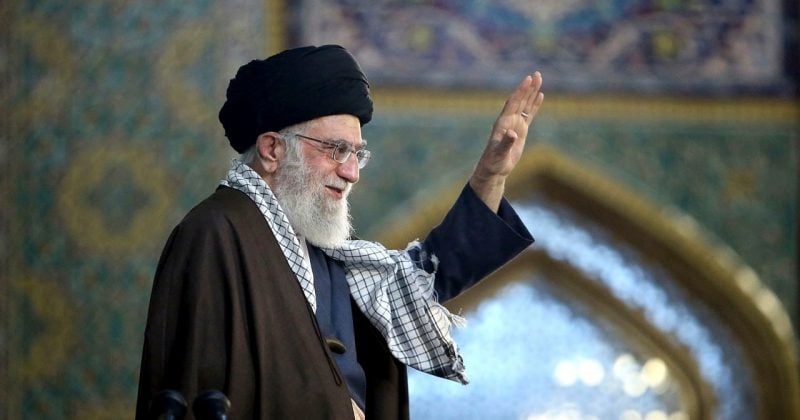
Iran confirms bombing of Khamenei’s residence linked to unresolved security breach, raising geopolitical risk for crypto markets

Iran confirms bombing of Khamenei’s residence linked to unresolved security breach, raising geopolitical risk for crypto markets

Iranian Foreign Minister Abbas Araghchi says the US-Israeli airstrikes that destroyed the Supreme Leader's compound exploited a security vulnerability that still hasn't been fixed

Iranian Foreign Minister Abbas Araghchi has publicly stated that the bombing of Supreme Leader Ali Khamenei’s residence was caused by a security breach that remains unresolved.

The US-Israeli airstrikes that struck Tehran on February 28 didn’t just hit military targets. Satellite imagery confirmed substantial damage to Khamenei’s personal compound.

What happened in Tehran

Araghchi reported that he was physically inside Khamenei’s office during the initial waves of the attack. He later emerged from the rubble, expressing fears for the Supreme Leader’s safety.

Advertisement

Iranian officials confirmed Khamenei’s death around March 1, shortly after the strikes. Reports indicate he had disregarded security advice to relocate from the compound before the attack.

Araghchi himself had previously been the target of a foiled bomb plot near his own residence amid Israel-related tensions in 2025.

Why crypto traders should care about Tehran

When traditional markets get rattled by geopolitical shocks, volatility spikes across equities and commodities. Some portion of capital that would normally sit in conventional risk assets migrates toward crypto, partly as a hedge and partly because crypto markets operate 24/7 and can absorb positioning moves when traditional exchanges are closed.

Major geopolitical escalations in the Middle East, whether it’s the 2020 US-Iran tensions following the Soleimani strike or the 2023-2024 Israel-Hamas conflict, have consistently produced short-term Bitcoin price reactions with elevated volume and volatility.

What investors should watch

Traders should monitor crude oil futures as a leading indicator. When Brent crude moves sharply on Middle Eastern news, crypto markets tend to follow with a lag of hours to days.

Disclosure: This article was edited by Editorial Team. For more information on how we create and review content, see our Editorial Policy.

Iran confirms bombing of Khamenei’s residence linked to unresolved security breach, raising geopolitical risk for crypto markets

Iran confirms bombing of Khamenei’s residence linked to unresolved security breach, raising geopolitical risk for crypto markets

Iranian Foreign Minister Abbas Araghchi says the US-Israeli airstrikes that destroyed the Supreme Leader's compound exploited a security vulnerability that still hasn't been fixed

Iranian Foreign Minister Abbas Araghchi has publicly stated that the bombing of Supreme Leader Ali Khamenei’s residence was caused by a security breach that remains unresolved.

The US-Israeli airstrikes that struck Tehran on February 28 didn’t just hit military targets. Satellite imagery confirmed substantial damage to Khamenei’s personal compound.

What happened in Tehran

Araghchi reported that he was physically inside Khamenei’s office during the initial waves of the attack. He later emerged from the rubble, expressing fears for the Supreme Leader’s safety.

Advertisement

Iranian officials confirmed Khamenei’s death around March 1, shortly after the strikes. Reports indicate he had disregarded security advice to relocate from the compound before the attack.

Araghchi himself had previously been the target of a foiled bomb plot near his own residence amid Israel-related tensions in 2025.

Why crypto traders should care about Tehran

When traditional markets get rattled by geopolitical shocks, volatility spikes across equities and commodities. Some portion of capital that would normally sit in conventional risk assets migrates toward crypto, partly as a hedge and partly because crypto markets operate 24/7 and can absorb positioning moves when traditional exchanges are closed.

Major geopolitical escalations in the Middle East, whether it’s the 2020 US-Iran tensions following the Soleimani strike or the 2023-2024 Israel-Hamas conflict, have consistently produced short-term Bitcoin price reactions with elevated volume and volatility.

What investors should watch

Traders should monitor crude oil futures as a leading indicator. When Brent crude moves sharply on Middle Eastern news, crypto markets tend to follow with a lag of hours to days.

Disclosure: This article was edited by Editorial Team. For more information on how we create and review content, see our Editorial Policy.