
Iran accelerates rebuilding of nuclear sites after US strikes, raising geopolitical risk for markets
Satellite imagery reveals rapid reconstruction at missile and nuclear facilities damaged in 2025, adding fresh uncertainty to an already jittery global risk landscape
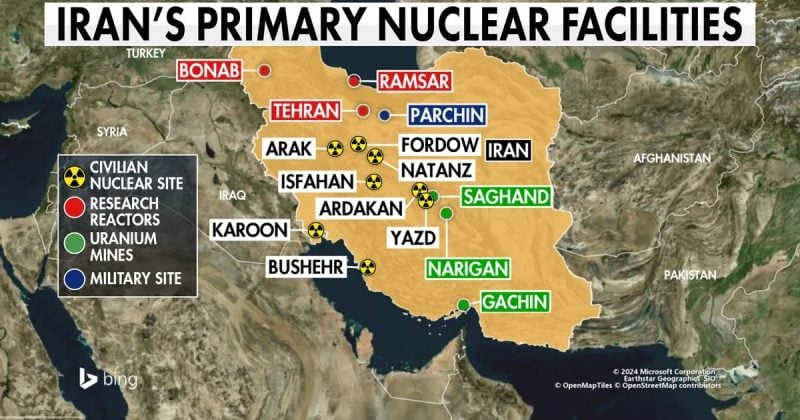
Satellite images taken in late June and early July 2026 show Iran is actively rebuilding nuclear and missile facilities that were damaged by US and Israeli strikes in 2025. The reconstruction is moving faster than Western analysts expected, and Iranian leadership is making no effort to hide it.
What the satellites show
Analysis conducted by CNN in collaboration with the Institute for Science and International Security (ISIS) reveals extensive repair work at several key Iranian sites. Satellite images from June 22 and July 7, 2026, show concrete reinforcement, excavation, and blast crater coverage at the Taleghan 2 facility inside the Parchin military complex and near a location known as Pickaxe Mountain.
Reconstruction at missile facilities near Kangavar, Kermanshah, and Dezful has progressed even faster. Some repair activities at those sites were completed within weeks of the original airstrikes. That timeline caught Western intelligence off guard, according to ISIS reporting, which noted that recovery at certain locations outpaced initial assessments.
Five months after the strikes, the picture is mixed at nuclear enrichment sites specifically, where progress has been more limited. But construction at tunnel complexes, the kind of underground infrastructure designed to survive aerial bombardment, continues at a notable pace.
Macro, rates, and crypto—what moved markets and what matters next.
Daily. Free. Join 34,000+ readers across crypto, finance, and policy.
Iran’s public posture
Iranian President Masoud Pezeshkian has publicly stated that Iran will rebuild its damaged nuclear sites “with greater strength” following the 2025 strikes. Opposition figures inside Iran have interpreted the rhetoric as a signal that the regime may be preparing for future military confrontation, even as diplomatic channels with the US remain technically open.
Why crypto traders should pay attention
Sanctions regimes historically push targeted nations toward alternative financial infrastructure, and Iran has been no exception. Previous rounds of sanctions drove increased Iranian interest in crypto as a sanctions evasion tool, which in turn drew regulatory scrutiny onto exchanges and protocols that facilitated those flows. A fresh escalation cycle could trigger similar dynamics. Tighter sanctions enforcement tends to mean tighter compliance requirements for exchanges, more aggressive OFAC designations, and increased KYC friction across the ecosystem.