
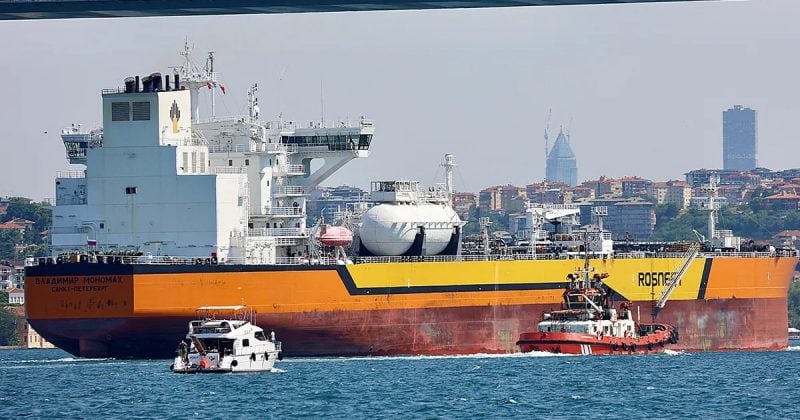
Italian navy boards Russian tanker in international waters, raising questions about sanctions enforcement and shadow fleet economics

Via foxnews.com

Italian navy boards Russian tanker in international waters, raising questions about sanctions enforcement and shadow fleet economics

A multinational operation near Sicily highlights Europe's escalating crackdown on Russian oil trafficking, with potential ripple effects across commodity and crypto markets.

The Italian navy boarded a Russian tanker in international waters off Pantelleria, a small island situated between Sicily and Tunisia. The operation involved support from a Greek vessel and a Polish maritime patrol aircraft, marking a coordinated multinational effort to crack down on suspected arms and oil trafficking tied to Russian sanctions evasion.

What happened and why it matters

The boarding operation took place near Pantelleria, a strategically located Mediterranean island that sits along major shipping routes between Europe and North Africa. Italian naval forces carried out the interdiction as part of an ongoing monitoring mission focused on illicit oil and arms shipments.

The operation fits squarely within the framework of the EU’s Operation Irini, a naval mission originally designed to enforce the UN arms embargo on Libya but increasingly focused on monitoring Russian oil movements in the Mediterranean.

Advertisement

What makes this incident notable is the location. Most high-profile enforcement actions against Russia’s so-called shadow fleet have occurred in the Atlantic, the English Channel, or the Baltic Sea. Central Mediterranean interdictions near Pantelleria are far less common, suggesting that Russian operators may be testing new routes to move sanctioned crude.

The identity of the tanker, its cargo, and the outcome of the boarding have not been publicly disclosed.

The sanctions evasion machine

Russia’s shadow fleet didn’t appear overnight. Since Western nations imposed sweeping sanctions on Russian energy exports following the invasion of Ukraine, Moscow has built an elaborate parallel shipping infrastructure. Old tankers are purchased through shell companies, re-flagged under obscure registries, and dispatched along circuitous routes designed to obscure the origin of their cargo.

The involvement of Greek and Polish assets in this particular operation signals a level of multinational coordination that goes beyond routine patrols. Greece has one of the world’s largest commercial shipping fleets and has been walking a careful line between EU solidarity and its own economic interests in shipping. Poland, meanwhile, has been among the most hawkish EU members on Russian sanctions enforcement.

What this means for crypto and commodity markets

There is no evidence that cryptocurrency or digital assets played any role in this specific operation. The shadow fleet economy, at least as publicly documented, runs on traditional financial plumbing: shell companies, offshore bank accounts, and the kind of old-school money laundering that predates Bitcoin by decades.

The EU has already been aggressive on crypto regulation through MiCA, and any evidence that digital assets are being used to circumvent oil sanctions would likely accelerate enforcement actions against exchanges and DeFi protocols operating in European jurisdictions.

Disclosure: This article was edited by Editorial Team. For more information on how we create and review content, see our Editorial Policy.

Italian navy boards Russian tanker in international waters, raising questions about sanctions enforcement and shadow fleet economics

Italian navy boards Russian tanker in international waters, raising questions about sanctions enforcement and shadow fleet economics

A multinational operation near Sicily highlights Europe's escalating crackdown on Russian oil trafficking, with potential ripple effects across commodity and crypto markets.

Via foxnews.com

The Italian navy boarded a Russian tanker in international waters off Pantelleria, a small island situated between Sicily and Tunisia. The operation involved support from a Greek vessel and a Polish maritime patrol aircraft, marking a coordinated multinational effort to crack down on suspected arms and oil trafficking tied to Russian sanctions evasion.

What happened and why it matters

The boarding operation took place near Pantelleria, a strategically located Mediterranean island that sits along major shipping routes between Europe and North Africa. Italian naval forces carried out the interdiction as part of an ongoing monitoring mission focused on illicit oil and arms shipments.

The operation fits squarely within the framework of the EU’s Operation Irini, a naval mission originally designed to enforce the UN arms embargo on Libya but increasingly focused on monitoring Russian oil movements in the Mediterranean.

Advertisement

What makes this incident notable is the location. Most high-profile enforcement actions against Russia’s so-called shadow fleet have occurred in the Atlantic, the English Channel, or the Baltic Sea. Central Mediterranean interdictions near Pantelleria are far less common, suggesting that Russian operators may be testing new routes to move sanctioned crude.

The identity of the tanker, its cargo, and the outcome of the boarding have not been publicly disclosed.

The sanctions evasion machine

Russia’s shadow fleet didn’t appear overnight. Since Western nations imposed sweeping sanctions on Russian energy exports following the invasion of Ukraine, Moscow has built an elaborate parallel shipping infrastructure. Old tankers are purchased through shell companies, re-flagged under obscure registries, and dispatched along circuitous routes designed to obscure the origin of their cargo.

The involvement of Greek and Polish assets in this particular operation signals a level of multinational coordination that goes beyond routine patrols. Greece has one of the world’s largest commercial shipping fleets and has been walking a careful line between EU solidarity and its own economic interests in shipping. Poland, meanwhile, has been among the most hawkish EU members on Russian sanctions enforcement.

What this means for crypto and commodity markets

There is no evidence that cryptocurrency or digital assets played any role in this specific operation. The shadow fleet economy, at least as publicly documented, runs on traditional financial plumbing: shell companies, offshore bank accounts, and the kind of old-school money laundering that predates Bitcoin by decades.

The EU has already been aggressive on crypto regulation through MiCA, and any evidence that digital assets are being used to circumvent oil sanctions would likely accelerate enforcement actions against exchanges and DeFi protocols operating in European jurisdictions.

Disclosure: This article was edited by Editorial Team. For more information on how we create and review content, see our Editorial Policy.