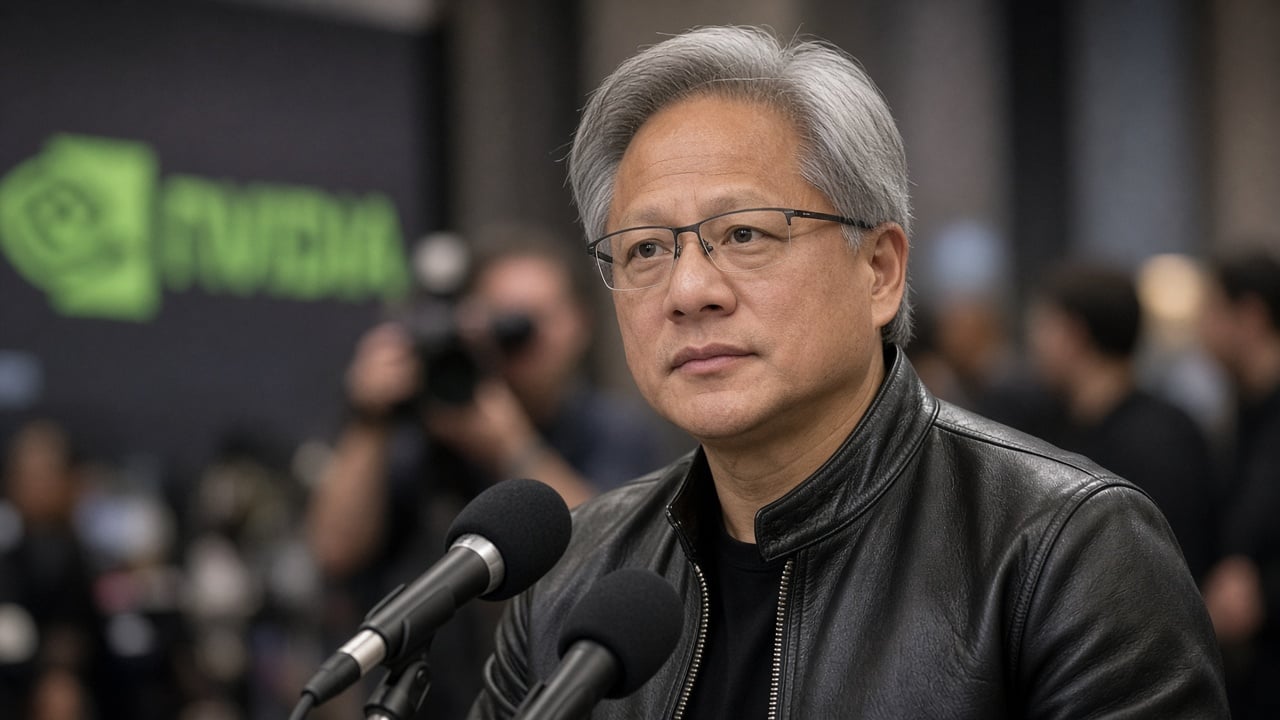
Jensen Huang says the US is not in the top 3 for manufacturing and tech
Nvidia's CEO named Germany, Japan, and China as the global leaders, and pinned America's slide on 50 years of offshoring
The CEO of the world’s most talked-about chipmaker just told a room in Germany that America doesn’t make the podium.
Speaking at Nvidia’s GTC Berlin event on October 29, 2026, Jensen Huang said the United States ranks outside the top three countries in manufacturing and advanced technology. That is a striking assessment from the head of an American company whose products sit at the center of the global computing boom.
Who made the list, and who didn’t
Huang named the three leaders directly: Germany, Japan, and China. The US, home to Nvidia’s headquarters, was left off.
His explanation was historical, not cyclical. Over the past half century, Huang argued, the US sent much of its heavy manufacturing overseas, with China as the main destination.
“For the last 50 years…the United States has largely exported its heavy manufacturing…to China.”
Huang also singled out China as a rare case. He described it as probably the only country today with real depth in both manufacturing and computer science at the same time.
Why the setting matters
The venue was not incidental. Huang delivered these remarks in Berlin, the capital of one of the three countries he ranked ahead of the US.
AI, tech, and the markets they move—in one daily briefing.
Daily. Free. Join 34,000+ readers across crypto, finance, and policy.
The comments also landed against the backdrop of Nvidia’s own supply-chain expansions, which the company announced earlier in October 2026. When the CEO of a company actively reshaping where its products get built talks about national manufacturing strength, he is describing the terrain his business has to operate on every day.
The longer arc
Huang’s framing reaches back five decades. On his telling, today’s ranking isn’t the result of one bad policy or one rough year, but of a long, steady shift in where heavy industry lives.
His description of China also cuts against a familiar narrative. The common shorthand casts China as the world’s factory and the US as its software lab. Huang’s view is that China has quietly become both, while the US leaned heavily on one side of that equation.
What this means
For the semiconductor and broader tech sectors, the remarks put a spotlight on supply-chain geography. If an industry leader views the US as trailing in manufacturing, companies may face more pressure to reconsider where they build and how much they invest in domestic production.
China’s combination of factory depth and computing talent could translate into sharper competition for technology goods. If supply chains fragment along political lines, duplicated capacity and friction at borders could push costs higher rather than lower.
For now, the message from one of tech’s most closely watched executives is uncomfortable but clear. In his view, the country that invented much of modern computing no longer leads in building the machines that run it.
Disclosure: This article was edited by Diego Almada Lopez. For more information on how we create and review content, see our Editorial Policy.

