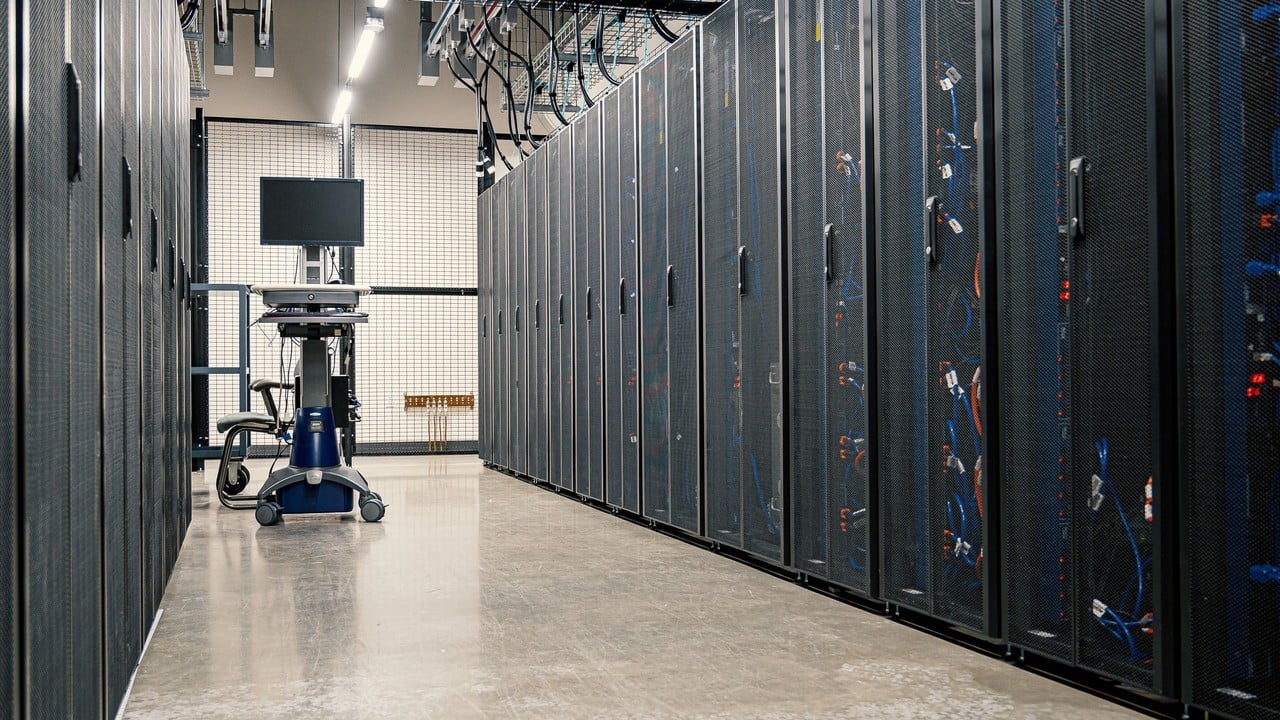
Mavria raises $130 million to mass-produce modular AI data centers
Photo: Brett Sayles / Pexels
The Houston-area startup, backed by Paradigm, AMP PBC and others, wants to build data centers in a factory instead of on site
Data centers have traditionally been built like custom homes: one site, one design, one long list of headaches. Mavria wants to build them more like cars coming off an assembly line.
The Houston-area startup has raised a total of $130 million to scale manufacturing of its factory-built data centers. That includes a $100 million round led by Paradigm, which puts the company at a post-money valuation of $1 billion.
Unicorn status on launch day
Mavria launched on November 9, 2026. It arrived with a billion-dollar price tag and a product already on the production floor.
Paradigm led the round, but it brought company. The backer list also includes AMP PBC, Critical Frontier, Liquid 2 and Dream Ventures.
The founding trio comes from an unusual place for a hardware startup: the US Department of Energy. CEO Adam Blake, Seth Cohen and Nick Poradek all previously worked at the agency.
The company’s first product line is called Terrain. Each unit is a standardized 5 MW block that bundles power, cooling and IT infrastructure into a single package.
The blocks are designed for high-density artificial intelligence workloads. The first unit, Terrain 01, is currently in production in Houston. Mavria has not disclosed which customers will deploy Terrain or where the units will go.
Why build a data center in a factory
The pitch is about repeatability. Conventional data center construction is site-specific, which means every project gets designed and built more or less from scratch.
AI, tech, and the markets they move—in one daily briefing.
Daily. Free. Join 34,000+ readers across crypto, finance, and policy.
Mavria’s bet is that AI infrastructure should move toward an industrialized model. Design one block, perfect it, then build it over and over.
The company frames the approach as a way to speed up AI infrastructure rollout. That rollout is currently running into two stubborn walls: power constraints and construction constraints.
Standardized blocks attack the construction problem directly. If most of the work happens on a factory floor, less of it has to happen on a muddy job site.
The 5 MW unit size also matters. Modular blocks theoretically let an operator add capacity in increments rather than committing to a single giant build all at once.
The investor lineup tells its own story
A $100 million lead check is a strong signal at any stage. The supporting cast adds weight too. AMP PBC, Critical Frontier, Liquid 2 and Dream Ventures all joined Paradigm on the cap table.
Still, a $1 billion valuation before any disclosed customer deployment sets a high bar. Investors are pricing in the factory’s future output, not its current one.
What this means for AI infrastructure
Factory output alone does not solve the power problem. A finished 5 MW block still needs 5 MW of electricity waiting for it at the destination.
That is where the founders’ energy policy experience may prove useful. Navigating grid access and energy infrastructure is a skill set, and this team spent time where those decisions get shaped.
The things to watch are fairly concrete. First, when Terrain 01 leaves the Houston production line and where it ends up. Second, whether Mavria names its first customers. A disclosed deployment would turn a promising pitch into a proven product. Third, how quickly the company can move from a single unit to repeatable volume. Raising $130 million to scale manufacturing means the scaling part now has to actually happen.
Disclosure: This article was edited by Diego Almada Lopez. For more information on how we create and review content, see our Editorial Policy.

