
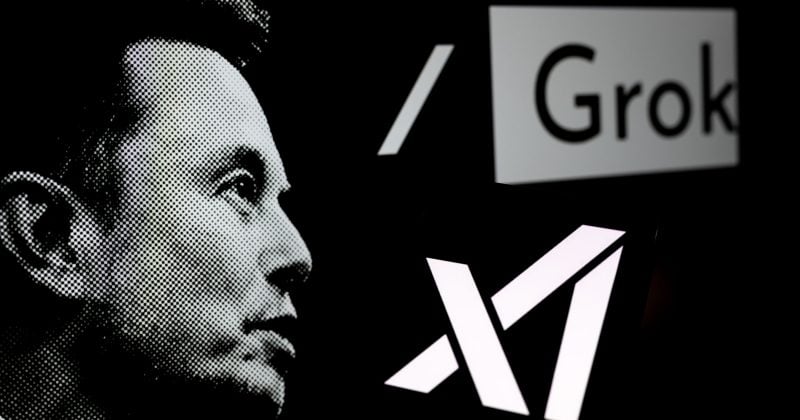
Elon Musk announces Grok 4.6 in two weeks, Grok 4.7 in four weeks as AI arms race accelerates

Elon Musk announces Grok 4.6 in two weeks, Grok 4.7 in four weeks as AI arms race accelerates

SpaceXAI's aggressive release cadence puts it on a collision course with Anthropic and other frontier AI labs

Elon Musk is apparently done with the concept of breathing room between product launches. On July 24, he posted on X that Grok 4.6 would arrive in two weeks and Grok 4.7 just four weeks after that, a schedule so compressed it makes software sprints look leisurely.

The announcement came barely a week after Grok 4.5 launched, which itself was positioned as a competitor to Anthropic’s Opus-class models.

What we know about Grok 4.6 and 4.7

Musk’s announcement carried no benchmarks, no pricing details, and no technical deep-dive. What has surfaced through reports is that Grok 4.6 is expected to be a two-trillion-parameter model, a notable jump from Grok 4.5’s approximately 1.5 trillion parameters.

Advertisement

Grok 4.5, which launched between July 8 and July 16, was marketed as optimized for coding and knowledge tasks. SpaceXAI claimed it delivered Opus-class performance at higher speeds while being more cost-efficient.

Grok 4.6 reportedly builds on this foundation with training supplemented by SpaceX’s internal engineering data. That’s a distinctive advantage no other AI lab can replicate.

SpaceXAI’s strategy and the rebrand

The company behind Grok underwent a rebrand in July 2026, shifting from xAI to SpaceXAI and formally operating as a subsidiary of SpaceX. The name change signals a strategic bet on integration, tying AI development directly to SpaceX’s operational infrastructure and data.

SpaceXAI appears to be emphasizing practical applications over theoretical performance, with model training drawing on proprietary data from SpaceX and Tesla operations.

What this means for investors and the broader market

The absence of independent benchmarks is the elephant in the room. Until third-party evaluators can test Grok 4.6 and 4.7 against competitors under controlled conditions, the market is pricing in promises rather than proven performance.

Investors should watch for three things over the coming weeks: whether Musk actually hits the announced release dates, whether independent benchmarks emerge shortly after launch, and whether enterprise customers publicly adopt these models for production workloads.

Disclosure: This article was edited by Editorial Team. For more information on how we create and review content, see our Editorial Policy.

Elon Musk announces Grok 4.6 in two weeks, Grok 4.7 in four weeks as AI arms race accelerates

Elon Musk announces Grok 4.6 in two weeks, Grok 4.7 in four weeks as AI arms race accelerates

SpaceXAI's aggressive release cadence puts it on a collision course with Anthropic and other frontier AI labs

Elon Musk is apparently done with the concept of breathing room between product launches. On July 24, he posted on X that Grok 4.6 would arrive in two weeks and Grok 4.7 just four weeks after that, a schedule so compressed it makes software sprints look leisurely.

The announcement came barely a week after Grok 4.5 launched, which itself was positioned as a competitor to Anthropic’s Opus-class models.

What we know about Grok 4.6 and 4.7

Musk’s announcement carried no benchmarks, no pricing details, and no technical deep-dive. What has surfaced through reports is that Grok 4.6 is expected to be a two-trillion-parameter model, a notable jump from Grok 4.5’s approximately 1.5 trillion parameters.

Advertisement

Grok 4.5, which launched between July 8 and July 16, was marketed as optimized for coding and knowledge tasks. SpaceXAI claimed it delivered Opus-class performance at higher speeds while being more cost-efficient.

Grok 4.6 reportedly builds on this foundation with training supplemented by SpaceX’s internal engineering data. That’s a distinctive advantage no other AI lab can replicate.

SpaceXAI’s strategy and the rebrand

The company behind Grok underwent a rebrand in July 2026, shifting from xAI to SpaceXAI and formally operating as a subsidiary of SpaceX. The name change signals a strategic bet on integration, tying AI development directly to SpaceX’s operational infrastructure and data.

SpaceXAI appears to be emphasizing practical applications over theoretical performance, with model training drawing on proprietary data from SpaceX and Tesla operations.

What this means for investors and the broader market

The absence of independent benchmarks is the elephant in the room. Until third-party evaluators can test Grok 4.6 and 4.7 against competitors under controlled conditions, the market is pricing in promises rather than proven performance.

Investors should watch for three things over the coming weeks: whether Musk actually hits the announced release dates, whether independent benchmarks emerge shortly after launch, and whether enterprise customers publicly adopt these models for production workloads.

Disclosure: This article was edited by Editorial Team. For more information on how we create and review content, see our Editorial Policy.