
PancakeSwap proposes redirecting side product fees to treasury optimization
The Kitchen wants to keep stablecoin fees in stablecoins instead of converting them to CAKE, a move that could reshape how the DEX manages its war chest.
PancakeSwap’s core development team, known as The Kitchen, has put forward a governance proposal to stop converting stablecoin pool fees into CAKE and instead retain them in their native stablecoin form for the protocol’s treasury. The change would apply across PancakeSwap’s entire product suite, including v2, v3, StableSwap, and Infinity.
Here’s the thing: stablecoin fees have historically accounted for roughly 29% of the treasury’s total annual revenue. That’s a meaningful chunk of income that was previously being routed through an unnecessary conversion step, swapped from stablecoins into CAKE, before landing in the treasury. The Kitchen’s argument is simple. Why add friction and conversion costs when you can just keep the stablecoins as stablecoins?
What the proposal actually changes
The mechanics here are straightforward. Fees generated from stablecoin trading pairs across all of PancakeSwap’s pool types would stay denominated in their original stablecoin form. Non-stablecoin fees would continue following the existing path, getting converted into CAKE as they always have.
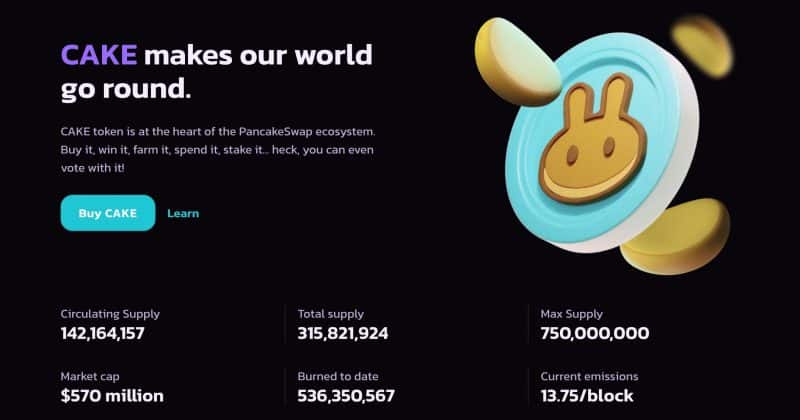
The proposal explicitly preserves PancakeSwap’s existing buyback-and-burn mechanism for CAKE. Revenue from non-stablecoin products would still flow through the same conversion pipeline, maintaining the deflationary pressure that CAKE holders have come to rely on. Long-term tokenomics remain untouched.
Why treasury composition matters for a DEX
Holding stablecoins directly gives PancakeSwap immediate purchasing power without market impact. When a treasury holds volatile governance tokens, deploying those funds means selling into the market, which can create downward price pressure on the very token the protocol is trying to support.
The news moving money, markets, and the world—before your day starts.
Daily. Free. Join 34,000+ readers across crypto, finance, and policy.
By keeping ~29% of its revenue in stablecoins, PancakeSwap positions itself to fund operations, partnerships, or emergency responses without touching CAKE’s market supply.
The broader trend in DeFi treasury management
PancakeSwap remains one of the largest decentralized exchanges by trading volume, operating primarily on BNB Chain with expansions to multiple other networks. The Kitchen serves as the protocol’s primary maintainer and has historically driven major governance proposals through the community voting process.
The proposal was posted on February 19, 2026, and following a community vote, was implemented on March 2, 2026.
What this means for investors
The preservation of the burn mechanism for non-stablecoin fees is the detail worth watching. As long as that pipeline remains intact, CAKE’s deflationary mechanics continue operating as designed.
The risk to monitor is scope creep. This proposal specifically targets stablecoin fees, but if future governance proposals extend the same logic to other fee categories, the calculus changes significantly. Investors should track whether subsequent proposals attempt to redirect additional revenue streams away from CAKE conversion, as that would represent a genuine shift in tokenomics rather than a treasury optimization.