
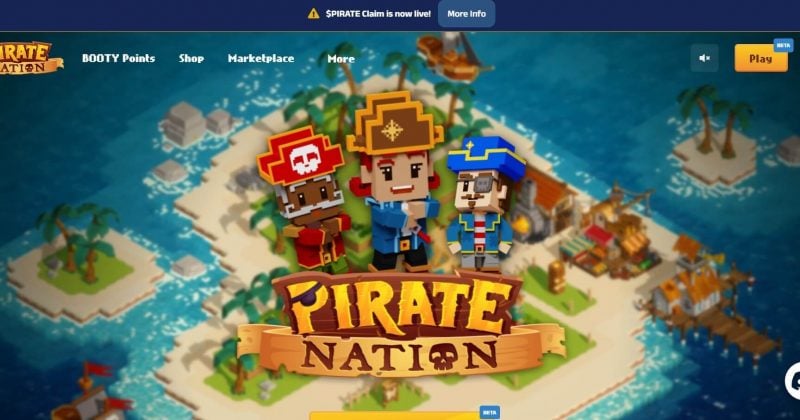
Via ethereum-ecosystem.com
Pirate Nation studio shuts down, open-sources all code and art under CC0 license
Proof of Play, backed by $33 million in a16z funding, releases its entire game into the public domain after player counts cratered 90%
Proof of Play, the studio behind the on-chain RPG Pirate Nation, announced on August 5 that it’s shutting down operations and releasing everything it built into the public domain. The app, smart contracts, artwork, NFTs, and full intellectual property are now available under a CC0 license, meaning anyone can use them for anything, no strings attached.
It’s a remarkably graceful exit for a studio that raised $33 million from Andreessen Horowitz in September 2023 to build the future of fully on-chain gaming.
From 100K players to a ghost ship
Pirate Nation’s daily active user count dropped from over 100,000 to roughly 10,000, a decline steep enough to make the game’s $150,000 monthly operating costs flatly unsustainable.
The game itself went dark back in September 2025. The studio limped along for nearly another year before pulling the plug entirely.
Founder Amitt and co-founder Adam Fern described the closure as a difficult decision, acknowledging that despite years of development and significant capital, the project never achieved the mass-market penetration they were chasing.
The news moving money, markets, and the world—before your day starts.
Daily. Free. Join 34,000+ readers across crypto, finance, and policy.
What CC0 actually means here
The CC0 designation is worth unpacking because it’s not just open-source. It’s a full surrender of intellectual property rights. That means any developer, anywhere, can take Pirate Nation’s Unity app, its smart contracts, its artwork, and build whatever they want. A competing pirate game. A completely different genre using the same art assets. A DeFi protocol that repurposes the smart contracts. All fair game, no permission needed.
The PIRATE token lives on, sort of
Not everything is being abandoned. An independent entity called the Pirate Nation Foundation will continue maintaining the PIRATE utility token and the game’s website after the studio goes dark.
What this means for crypto gaming investors
Proof of Play’s demise is one of the highest-profile casualties in the Web3 gaming space. The studio had tier-one venture backing from a16z, experienced founders, and a functioning product with real users. It still couldn’t sustain engagement long enough to justify its operating costs.
Pirate Nation’s user decline from 100,000-plus daily active users to 10,000 is a textbook illustration of crypto gaming’s core tension: the players who show up for token incentives leave when the rewards dry up, and the players who show up for gameplay rarely tolerate the friction of wallets, gas fees, and on-chain transactions.
For investors evaluating blockchain gaming opportunities, the Proof of Play story reinforces a few critical risk factors. First, user acquisition costs in crypto gaming remain high, and retention curves tend to be brutally steep. Second, $33 million in funding doesn’t buy you immunity from the same engagement problems that plague traditional free-to-play games. Third, monthly operational costs need to be measured against realistic, not optimistic, revenue projections from a durable player base.