
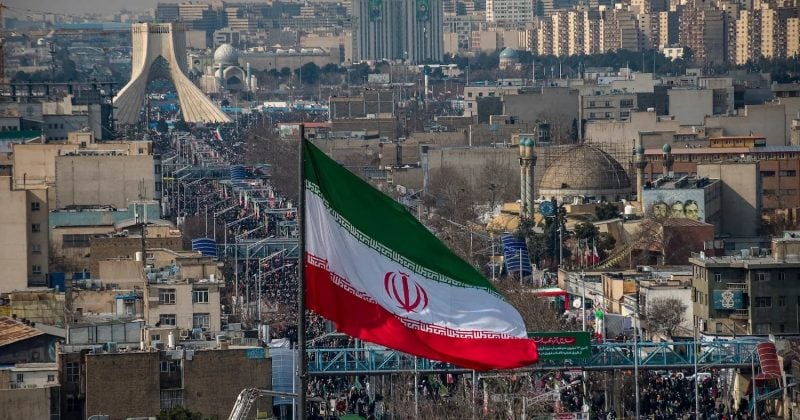
Retired US general warns of potential conflict over Iran’s control of Strait of Hormuz

https://foreignpolicy.com/2025/03/25/iran-islamic-republic-syria-hard-base/

Retired US general warns of potential conflict over Iran’s control of Strait of Hormuz

US invasion of Iran

A retired U.S. general has issued a warning about Iran’s potential control over the Strait of Hormuz, suggesting that such actions could lead to direct military conflict with the United States. This development comes amidst heightened tensions in the region, marked by Iran’s recent naval maneuvers and exchanges of fire with U.S. forces. The situation is part of a broader Middle Eastern conflict involving nuclear disputes and proxy battles, drawing in countries like China and the UAE. Market participants appear to interpret this escalation as consistent with scenarios that increase the likelihood of U.S. military action against Iran.

Advertisement

Key Takeaways

  • Market activity suggests that the retired general’s warning is seen as increasing the probability of U.S. military intervention in Iran.
  • The current situation in the Strait of Hormuz appears to align with scenarios that could lead to a broader regional conflict.
  • Pricing fluctuations in the market for a U.S. invasion of Iran indicate heightened concern over military developments.

What to Watch

Observers should monitor any further statements from U.S. military officials or the Pentagon regarding Iran. Diplomatic engagements between the U.S. and Iran may provide critical indicators of whether tensions will escalate or de-escalate. The response from key regional players, such as Israel and China, could also impact market perceptions of potential military actions. Changes in U.S. military deployments in the region may be particularly telling in assessing the likelihood of conflict.

Get prediction market intelligence as a structured API feed. Early access waitlist.

Disclosure: This article was edited by Estefano Gomez. For more information on how we create and review content, see our Editorial Policy.

Retired US general warns of potential conflict over Iran’s control of Strait of Hormuz

Retired US general warns of potential conflict over Iran’s control of Strait of Hormuz

US invasion of Iran

https://foreignpolicy.com/2025/03/25/iran-islamic-republic-syria-hard-base/

A retired U.S. general has issued a warning about Iran’s potential control over the Strait of Hormuz, suggesting that such actions could lead to direct military conflict with the United States. This development comes amidst heightened tensions in the region, marked by Iran’s recent naval maneuvers and exchanges of fire with U.S. forces. The situation is part of a broader Middle Eastern conflict involving nuclear disputes and proxy battles, drawing in countries like China and the UAE. Market participants appear to interpret this escalation as consistent with scenarios that increase the likelihood of U.S. military action against Iran.

Advertisement

Key Takeaways

  • Market activity suggests that the retired general’s warning is seen as increasing the probability of U.S. military intervention in Iran.
  • The current situation in the Strait of Hormuz appears to align with scenarios that could lead to a broader regional conflict.
  • Pricing fluctuations in the market for a U.S. invasion of Iran indicate heightened concern over military developments.

What to Watch

Observers should monitor any further statements from U.S. military officials or the Pentagon regarding Iran. Diplomatic engagements between the U.S. and Iran may provide critical indicators of whether tensions will escalate or de-escalate. The response from key regional players, such as Israel and China, could also impact market perceptions of potential military actions. Changes in U.S. military deployments in the region may be particularly telling in assessing the likelihood of conflict.

Get prediction market intelligence as a structured API feed. Early access waitlist.

Disclosure: This article was edited by Estefano Gomez. For more information on how we create and review content, see our Editorial Policy.