
Saudi Arabia’s nuclear deal with the US hits turbulence as Trump ties it to Abraham Accords
The 30-year civilian nuclear agreement faces political conditions that could reshape Middle Eastern geopolitics and energy markets
The US and Saudi Arabia signed a landmark 30-year nuclear cooperation agreement in late July 2026, but the deal’s path forward just got considerably more complicated. President Trump has attached a significant political condition to the arrangement: Saudi Arabia must join the Abraham Accords and normalize relations with Israel.
What the deal actually involves
The agreement, known formally as a “123 agreement” (named after Section 123 of the US Atomic Energy Act), was confirmed by the US Department of Energy. It establishes a framework for bilateral civilian nuclear cooperation between Washington and Riyadh.
The deal reportedly allows for potential domestic uranium enrichment in Saudi Arabia, which represents a major departure from what’s traditionally called the “gold standard” of non-proliferation agreements. Previous US nuclear deals with other countries typically prohibited the partner nation from enriching uranium or reprocessing plutonium on their own soil. This agreement relaxes that standard in favor of a more bilateral, partnership-oriented approach.
For Saudi Arabia, the nuclear program is part of a broader energy diversification strategy. Using nuclear energy for domestic electricity generation would free up more oil and gas for export.
The deal is currently moving toward congressional review, which means US lawmakers will get their say before anything becomes final.
The news moving money, markets, and the world—before your day starts.
Daily. Free. Join 34,000+ readers across crypto, finance, and policy.
The Abraham Accords condition
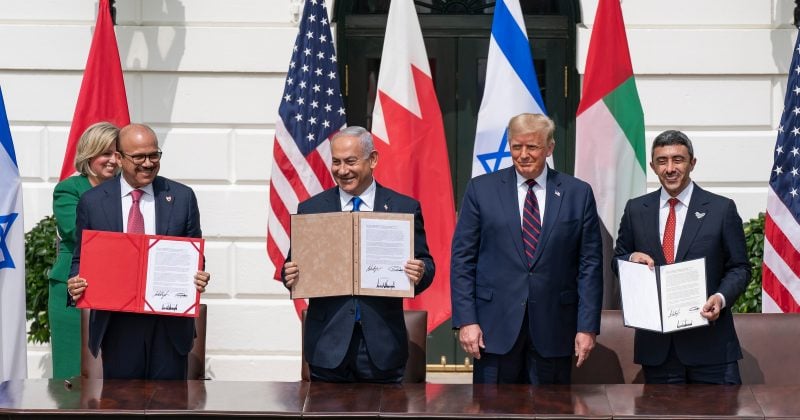
The Abraham Accords, originally brokered during Trump’s first term, normalized diplomatic relations between Israel and several Arab nations including the UAE, Bahrain, Sudan, and Morocco. Saudi Arabia, the region’s most influential Arab state, notably did not join.
Saudi Arabia has historically conditioned any normalization on progress toward Palestinian statehood. By tying the nuclear deal to Saudi participation in the Accords, Trump is using civilian nuclear technology as leverage to achieve a broader foreign policy objective.
What this means for energy markets and investors
The nuclear agreement, if fully implemented, would create substantial business opportunities for US companies specializing in nuclear reactor technology, engineering, and safety systems. Saudi Arabia would need extensive technical partnerships to build out its civilian nuclear infrastructure, and American firms would be first in line under this agreement’s terms.
If Saudi Arabia balks at the normalization requirement, the deal could stall indefinitely, pushing Riyadh toward alternative nuclear partners, with China and Russia both eager to fill the gap. US companies would lose a generational business opportunity, and Washington would lose strategic influence over Saudi Arabia’s nuclear development standards.
Investors should watch the congressional review process and any signals from Riyadh about its willingness to engage with the Abraham Accords framework, because those two variables will determine whether this 30-year agreement actually moves forward.