
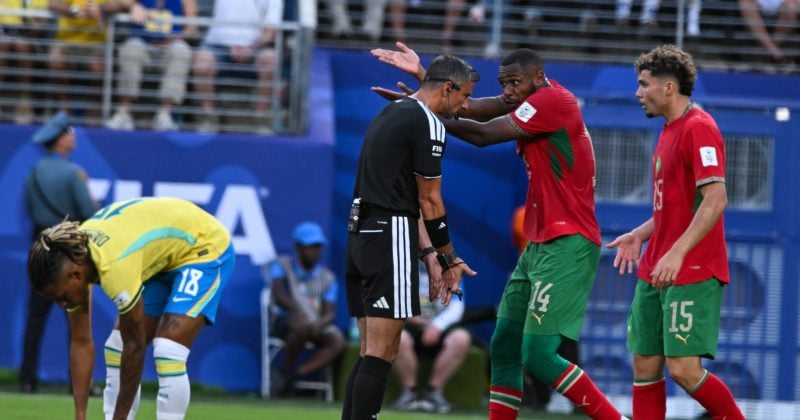
Slavko Vinčić retires after officiating the 2026 FIFA World Cup final

Photo: YantsImages / Wikimedia Commons / CC BY-SA 4.0 (https://creativecommons.org/licenses/by-sa/4.0)

Slavko Vinčić retires after officiating the 2026 FIFA World Cup final

The Slovenian referee closes a landmark career after handling the sport's biggest match in New Jersey

Every referee dreams of one assignment above all others. For Slavko Vinčić, that assignment arrived on July 16, 2026, when he took the center of the pitch for the FIFA World Cup final between Spain and Argentina in New Jersey. A week later, he walked away from the game entirely.

The Slovenian Football Association confirmed Vinčić’s retirement on July 26-27, 2026, roughly ten days after Spain claimed the trophy. He was 46 years old, and he had just done the one thing most officials never get to do: go out at the absolute top.

Advertisement

The final and the controversy that followed

The Slovenian official drew criticism for his management of Argentina’s physical approach during the final. Observers felt he was lenient with a number of challenges.

Born on November 25, 1979, Vinčić spent decades building toward that moment.

A career measured in the biggest stages

Vinčić had long been one of UEFA’s most trusted officials before the 2026 tournament, accumulating assignments across UEFA competitions and other prestigious international tournaments before FIFA appointed him to the final match.

The retirement at 46 is not unusual for elite referees. The physical demands of keeping up with top-level professional footballers across 90-plus minutes are significant, and the mental load of preparation, video analysis, and post-match scrutiny is relentless.

What this means for the refereeing landscape

Vinčić’s exit creates a vacancy at the top of Slovenian and, more broadly, European refereeing. The NZS will need to develop successors capable of operating at UEFA and FIFA level, which takes time measured in years rather than months.

Disclosure: This article was edited by Editorial Team. For more information on how we create and review content, see our Editorial Policy.

Slavko Vinčić retires after officiating the 2026 FIFA World Cup final

Slavko Vinčić retires after officiating the 2026 FIFA World Cup final

The Slovenian referee closes a landmark career after handling the sport's biggest match in New Jersey

Photo: YantsImages / Wikimedia Commons / CC BY-SA 4.0 (https://creativecommons.org/licenses/by-sa/4.0)

Every referee dreams of one assignment above all others. For Slavko Vinčić, that assignment arrived on July 16, 2026, when he took the center of the pitch for the FIFA World Cup final between Spain and Argentina in New Jersey. A week later, he walked away from the game entirely.

The Slovenian Football Association confirmed Vinčić’s retirement on July 26-27, 2026, roughly ten days after Spain claimed the trophy. He was 46 years old, and he had just done the one thing most officials never get to do: go out at the absolute top.

Advertisement

The final and the controversy that followed

The Slovenian official drew criticism for his management of Argentina’s physical approach during the final. Observers felt he was lenient with a number of challenges.

Born on November 25, 1979, Vinčić spent decades building toward that moment.

A career measured in the biggest stages

Vinčić had long been one of UEFA’s most trusted officials before the 2026 tournament, accumulating assignments across UEFA competitions and other prestigious international tournaments before FIFA appointed him to the final match.

The retirement at 46 is not unusual for elite referees. The physical demands of keeping up with top-level professional footballers across 90-plus minutes are significant, and the mental load of preparation, video analysis, and post-match scrutiny is relentless.

What this means for the refereeing landscape

Vinčić’s exit creates a vacancy at the top of Slovenian and, more broadly, European refereeing. The NZS will need to develop successors capable of operating at UEFA and FIFA level, which takes time measured in years rather than months.

Disclosure: This article was edited by Editorial Team. For more information on how we create and review content, see our Editorial Policy.