
SpaceX winds down Falcon 9 rocket as focus shifts to Starship, signaling a new era for space economics

SpaceX winds down Falcon 9 rocket as focus shifts to Starship, signaling a new era for space economics

The world's most prolific rocket is getting a quieter 2026 as SpaceX bets big on its next-generation vehicle

SpaceX is doing something that sounds counterintuitive for a company that basically turned rocket launches into a weekly routine. It’s launching fewer rockets next year.

The company plans to fly its workhorse Falcon 9 roughly 140 to 145 times in 2026, according to SpaceX President Gwynne Shotwell. That’s down from 165 launches in 2025. The reason is straightforward: SpaceX is reallocating resources toward Starship, the massive next-generation vehicle it hopes will eventually carry humans to the Moon and Mars.

The great infrastructure pivot

The shift is most visible in Florida. Launch Complex 39A at Kennedy Space Center is transitioning to support Starship operations and occasional Falcon Heavy missions.

Advertisement

SpaceX has also retired the second of its two Florida-based droneships. The retired droneship is being repurposed to assist with Starship transport logistics.

The operational center of gravity for Falcon 9 is shifting westward to Vandenberg Space Force Base in California. That facility will handle the bulk of remaining Falcon 9 flights, primarily serving SpaceX’s own Starlink satellite constellation.

Starship’s slow burn toward operational status

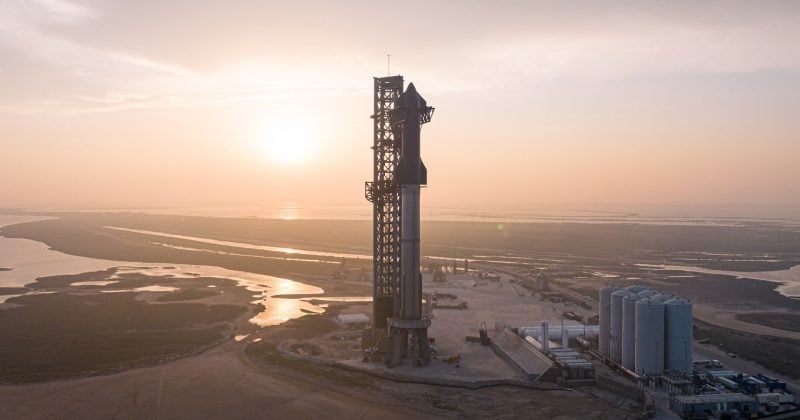
Starship is still deep in its flight testing phase, with Flight 13 scheduled for July 24, 2026, launching from SpaceX’s Starbase facility in Texas.

NASA has already contracted Starship as the lunar lander for its Artemis program, giving SpaceX a major anchor customer for the vehicle’s development.

Meanwhile, Falcon 9 remains the only American crew vehicle certified to fly astronauts to the International Space Station, a role it’s expected to maintain through at least the early 2030s. Boeing’s Starliner was supposed to share that responsibility, but its troubled development has left Falcon 9 as the sole US option for human spaceflight to the ISS.

Disclosure: This article was edited by Editorial Team. For more information on how we create and review content, see our Editorial Policy.

SpaceX winds down Falcon 9 rocket as focus shifts to Starship, signaling a new era for space economics

SpaceX winds down Falcon 9 rocket as focus shifts to Starship, signaling a new era for space economics

The world's most prolific rocket is getting a quieter 2026 as SpaceX bets big on its next-generation vehicle

SpaceX is doing something that sounds counterintuitive for a company that basically turned rocket launches into a weekly routine. It’s launching fewer rockets next year.

The company plans to fly its workhorse Falcon 9 roughly 140 to 145 times in 2026, according to SpaceX President Gwynne Shotwell. That’s down from 165 launches in 2025. The reason is straightforward: SpaceX is reallocating resources toward Starship, the massive next-generation vehicle it hopes will eventually carry humans to the Moon and Mars.

The great infrastructure pivot

The shift is most visible in Florida. Launch Complex 39A at Kennedy Space Center is transitioning to support Starship operations and occasional Falcon Heavy missions.

Advertisement

SpaceX has also retired the second of its two Florida-based droneships. The retired droneship is being repurposed to assist with Starship transport logistics.

The operational center of gravity for Falcon 9 is shifting westward to Vandenberg Space Force Base in California. That facility will handle the bulk of remaining Falcon 9 flights, primarily serving SpaceX’s own Starlink satellite constellation.

Starship’s slow burn toward operational status

Starship is still deep in its flight testing phase, with Flight 13 scheduled for July 24, 2026, launching from SpaceX’s Starbase facility in Texas.

NASA has already contracted Starship as the lunar lander for its Artemis program, giving SpaceX a major anchor customer for the vehicle’s development.

Meanwhile, Falcon 9 remains the only American crew vehicle certified to fly astronauts to the International Space Station, a role it’s expected to maintain through at least the early 2030s. Boeing’s Starliner was supposed to share that responsibility, but its troubled development has left Falcon 9 as the sole US option for human spaceflight to the ISS.

Disclosure: This article was edited by Editorial Team. For more information on how we create and review content, see our Editorial Policy.