
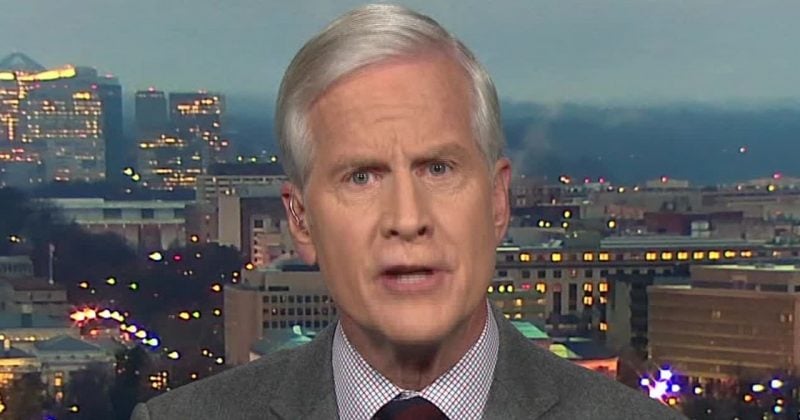
General James ‘Spider’ Marks warns closed AI systems pose national security risks as China closes the gap
The retired intelligence officer's case for open-weight AI models carries implications for decentralized tech and the growing intersection of defense, transparency, and open-source development
Retired US Army General James “Spider” Marks, one of the military’s most experienced intelligence figures, is sounding the alarm on a problem that should feel familiar to anyone in crypto: closed systems controlled by a handful of powerful entities are a liability, not an asset.
His argument centers on the growing friction between Washington and Silicon Valley’s biggest AI companies, whose proprietary, closed-source models increasingly underpin national security infrastructure. Marks contends that this arrangement creates fragile dependencies at exactly the wrong moment, as Chinese AI capabilities are advancing faster than most people realize.
China’s Kimi K3 changes the calculus
The catalyst for Marks’ concerns has a name: Kimi K3. Unveiled on July 17 by Beijing-based startup Moonshot AI, the model packs 2.8 trillion parameters and a 1 million-token context window.
What makes K3 genuinely notable isn’t just its size. It’s the first open-source model to operate in the near-3-trillion-parameter category, and it reportedly rivals the front-end coding capabilities of Anthropic’s Claude and OpenAI’s ChatGPT variants.
Moonshot AI plans to release the model’s full weights by July 27, meaning anyone, governments included, can inspect, modify, and deploy it without asking permission from a corporate gatekeeper.
The trust deficit between Washington and Silicon Valley
Marks, whose intelligence career includes leadership roles during Operation Iraqi Freedom, frames this as fundamentally a trust problem. The escalating friction between US government enterprises and closed commercial AI ecosystems has made the relationship between the Pentagon and its AI suppliers increasingly fragile.
AI, tech, and the markets they move—in one daily briefing.
Daily. Free. Join 34,000+ readers across crypto, finance, and policy.
Open-weight architectures like Kimi K3 offer something different. They let government users inspect the model’s internals, customize it for specific defense applications, and deploy it without relying on a single vendor’s API staying online during a crisis.
Marks argues that the US needs to seriously consider shifting toward open models for defense operations, not because Chinese models are inherently superior, but because the open architecture itself provides strategic advantages that closed systems structurally cannot.
What this means for decentralized tech and crypto
There is currently no direct connection between the Kimi K3 model and any cryptocurrency or blockchain project. No token launch, no on-chain inference marketplace, no DAO governance layer. The sectors remain clearly separated.
If defense establishments globally begin prioritizing open-weight AI models over proprietary ones, decentralized compute networks, on-chain model verification, and blockchain-based audit trails for AI decision-making all become more relevant in a world where governments demand transparency from their AI stack.
The risk is that governments opt for open-weight models but deploy them on classified, air-gapped infrastructure with no blockchain component whatsoever. Open source doesn’t automatically mean decentralized, and the Pentagon’s version of transparency may look nothing like what crypto builders envision.
Investors watching this space should pay attention to two signals. First, whether US defense procurement language begins explicitly favoring open-weight AI models in upcoming contract cycles. Second, whether any of the existing decentralized AI projects secure government pilot programs or partnerships.