
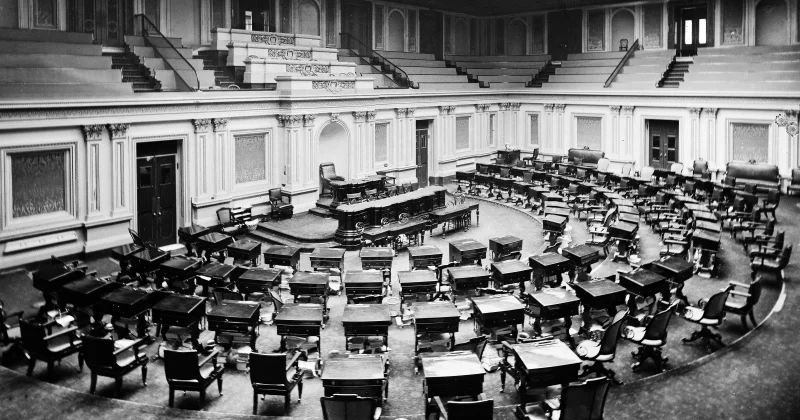
The U.S. senate voted 49-50 to reject a resolution that would have required president Trump to cease hostile actions against Iran absent congressional authorization

https://en.wikipedia.org/wiki/United_States_Senate_chamber

The U.S. senate voted 49-50 to reject a resolution that would have required president Trump to cease hostile actions against Iran absent congressional authorization

US-Iran negotiation extension

The United States Senate has narrowly rejected a resolution aimed at restricting President Donald Trump’s ability to engage in military actions against Iran without prior Congressional approval. The vote, which concluded with a 49-50 result, reflects the ongoing debate over presidential war powers in the context of U.S.-Iran relations. This decision emerges amidst a fragile ceasefire and diplomatic pause in the region, where tensions between the U.S. and Iran have been a focal point of international attention. Market pricing suggests that this outcome may decrease the likelihood of extending the current U.S.-Iran negotiation period, as it indicates a continued aggressive stance towards Iran.

Advertisement

Key Takeaways

  • The Senate’s rejection of the resolution suggests continued support for President Trump’s current military posture towards Iran.
  • Market pricing indicates a decreased likelihood of extending the U.S.-Iran negotiation period, as reflected in recent odds changes.
  • The decision contributes to ongoing uncertainty in U.S.-Iran relations, with potential implications for future diplomatic engagements.

What to Watch

Observers now turn their attention to potential responses from Iran and any forthcoming statements from key actors such as President Trump and Iranian Foreign Minister Abbas Araghchi. Developments such as confirmation of extended negotiations or any violations of the ceasefire could influence market perceptions. Additionally, any new sanctions or diplomatic moves by the U.S. Congress or the Trump administration will be closely monitored as indicators of the future trajectory of U.S.-Iran relations.

Get live prediction-market analysis, powered by Vera. Sign up for Vera.

Disclosure: This article was edited by Estefano Gomez. For more information on how we create and review content, see our Editorial Policy.

The U.S. senate voted 49-50 to reject a resolution that would have required president Trump to cease hostile actions against Iran absent congressional authorization

The U.S. senate voted 49-50 to reject a resolution that would have required president Trump to cease hostile actions against Iran absent congressional authorization

US-Iran negotiation extension

https://en.wikipedia.org/wiki/United_States_Senate_chamber

The United States Senate has narrowly rejected a resolution aimed at restricting President Donald Trump’s ability to engage in military actions against Iran without prior Congressional approval. The vote, which concluded with a 49-50 result, reflects the ongoing debate over presidential war powers in the context of U.S.-Iran relations. This decision emerges amidst a fragile ceasefire and diplomatic pause in the region, where tensions between the U.S. and Iran have been a focal point of international attention. Market pricing suggests that this outcome may decrease the likelihood of extending the current U.S.-Iran negotiation period, as it indicates a continued aggressive stance towards Iran.

Advertisement

Key Takeaways

  • The Senate’s rejection of the resolution suggests continued support for President Trump’s current military posture towards Iran.
  • Market pricing indicates a decreased likelihood of extending the U.S.-Iran negotiation period, as reflected in recent odds changes.
  • The decision contributes to ongoing uncertainty in U.S.-Iran relations, with potential implications for future diplomatic engagements.

What to Watch

Observers now turn their attention to potential responses from Iran and any forthcoming statements from key actors such as President Trump and Iranian Foreign Minister Abbas Araghchi. Developments such as confirmation of extended negotiations or any violations of the ceasefire could influence market perceptions. Additionally, any new sanctions or diplomatic moves by the U.S. Congress or the Trump administration will be closely monitored as indicators of the future trajectory of U.S.-Iran relations.

Get live prediction-market analysis, powered by Vera. Sign up for Vera.

Disclosure: This article was edited by Estefano Gomez. For more information on how we create and review content, see our Editorial Policy.