
Trump and Netanyahu meet at White House for first time since launching Iran offensive

Via whitehouse.gov

Trump and Netanyahu meet at White House for first time since launching Iran offensive

The sit-down marks the Israeli prime minister's eighth visit since Trump's return to office, with the Iran conflict topping the agenda.

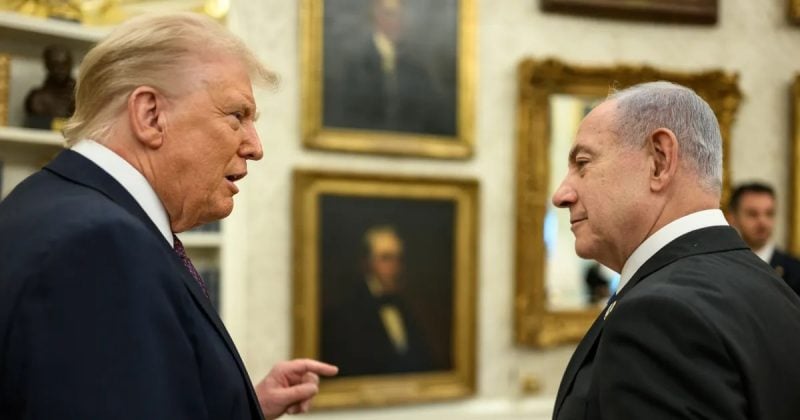
President Trump and Israeli Prime Minister Benjamin Netanyahu sat down at the White House on July 29 for their first face-to-face meeting since the two nations launched joint military strikes against Iran on February 28. Five months of aerial bombardments, regime change rhetoric, and the assassination of Supreme Leader Ali Khamenei later, the two leaders apparently had some things to discuss.

Netanyahu departed for Washington on July 27, making clear that Iran would be the primary item on his agenda. This marks his eighth meeting with Trump during the president’s second term.

Advertisement

The joint US-Israeli aerial strikes on Tehran that began on February 28 represented a dramatic escalation in a relationship with Iran that had been deteriorating for years. The campaign has been framed by both Washington and Jerusalem as an effort to dismantle the Iranian regime’s capacity to threaten regional stability.

The assassination of Supreme Leader Ali Khamenei, arguably the most consequential targeted killing since the US drone strike on Iranian General Qasem Soleimani in January 2020, fundamentally altered the geopolitical calculus. Regime change, once the subtext of US-Israeli Iran policy, became the explicit text.

But five months in, the picture is complicated. There have been temporary ceasefires, diplomatic strains between the two allies, and mounting domestic pressures on both leaders. Trump faces questions at home about the scope and cost of continued military engagement. Netanyahu navigates a coalition government that has its own fractures and demands.

Disclosure: This article was edited by Editorial Team. For more information on how we create and review content, see our Editorial Policy.

Trump and Netanyahu meet at White House for first time since launching Iran offensive

Trump and Netanyahu meet at White House for first time since launching Iran offensive

The sit-down marks the Israeli prime minister's eighth visit since Trump's return to office, with the Iran conflict topping the agenda.

Via whitehouse.gov

President Trump and Israeli Prime Minister Benjamin Netanyahu sat down at the White House on July 29 for their first face-to-face meeting since the two nations launched joint military strikes against Iran on February 28. Five months of aerial bombardments, regime change rhetoric, and the assassination of Supreme Leader Ali Khamenei later, the two leaders apparently had some things to discuss.

Netanyahu departed for Washington on July 27, making clear that Iran would be the primary item on his agenda. This marks his eighth meeting with Trump during the president’s second term.

Advertisement

The joint US-Israeli aerial strikes on Tehran that began on February 28 represented a dramatic escalation in a relationship with Iran that had been deteriorating for years. The campaign has been framed by both Washington and Jerusalem as an effort to dismantle the Iranian regime’s capacity to threaten regional stability.

The assassination of Supreme Leader Ali Khamenei, arguably the most consequential targeted killing since the US drone strike on Iranian General Qasem Soleimani in January 2020, fundamentally altered the geopolitical calculus. Regime change, once the subtext of US-Israeli Iran policy, became the explicit text.

But five months in, the picture is complicated. There have been temporary ceasefires, diplomatic strains between the two allies, and mounting domestic pressures on both leaders. Trump faces questions at home about the scope and cost of continued military engagement. Netanyahu navigates a coalition government that has its own fractures and demands.

Disclosure: This article was edited by Editorial Team. For more information on how we create and review content, see our Editorial Policy.