The Watertown robotics startup rents its warehouse robots by the hour and wants real-world work to train its AI models
Tutor Intelligence has raised $75 million in a Series B round led by Andreessen Horowitz (a16z). The round was announced on November 2, 2026.
The Watertown, Massachusetts robotics company plans to use the money to grow its robot fleet and scale manufacturing. It also wants to keep feeding its AI models with data from actual factory and warehouse work.
From basement welding to Fortune 50 floors
Co-founders Josh Gruenstein and Alon Kosowsky-Sachs have been building robots since childhood. Gruenstein reportedly welded robots in the basement of the apartment building where he grew up, knocking out the elevators more than once.
The founders eventually took that energy to MIT, and the company was spun out of MIT CSAIL in 2021.
Tutor now employs 160 people. Its robots work in Fortune 50 factories and warehouses, plus small mom-and-pop businesses across the US.
The numbers behind the round
The new raise brings Tutor’s total funding to $117 million. Its previous round, a $34 million Series A, closed in December 2025.
Tutor has not disclosed its valuation or revenue. The operating metrics it has shared, however, point in one direction:
- The number of facilities using Tutor robots grew nearly fourfold year over year.
- About one-third of recent deployments went to existing customers.
- The company is targeting more than 1,000 robots under contract by the end of 2027.
Two robots and a rental model
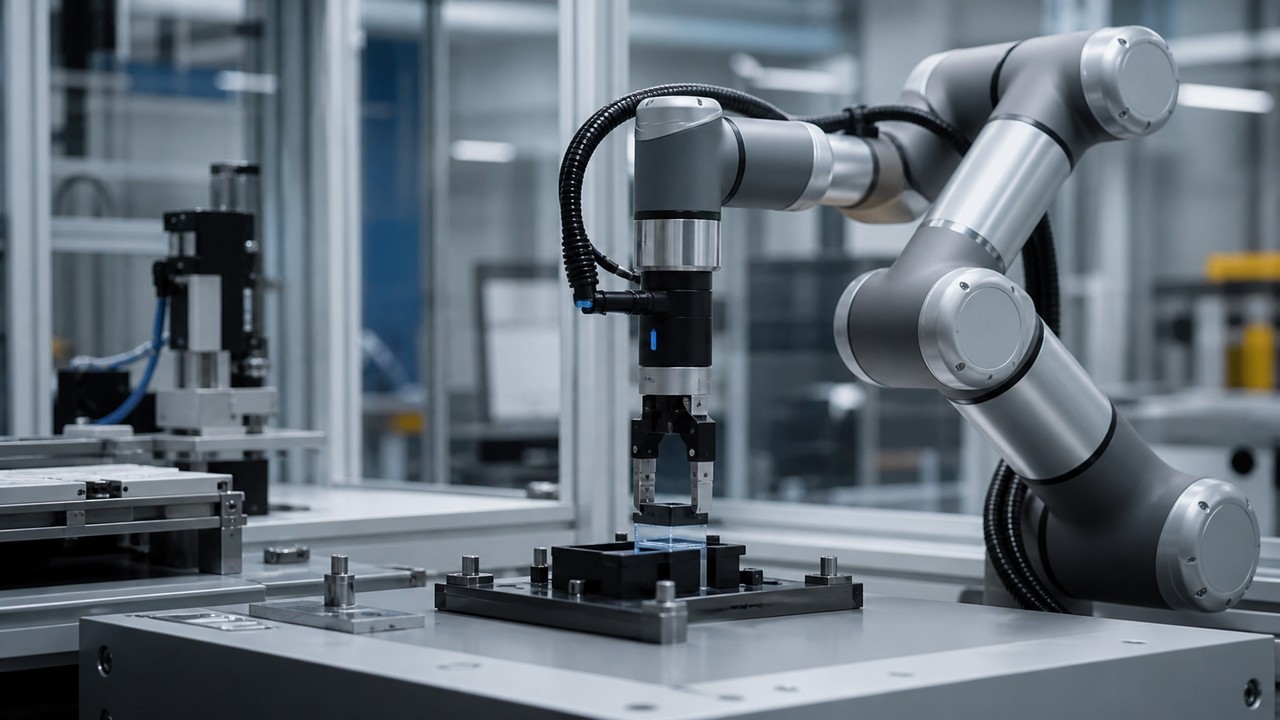
Tutor runs two main platforms. Sonny is a bimanual manipulator, meaning it uses two arms, built for picking individual items.
Cassie is a single-arm mobile manipulator. It moves around a facility and handles case picking and palletizing, the work of stacking boxes onto pallets for shipping.
Instead of selling robots outright, Tutor charges based on usage, with rates starting at approximately $14 an hour. Customers skip the large upfront capital expense and avoid being locked into long-term contracts.
The data factory angle
Tutor is building robot foundation models, and those models need training data. To produce it, the company operates what it calls a “Data Factory,” where more than 100 robots regularly generate real-world manipulation data.
Tutor also pairs its real-world deployments with human teleoperation. When a robot gets stuck or faces something unfamiliar, a human operator can step in remotely, and that intervention becomes useful training data too.
The robots do paid work, humans help them through the tricky parts, and the whole process makes the robots smarter. The customer pays for labor while Tutor collects the training data as a byproduct.