
UK inflation expectations fall ahead of Bank of England decision

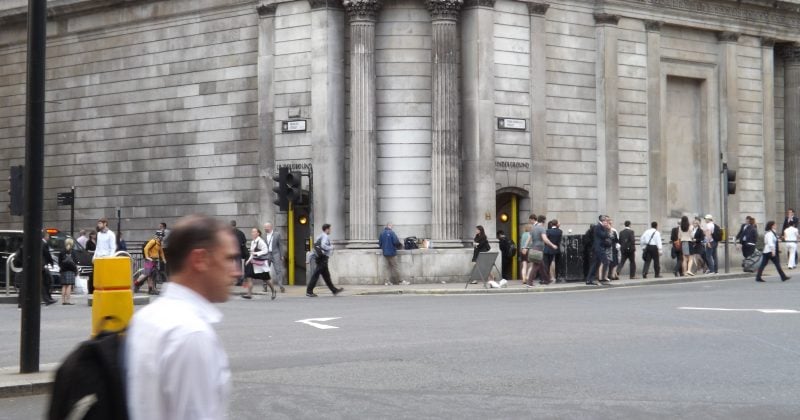
Photo: Edgepedia / Wikimedia Commons / CC BY-SA 3.0 (https://creativecommons.org/licenses/by-sa/3.0)

UK inflation expectations fall ahead of Bank of England decision

British consumers lowered their short and long term inflation forecasts in July, easing concerns that price pressures could become embedded in the economy.


British consumers lowered their expectations for future inflation in July, offering some relief to the Bank of England ahead of its interest rate decision this week.

Inflation expectations for five years or more fell to 3.7% from 3.9% in June, according to a survey conducted by Citi and YouGov.

Expectations for inflation over the next year declined more sharply to 3.4% from 3.8%.

Advertisement

The Bank of England closely monitors household inflation expectations because persistently elevated forecasts can influence wage demands and company pricing decisions, making inflation more difficult to control.

The latest figures suggest the rise in energy prices caused by the conflict with Iran has not become firmly embedded in consumer expectations.

Citi economist Callum McLaren Stewart said delayed increases in fuel prices could cause a modest rebound, but the smaller rise recorded in July was unlikely to have a meaningful effect.

The findings follow a separate survey showing that British companies expect to deliver smaller wage and price increases, providing further evidence that domestic inflation pressures may be easing.

UK consumer inflation slowed to 2.6% in June from 2.8% in May, although it remained above the Bank of England’s 2% target.

The Bank of England is widely expected to hold its benchmark rate at 3.75% on Thursday. All 70 economists surveyed by Reuters expected no change, with most forecasting that rates will remain unchanged through the end of 2026.

The central bank held rates at 3.75% in June in a seven to two vote, with two policymakers supporting a quarter point increase.

Disclosure: This article was edited by Editorial Team. For more information on how we create and review content, see our Editorial Policy.
UK inflation expectations fall ahead of Bank of England decision

British consumers lowered their short and long term inflation forecasts in July, easing concerns that price pressures could become embedded in the economy.

Share

Add us on Google

Photo: Edgepedia / Wikimedia Commons / CC BY-SA 3.0 (https://creativecommons.org/licenses/by-sa/3.0)

British consumers lowered their expectations for future inflation in July, offering some relief to the Bank of England ahead of its interest rate decision this week.

Inflation expectations for five years or more fell to 3.7% from 3.9% in June, according to a survey conducted by Citi and YouGov.

Expectations for inflation over the next year declined more sharply to 3.4% from 3.8%.

Advertisement

The Bank of England closely monitors household inflation expectations because persistently elevated forecasts can influence wage demands and company pricing decisions, making inflation more difficult to control.

The latest figures suggest the rise in energy prices caused by the conflict with Iran has not become firmly embedded in consumer expectations.

Citi economist Callum McLaren Stewart said delayed increases in fuel prices could cause a modest rebound, but the smaller rise recorded in July was unlikely to have a meaningful effect.

The findings follow a separate survey showing that British companies expect to deliver smaller wage and price increases, providing further evidence that domestic inflation pressures may be easing.

UK consumer inflation slowed to 2.6% in June from 2.8% in May, although it remained above the Bank of England’s 2% target.

The Bank of England is widely expected to hold its benchmark rate at 3.75% on Thursday. All 70 economists surveyed by Reuters expected no change, with most forecasting that rates will remain unchanged through the end of 2026.

The central bank held rates at 3.75% in June in a seven to two vote, with two policymakers supporting a quarter point increase.

Disclosure: This article was edited by Editorial Team. For more information on how we create and review content, see our Editorial Policy.