
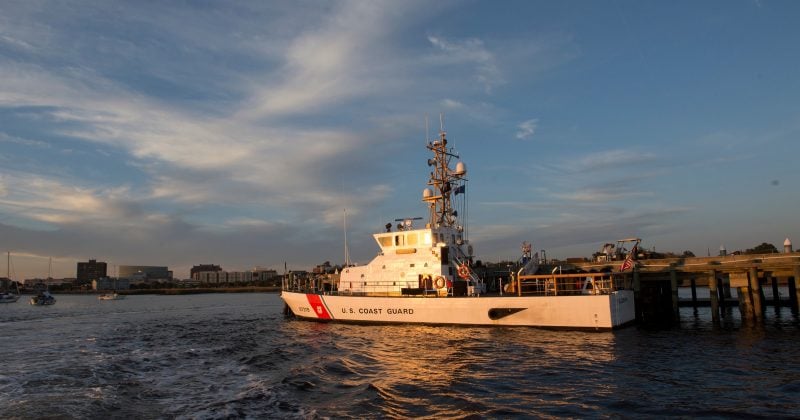
US Coast Guard boosts presence in South China Sea amid China patrols

https://en.wikipedia.org/wiki/Marine_Protector-class_patrol_boat

US Coast Guard boosts presence in South China Sea amid China patrols

China invasion of Taiwan

The U.S. Coast Guard is increasing its presence in the South China Sea following intensified Chinese patrols, particularly around the contested Scarborough Shoal. This move comes amid heightened tensions, as China has deployed additional coast guard and military assets to assert its territorial claims against the Philippines, with whom the U.S. has a mutual defense treaty. The U.S. Coast Guard’s involvement, alongside Philippine forces, aims to uphold freedom of navigation and reinforce maritime law without escalating into direct naval conflict. This strategic deployment underscores Washington’s commitment to support its allies while navigating the delicate balance of power in the region.

Advertisement

Key Takeaways

  • The U.S. Coast Guard’s increased presence suggests a strategic response to China’s intensified patrols in disputed waters.
  • Market pricing suggests participants view the growing tensions as consistent with scenarios where military posturing could escalate.
  • The current situation may indicate an elevated risk of conflict in the region, influencing broader geopolitical stability.

What to Watch

Observers will be looking for further developments from key actors, including the Chinese Communist Party and the U.S. Department of Defense, as their actions could provide more clarity on future tensions. Any significant changes in military posturing or diplomatic communications between the involved nations may affect market perceptions regarding potential conflict. Additionally, the response from regional allies like Japan will be crucial in assessing the evolving security dynamics in the South China Sea.

Get live prediction-market analysis, powered by Vera. Sign up for Vera.

Disclosure: This article was edited by Estefano Gomez. For more information on how we create and review content, see our Editorial Policy.

US Coast Guard boosts presence in South China Sea amid China patrols

US Coast Guard boosts presence in South China Sea amid China patrols

China invasion of Taiwan

https://en.wikipedia.org/wiki/Marine_Protector-class_patrol_boat

The U.S. Coast Guard is increasing its presence in the South China Sea following intensified Chinese patrols, particularly around the contested Scarborough Shoal. This move comes amid heightened tensions, as China has deployed additional coast guard and military assets to assert its territorial claims against the Philippines, with whom the U.S. has a mutual defense treaty. The U.S. Coast Guard’s involvement, alongside Philippine forces, aims to uphold freedom of navigation and reinforce maritime law without escalating into direct naval conflict. This strategic deployment underscores Washington’s commitment to support its allies while navigating the delicate balance of power in the region.

Advertisement

Key Takeaways

  • The U.S. Coast Guard’s increased presence suggests a strategic response to China’s intensified patrols in disputed waters.
  • Market pricing suggests participants view the growing tensions as consistent with scenarios where military posturing could escalate.
  • The current situation may indicate an elevated risk of conflict in the region, influencing broader geopolitical stability.

What to Watch

Observers will be looking for further developments from key actors, including the Chinese Communist Party and the U.S. Department of Defense, as their actions could provide more clarity on future tensions. Any significant changes in military posturing or diplomatic communications between the involved nations may affect market perceptions regarding potential conflict. Additionally, the response from regional allies like Japan will be crucial in assessing the evolving security dynamics in the South China Sea.

Get live prediction-market analysis, powered by Vera. Sign up for Vera.

Disclosure: This article was edited by Estefano Gomez. For more information on how we create and review content, see our Editorial Policy.