
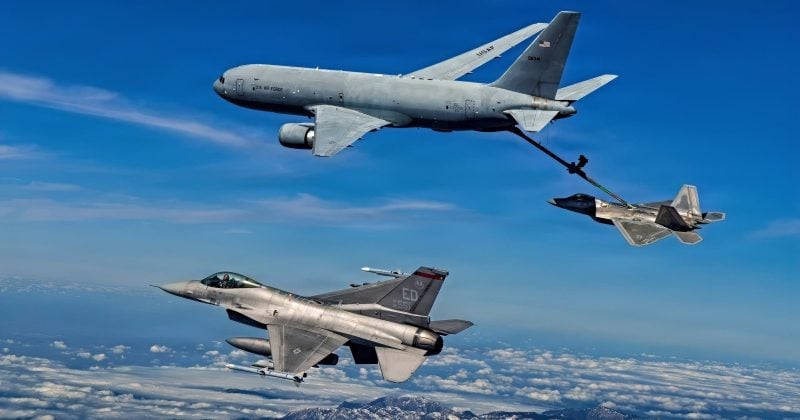
US deploys 100 refueling tankers to Israel amid Iran conflict escalation

https://www.19fortyfive.com/2026/04/category-1-deficiencies-the-tanker-u-s-air-force-bombers-and-fighters-need-looks-like-a-liability-now/

US deploys 100 refueling tankers to Israel amid Iran conflict escalation

US-Iran deal in 2026

U.S. and Israeli officials have indicated that President Trump is planning to escalate military operations against Iran, deploying 100 aerial refueling tankers to Israel. This development is part of an ongoing conflict that began in February 2026, aimed at curbing Iran’s nuclear capabilities. The deployment of additional tankers suggests preparations for intensified airstrikes, marking a significant shift in the conflict’s dynamics. These actions come in the wake of a collapsed ceasefire, following alleged Iranian strikes in the Strait of Hormuz, which prompted a resumption of military operations by the U.S.

Advertisement

Key Takeaways

  • Market activity suggests the intensified military actions are seen as undermining the likelihood of a US-Iran deal, particularly with regards to reconstruction funding.
  • Odds for Iran Reconstruction Funding being part of a US-Iran deal in 2026 have decreased, with pricing indicating less confidence in a diplomatic resolution.
  • The deployment of aerial refueling tankers appears consistent with scenarios where further military escalation is anticipated.

What to Watch

Observers should monitor any further military deployments or strikes by the U.S. and Israel, as these could further impact market pricing on a potential US-Iran deal. Key statements from President Trump or Iranian officials may indicate shifts in diplomatic efforts or military strategies. Additionally, reactions from international mediators and changes in uranium enrichment levels reported by Iranian state media could influence market perceptions of a resolution.

Get live prediction-market analysis, powered by Vera. Sign up for Vera.

Disclosure: This article was edited by Estefano Gomez. For more information on how we create and review content, see our Editorial Policy.

US deploys 100 refueling tankers to Israel amid Iran conflict escalation

US deploys 100 refueling tankers to Israel amid Iran conflict escalation

US-Iran deal in 2026

https://www.19fortyfive.com/2026/04/category-1-deficiencies-the-tanker-u-s-air-force-bombers-and-fighters-need-looks-like-a-liability-now/

U.S. and Israeli officials have indicated that President Trump is planning to escalate military operations against Iran, deploying 100 aerial refueling tankers to Israel. This development is part of an ongoing conflict that began in February 2026, aimed at curbing Iran’s nuclear capabilities. The deployment of additional tankers suggests preparations for intensified airstrikes, marking a significant shift in the conflict’s dynamics. These actions come in the wake of a collapsed ceasefire, following alleged Iranian strikes in the Strait of Hormuz, which prompted a resumption of military operations by the U.S.

Advertisement

Key Takeaways

  • Market activity suggests the intensified military actions are seen as undermining the likelihood of a US-Iran deal, particularly with regards to reconstruction funding.
  • Odds for Iran Reconstruction Funding being part of a US-Iran deal in 2026 have decreased, with pricing indicating less confidence in a diplomatic resolution.
  • The deployment of aerial refueling tankers appears consistent with scenarios where further military escalation is anticipated.

What to Watch

Observers should monitor any further military deployments or strikes by the U.S. and Israel, as these could further impact market pricing on a potential US-Iran deal. Key statements from President Trump or Iranian officials may indicate shifts in diplomatic efforts or military strategies. Additionally, reactions from international mediators and changes in uranium enrichment levels reported by Iranian state media could influence market perceptions of a resolution.

Get live prediction-market analysis, powered by Vera. Sign up for Vera.

Disclosure: This article was edited by Estefano Gomez. For more information on how we create and review content, see our Editorial Policy.