
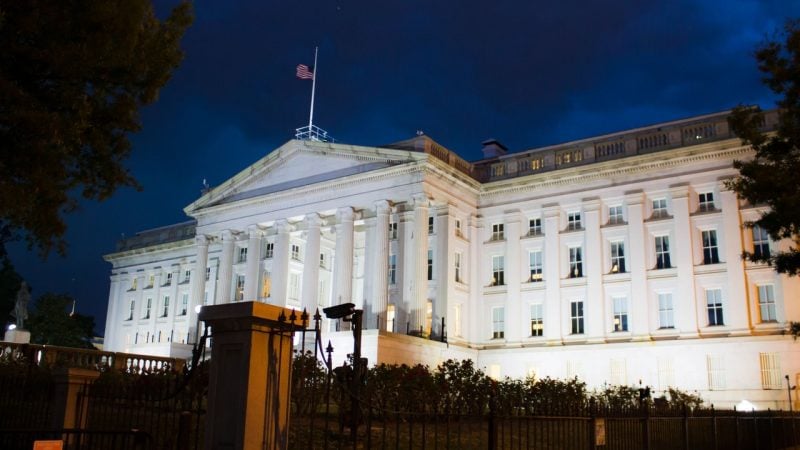
Photo: Thuan Vo / Pexels
US Treasury proposes AI incident notification mechanism after talks with China
Scott Bessent floated a bilateral alert system for national security-level AI incidents during economic meetings with China's Vice Premier He Lifeng in New York.
The world’s two largest AI powers just agreed they should probably talk to each other when something goes wrong. US Treasury Secretary Scott Bessent proposed a formal notification mechanism for national security-level AI incidents during economic talks with China’s Vice Premier He Lifeng on September 20 in New York.
What Bessent is actually proposing
The notification system would create a formalized communication pathway between Washington and Beijing specifically for AI incidents that rise to a national security threshold. Bessent framed the proposal as a necessary shift from opacity to transparency, acknowledging that when two countries dominate AI development globally, silence between them isn’t strategic.
The meetings in New York also included US Trade Representative Jamieson Greer, signaling that the conversation wasn’t just about safety in the abstract.
These discussions took place in the lead-up to a scheduled summit between President Trump and President Xi Jinping later that same week. Bessent’s proposal appears designed, at least in part, to arrive at that summit with something concrete on the table.
The proposal also builds on earlier groundwork laid in 2026. Think tanks like the Institute for AI Policy and Strategy had been advocating for exactly this kind of mechanism, arguing that ad hoc communication about critical AI incidents leaves too much room for misinterpretation. The IAPS framework emphasized that notification mechanisms need to focus on improving understanding of responsibilities and threats rather than requiring either side to reveal proprietary capabilities.
Macro, rates, and crypto—what moved markets and what matters next.
Daily. Free. Join 34,000+ readers across crypto, finance, and policy.
Why this is harder than it sounds
Defining what counts as a “national security-level incident” will be the first major hurdle. The US and China have dramatically different views on what constitutes a security threat in the technology space, and those definitions are shaped by competing strategic interests.
There’s also the trust deficit. The US has spent the last several years tightening export controls on advanced chips and AI technology to China, treating Beijing explicitly as a competitor to be contained rather than a partner to be engaged. China, for its part, has been building parallel AI ecosystems designed specifically to reduce dependence on American technology.
What markets and stakeholders should watch
Initial market reaction to the proposal was muted, with no immediate implications for trading in AI-related sectors reported.
That calm could shift depending on what comes out of the Trump-Xi summit. If the two leaders endorse the notification concept and attach concrete timelines or enforcement mechanisms, it could begin reshaping expectations around US-China AI cooperation.