
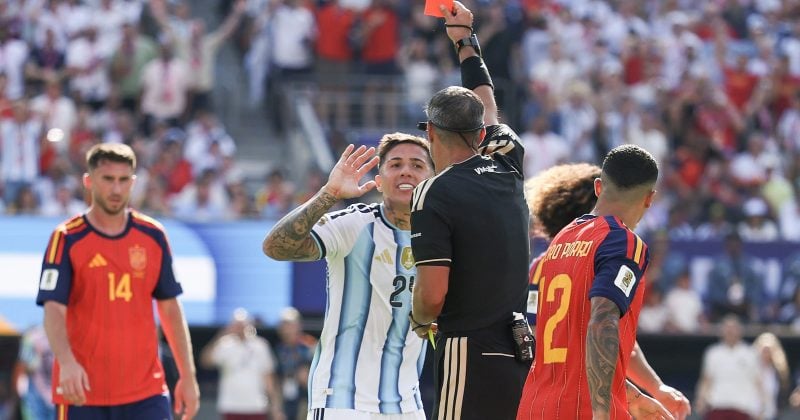
World Cup final’s 46 fouls highlight the growing collision between sports physicality and fair play standards
Spain's 1-0 victory over Argentina in the 2026 World Cup final was defined by a record-breaking foul count that raises familiar questions about officiating, incentives, and the economics of the beautiful game.
The 2026 FIFA World Cup final between Spain and Argentina featured 46 fouls, the highest count of any match in the entire tournament. Spain won 1-0 after extra time.
Argentina committed 25 of those fouls. Spain contributed 21.
What actually happened on the pitch
The final took place on July 19, 2026, at New York/New Jersey Stadium, one of the marquee venues for a World Cup spread across the US, Canada, and Mexico. Spain secured their second World Cup title with a late winner in extra time.
Argentina’s 25 fouls earned four yellow cards and a red card issued to Enzo Fernandez late in the match. Spain committed 21 fouls without picking up a single card.
The news moving money, markets, and the world—before your day starts.
Daily. Free. Join 34,000+ readers across crypto, finance, and policy.
The Slovenian referee’s performance drew immediate scrutiny. The disparity in disciplinary action, zero cards for Spain versus five for Argentina, became a talking point that overshadowed the tactical battle between Argentina’s combative physicality and Spain’s trademark technical precision.
For context, Argentina committed 26 fouls in the 2022 World Cup final against France, which was previously the highest by a single team in a final.