
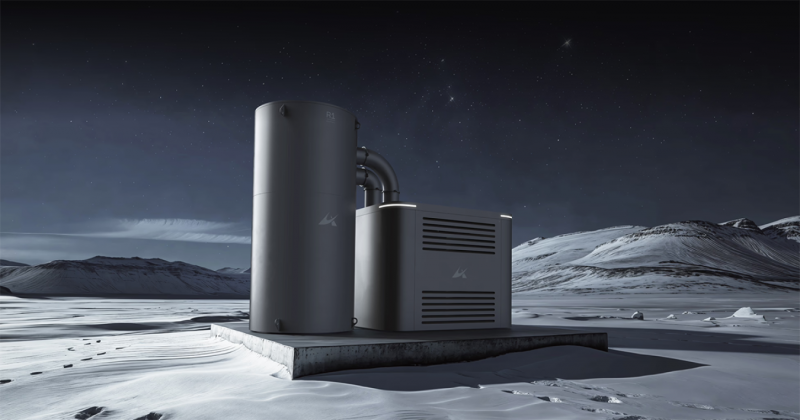
Via energy.gov
Antares Nuclear raises $470M to build tiny reactors for US military bases
The California startup already achieved a self-sustaining nuclear reaction and plans to start deploying microreactors by 2028.
A nuclear startup founded just three years ago has pulled in $470 million to build microreactors small enough to power US military bases, a bet that the Pentagon’s energy future looks less like diesel generators and more like miniature nuclear plants.
Antares Nuclear, headquartered in the Torrance area of California, is developing its R1 microreactor for defense and strategic applications. The reactor generates between 100 kWe and 1 MWe, which in practical terms means enough juice to keep a remote military installation running without relying on vulnerable fuel supply chains.
From founding to fission in three years
Antares was founded in 2023 by Jordan Bramble and Julia DeWahl. By June 4, 2026, their reactor achieved criticality at the Idaho National Laboratory under the Department of Energy’s Reactor Pilot Program, making Antares the first privately developed advanced reactor to get there under the DOE program.
The company had previously closed a $96 million Series B funding round in December 2025, which included $71 million in equity led by Shine Capital and $25 million in debt. Before that, Antares raised $30 million in a Series A round in 2024, bringing its total funding past $130 million even before this latest capital infusion.
Why the Pentagon wants pocket-sized reactors
The R1 is designed to operate for over six years without refueling.
AI, tech, and the markets they move—in one daily briefing.
Daily. Free. Join 34,000+ readers across crypto, finance, and policy.
Antares has already secured relationships with major government entities including the US Department of Defense, the Department of Energy, NASA, and military branches like the Air Force and Space Force. The company received $3.75 million in DoD funding awarded in September 2024.
The company operates a vertically integrated facility in Torrance, California, and has set production targets of ten units per year.
The competitive landscape is heating up
Antares is targeting electricity generation by 2027 and initial deployments by 2028, which would make it one of the earliest advanced reactor companies to reach operational status.