
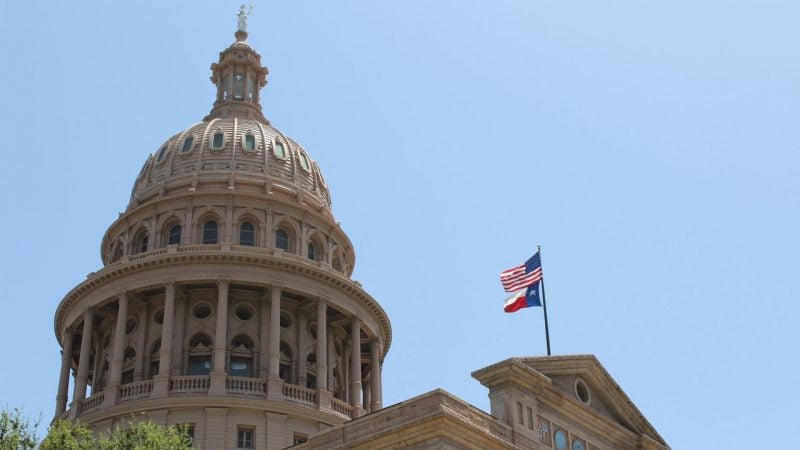
Photo: Ruben Reyes / Pexels
Centralized exchanges avoid listing legacy crypto tokens without SEC immunity
Without explicit protection from the SEC, major trading platforms are treating older tokens as legal liabilities rather than listing opportunities
Centralized crypto exchanges have a simple rule for legacy tokens: no regulatory cover, no listing.
Without explicit immunity from the US Securities and Exchange Commission, platforms are declining to list older, legacy-style tokens. For projects hoping to reach mainstream traders, that leaves a very short list of doors to knock on.
The Howey problem, revisited
The core issue is an old one. US regulators use the Howey test to decide whether an asset counts as a security.
A key question in that test is whether buyers expect profits from the efforts of others. If a token looks like a bet on a founding team’s hard work, it starts to resemble a stock. Stocks come with registration requirements, disclosure obligations, and enforcement risk.
For an exchange, listing a token later deemed an unregistered security is a real liability. The platform could face enforcement action for facilitating trading in it. That turns every listing decision into a legal risk assessment first and a business decision second.
So exchanges are filtering hard. They favor tokens that show strong decentralization, clear utility, or other features that lower the odds of a securities classification.
Projects with concentrated ownership face extra scrutiny. So do tokens whose marketing leans on price appreciation.
What the SEC has and has not offered
The SEC has not been entirely silent. In September 2026, the agency introduced the Innovation Exemption for Tokenized Securities Venues, or TSVs.
The news moving money, markets, and the world—before your day starts.
Daily. Free. Join 34,000+ readers across crypto, finance, and policy.
The program runs as a five-year pilot. It aims to support on-chain trading of tokenized NMS stocks through permissioned automated market makers.
It does not, however, hand broad protection to legacy-style tokens trading on centralized exchanges. The exemption covers tokenized securities venues. It is not a blanket pass for the older tokens sitting in exchange listing queues.
Exchanges are therefore still stuck doing the work themselves. Every potential listing requires a rigorous legal review under US securities law. It also requires compliance checks under anti-money laundering and know-your-customer rules.
How the industry got here
Interactions between the SEC and Coinbase in 2023 put pressure on platforms to narrow their offerings, pushing them predominantly toward Bitcoin.
Bitcoin occupies a comfortable spot in this debate. Its decentralization makes it the asset least likely to be framed as a profit bet on someone else’s efforts.
Meanwhile, the policy conversation has been fragmented. Industry groups have proposed safe harbor provisions for decentralized exchanges. Those proposals highlight a gap: much of the debate around protection has focused on DEXs, leaving centralized platforms to manage enforcement risk with less formal cover.
What this means for projects, traders, and exchanges
For token projects, the message is blunt. Getting onto a major centralized exchange increasingly depends on demonstrating significant decentralization or real utility.
Projects with insider-heavy token distributions or hype-driven marketing face an uphill climb.
For traders, the cautious posture may push activity elsewhere. Investors seeking access to tokens that centralized platforms won’t touch may migrate toward decentralized exchanges.
For the exchanges themselves, the calculus favors restraint. Listing a borderline token offers some trading fee upside. Getting it wrong could mean an enforcement case.
The thing to watch is whether the SEC extends any formal guidance beyond the tokenized securities pilot. The September 2026 exemption shows the agency is willing to build carve-outs for new market structures. Whether it will offer similar clarity for legacy tokens on centralized platforms remains an open question.