
Photo: Ian Hutchinson/Unsplash
Senate updates Clarity Act to bar presidents from issuing crypto assets: Report
The updated proposal incorporates a White House-supported ethics framework governing digital asset activities by certain federal officials.


The Senate’s latest draft of the Digital Asset Market Clarity Act has emerged as the Senate prepares its final push to pass landmark crypto market structure legislation, though negotiations continue over ethics provisions needed to secure bipartisan support.
The 616-page draft, released by Senator Cynthia Lummis on Wednesday, includes a White House-backed ethics framework that would prohibit certain senior federal officials, including the president, from issuing or sponsoring digital assets during their term of service.
“This is another step in my years-long journey to ensure the US leads the way on digital assets,” Lummis stated. “The US has always been at the forefront of financial innovation, and the coming weeks are likely the last real chance we will have for years to get this right.”
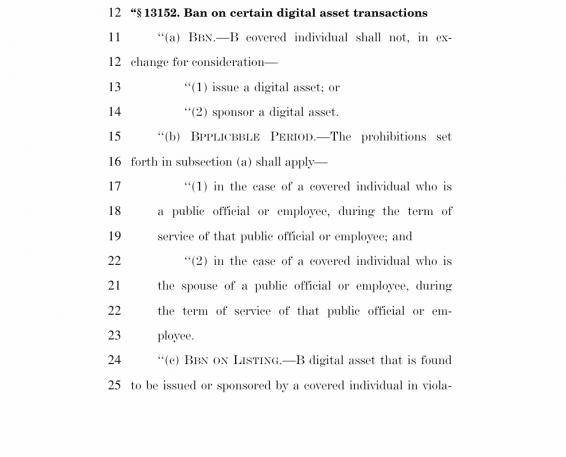
The measure would also create a safe harbor for officials who already hold direct interests in digital assets before taking office. They could comply by placing those holdings in qualified blind trusts, selling them, or both, under existing government ethics rules.
The proposal includes a temporary ban on top federal officials’ direct crypto business ties, which expires in 2029, and makes the Department of Justice solely responsible for enforcing ethics rules.
The crypto and markets news you actually need—every morning.
Daily. Free. Join 34,000+ readers across crypto, finance, and policy.
Under the draft, the attorney general could bring civil actions against government officials or digital asset intermediaries that knowingly violate the provisions, while state attorneys general and private individuals would be prohibited from initiating enforcement actions.
Democrats have criticized that approach and continue to push for state-level enforcement.
Beyond the ethics debate, the bill preserves industry-backed measures such as the Blockchain Regulatory Certainty Act while adding new investor protection provisions. Republican leaders are seeking Senate approval before lawmakers begin their August recess.