
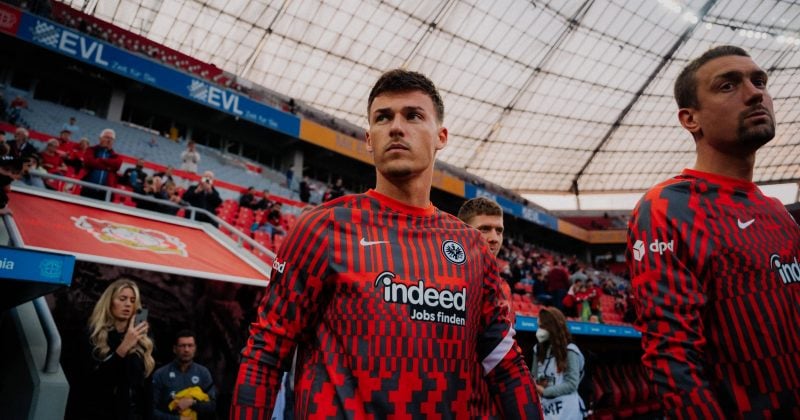
Eintracht Frankfurt pays three times market value for 20-year-old Brazilian defender, and crypto is nowhere in sight
The €4.5 million transfer of Otávio from Estrela Amadora highlights how traditional football economics still dominate European transfers, even as blockchain-based deals gain traction elsewhere in sports.
European football’s transfer market continues to operate on its own logic. Eintracht Frankfurt just paid €4.5 million for a 20-year-old Brazilian centre-back whose estimated market value sits around €1.5 million.
That’s a 3x premium for Otávio Manoel Galdino Fernandes, known simply as Otávio, who moves from Portuguese top-flight side CF Estrela Amadora to the German Bundesliga.
The deal and why the numbers matter
Otávio, born November 25, 2005, joined Estrela Amadora in October 2025 on a contract running through 2029. Frankfurt clearly saw enough in his limited time in Portugal’s Primeira Liga to justify paying triple what the market says he’s worth.
For Estrela Amadora, this is a tidy return on a player they’ve had for less than a year. The Portuguese club effectively served as a finishing school, adding European experience to Otávio’s profile before flipping him to a bigger league.
What’s conspicuously absent: crypto
Here’s the thing. In a sports landscape where fan tokens, NFT ticketing, blockchain-based transfer platforms, and crypto exchange sponsorships have become impossible to ignore, this deal is refreshingly analog. No tokens were issued. No smart contracts facilitated the transfer. No crypto exchange slapped its logo on the announcement.
The news moving money, markets, and the world—before your day starts.
Daily. Free. Join 34,000+ readers across crypto, finance, and policy.
That’s notable because European football has been one of crypto’s most aggressive marketing battlegrounds. Clubs across the Premier League, La Liga, and Serie A have signed sponsorship deals worth hundreds of millions with crypto exchanges and Web3 platforms. Socios and its fan token platform, Chiliz, have partnered with dozens of major clubs. Crypto.com, Coinbase, and formerly FTX have all competed for stadium naming rights and jersey placements.
Yet when it comes to the actual mechanics of player transfers, blockchain has made virtually zero inroads. Transfers still run through traditional banking rails, negotiated by agents and finalized through conventional means.
The gap between crypto’s marketing presence in football and its operational irrelevance in the sport’s core business transactions remains one of the more telling indicators of where blockchain adoption actually stands in traditional industries.