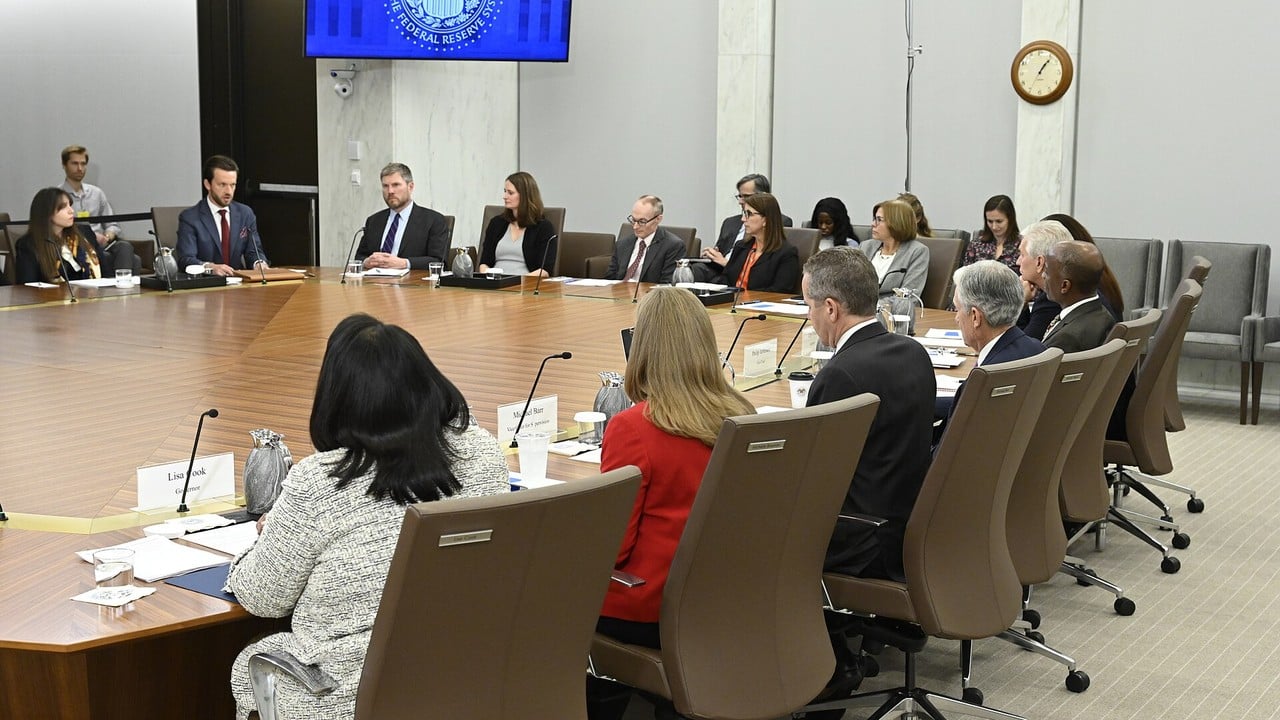
Fed’s Hammack cites AI build-out as source of price pressures
Federalreserve / Wikimedia Commons (Public domain)
The Cleveland Fed president says demand for data centers and tech components is pushing up prices across the economy
Cleveland Fed President Beth Hammack has a new suspect in the inflation case: the artificial intelligence boom.
According to Hammack, the rush to build AI infrastructure is creating real price pressures in the US economy.
The warning matters now because it shapes how one of the Federal Reserve’s more hawkish voices thinks about interest rates. If AI spending keeps prices elevated, she believes the Fed cannot afford to relax.
What Hammack is saying
In a speech on October 12, 2026, Hammack argued that soaring demand for data centers and technology components is driving up prices for key tech parts. She said the effects ripple into related industries, including aviation, power generation and construction.
Hammack’s staff estimates that underlying inflation sits in the mid-to-high 2% range. That is above the Fed’s 2% target, which is the number the central bank considers healthy price stability.
Earlier, in June 2026, Hammack described demand for electrical switching equipment as “insatiable.” According to her account, buyers were willing to pay high prices to secure it.
Reports from her district reinforce the picture. Manufacturing contacts have reportedly refused to budge on prices for specialized equipment used in AI infrastructure.
Her prescription: slow and restrictive
Hammack is generally seen as a hawk within the Fed. Her preferred approach leans toward restrictive monetary policy, wanting borrowing costs high enough to actually slow spending and bring inflation back to 2%.
She also favors smaller and more frequent rate changes rather than big, dramatic moves.
AI, tech, and the markets they move—in one daily briefing.
Daily. Free. Join 34,000+ readers across crypto, finance, and policy.
On November 5, 2026, Hammack again stressed the need for gradual restrictive policy adjustments to fight inflation.
There is a catch she acknowledges. Higher borrowing costs appear to have only limited impact on the AI sector itself, which means rate policy is a blunt instrument against the specific force she is worried about.
Even so, Hammack argues that the Fed’s dual mandate requires restraint. That mandate asks the central bank to pursue both stable prices and maximum employment, and she sees the price side as the more pressing concern.
The election wrinkle
The November 2026 midterm elections added another layer. According to the research findings, Hammack’s sense of urgency on policy has intensified since the vote.
Local election results have raised concerns about potential delays in data-center project approvals for 2027 and 2028. Local opposition to these massive facilities could slow the pipeline.
Background: a split view inside the Fed
Hammack has repeatedly warned about the inflation risks connected to rising capital spending in AI. Capital spending, or capex, is the money companies pour into physical assets like buildings, servers and power systems.
Her view contrasts sharply with other Federal Reserve officials. Some of her colleagues emphasize AI’s potential long-term productivity benefits, the idea that smarter tools will eventually let the economy produce more without pushing prices higher.
What this means
For investors, the clearest takeaway is that at least one Fed policymaker sees AI demand as a reason to keep policy tight. With underlying inflation reportedly above the 2% target, that stance could support expectations of higher interest rates in the months ahead.
The AI trade itself sits in an odd position. The sector is the source of the price pressure Hammack describes, yet she concedes it is relatively insulated from higher borrowing costs.
Companies tied to AI infrastructure face a separate risk worth watching. If local pushback delays data-center approvals in 2027 and 2028, demand for power equipment, construction and related hardware could shift.
Hammack’s preference for small, frequent adjustments also matters for volatility. A Fed that moves in measured steps may reduce shock value per decision, but it also keeps every meeting in play.
The key things to track are the inflation readings Hammack’s staff is watching, whether her colleagues adopt her framing or stick with the productivity argument, and how quickly data-center projects keep winning approval.
Disclosure: This article was edited by Diego Almada Lopez. For more information on how we create and review content, see our Editorial Policy.

