
Google taps Samsung to help build its next-generation AI chip
The search giant's upcoming TPU, codenamed Icefish, would split manufacturing between TSMC and Samsung's 2nm process technology.
Google is in discussions with Samsung Electronics to manufacture a critical component of its next-generation Tensor Processing Unit, a move that could reshape the competitive landscape of AI chip production and ripple through the broader tech supply chain.
The chip, codenamed Icefish, would use a split manufacturing approach. TSMC handles the primary computing die. Samsung would produce an interconnect module that links the processor to memory, leveraging its advanced 2-nanometer process technology.
Why Google is splitting the recipe
TSMC gets the main compute die. Samsung would handle the interconnect, the part that determines how quickly the processor can talk to memory.
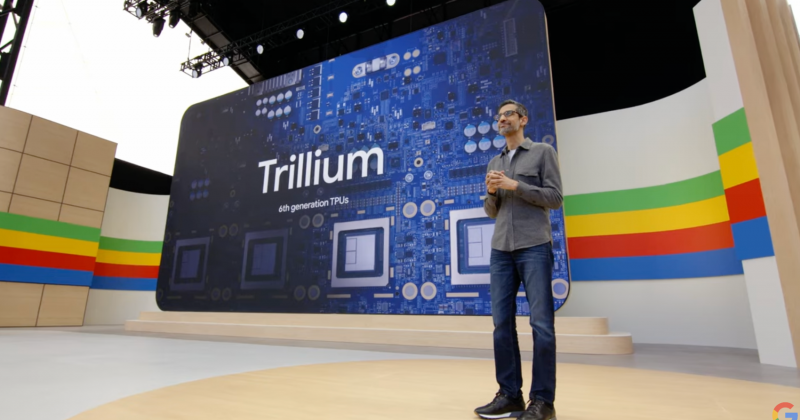
Google has been designing its own TPUs since 2016, a decade-long effort to reduce dependence on third-party GPUs. The company uses these chips internally to power everything from search to its Gemini AI models.
What this means for Samsung’s foundry ambitions
Samsung has been pouring resources into its 2nm production capabilities throughout 2026, and securing a high-profile contract with Google would send a strong signal that the technology is ready for prime time.
AI, tech, and the markets they move—in one daily briefing.
Daily. Free. Join 34,000+ readers across crypto, finance, and policy.
Samsung already counts Tesla among its custom silicon clients. Google’s TPUs are deployed at massive scale across its global data center fleet, meaning volumes could be substantial if the partnership progresses beyond the discussion phase.
These discussions remain non-binding as of now. No formal announcements have been made.
The crypto and market angle
The competitive dynamics here also matter for Nvidia, whose dominance in AI GPUs has made it a proxy for the entire AI trade. If companies like Google can build increasingly capable custom chips, potentially reducing their reliance on Nvidia hardware, that changes the narrative around AI infrastructure concentration.
Investors watching this space should track whether the Google-Samsung discussions advance to a formal agreement. If Samsung successfully demonstrates 2nm production capability at scale through a contract like this, it could accelerate the broader transition to next-generation chip technology across the industry.