
Hamas names Khalil al-Hayya as new leader, and crypto markets barely blink

Hamas names Khalil al-Hayya as new leader, and crypto markets barely blink

The appointment carries geopolitical weight that could ripple into energy markets and regional risk sentiment, even if traders aren't paying attention yet.

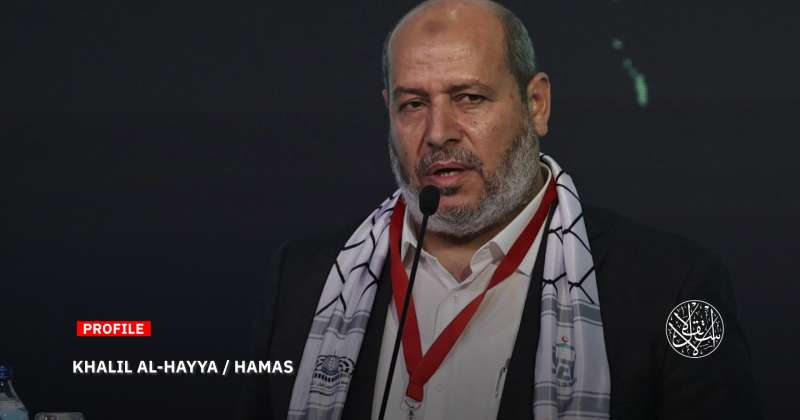
Hamas has appointed Khalil al-Hayya as its new leader in Gaza, filling the vacuum left by Yahya Sinwar, who was killed by Israeli Defense Forces on October 16, 2024, during a confrontation in Rafah. The selection, made by Hamas’s Shura Council in early May 2026, elevates a founding member of the organization who has been operating in its political machinery since 1987.

Who is Khalil al-Hayya

Al-Hayya is not a newcomer to Hamas’s inner circle. He served as deputy to Sinwar and has been a fixture in the organization’s political bureau for decades. The man has survived multiple assassination attempts over the years.

Advertisement

His track record leans heavily toward the diplomatic side of Hamas operations. He played key roles in mediation during truce negotiations in both 2014 and 2023, positioning himself as a figure capable of engaging with external stakeholders. His relationships with allies like Iran have been well-documented, making him a bridge between Hamas’s militant operations in Gaza and its broader geopolitical network.

The leadership transition follows a turbulent period for Hamas at the top. Ismail Haniyeh was assassinated in the summer of 2024, which propelled Sinwar into the top leadership role in August of that year. Sinwar’s tenure lasted barely two months before he was killed by Israeli forces in Rafah. Al-Hayya’s appointment, arriving roughly 18 months after Sinwar’s death, suggests the organization took its time consolidating power rather than rushing to name a successor.

The post-Sinwar power structure now prominently features al-Hayya alongside Khaled Mashal and Zaher Jabarin, creating a leadership triumvirate that blends Gaza-based operational knowledge with diaspora political connections.

What this means for investors

The absence of any crypto market reaction to al-Hayya’s appointment reflects a broader pattern. Searches across cryptocurrency platforms yielded no mentions of these leadership changes, and digital asset traders have increasingly decoupled their attention from geopolitical events in regions like Gaza, focusing instead on macroeconomic indicators, Federal Reserve policy, and industry-specific developments like ETF flows and protocol upgrades.

That decoupling is understandable but potentially shortsighted. The October 2023 Hamas attack on Israel initially sent Bitcoin down before it recovered, demonstrating that Middle Eastern escalations can inject volatility into crypto markets when they reach a certain threshold of severity.

Disclosure: This article was edited by Editorial Team. For more information on how we create and review content, see our Editorial Policy.

Hamas names Khalil al-Hayya as new leader, and crypto markets barely blink

Hamas names Khalil al-Hayya as new leader, and crypto markets barely blink

The appointment carries geopolitical weight that could ripple into energy markets and regional risk sentiment, even if traders aren't paying attention yet.

Hamas has appointed Khalil al-Hayya as its new leader in Gaza, filling the vacuum left by Yahya Sinwar, who was killed by Israeli Defense Forces on October 16, 2024, during a confrontation in Rafah. The selection, made by Hamas’s Shura Council in early May 2026, elevates a founding member of the organization who has been operating in its political machinery since 1987.

Who is Khalil al-Hayya

Al-Hayya is not a newcomer to Hamas’s inner circle. He served as deputy to Sinwar and has been a fixture in the organization’s political bureau for decades. The man has survived multiple assassination attempts over the years.

Advertisement

His track record leans heavily toward the diplomatic side of Hamas operations. He played key roles in mediation during truce negotiations in both 2014 and 2023, positioning himself as a figure capable of engaging with external stakeholders. His relationships with allies like Iran have been well-documented, making him a bridge between Hamas’s militant operations in Gaza and its broader geopolitical network.

The leadership transition follows a turbulent period for Hamas at the top. Ismail Haniyeh was assassinated in the summer of 2024, which propelled Sinwar into the top leadership role in August of that year. Sinwar’s tenure lasted barely two months before he was killed by Israeli forces in Rafah. Al-Hayya’s appointment, arriving roughly 18 months after Sinwar’s death, suggests the organization took its time consolidating power rather than rushing to name a successor.

The post-Sinwar power structure now prominently features al-Hayya alongside Khaled Mashal and Zaher Jabarin, creating a leadership triumvirate that blends Gaza-based operational knowledge with diaspora political connections.

What this means for investors

The absence of any crypto market reaction to al-Hayya’s appointment reflects a broader pattern. Searches across cryptocurrency platforms yielded no mentions of these leadership changes, and digital asset traders have increasingly decoupled their attention from geopolitical events in regions like Gaza, focusing instead on macroeconomic indicators, Federal Reserve policy, and industry-specific developments like ETF flows and protocol upgrades.

That decoupling is understandable but potentially shortsighted. The October 2023 Hamas attack on Israel initially sent Bitcoin down before it recovered, demonstrating that Middle Eastern escalations can inject volatility into crypto markets when they reach a certain threshold of severity.

Disclosure: This article was edited by Editorial Team. For more information on how we create and review content, see our Editorial Policy.