
Nexo Earn with Nexo
Hewlett Packard Enterprise partners with 8 quantum firms to build hybrid HPC, AI, and quantum platform

Hewlett Packard Enterprise partners with 8 quantum firms to build hybrid HPC, AI, and quantum platform

The new Quantum Scaling Alliance aims to merge quantum accelerators with classical supercomputing on HPE's Cray systems, with a Nobel laureate co-leading the effort

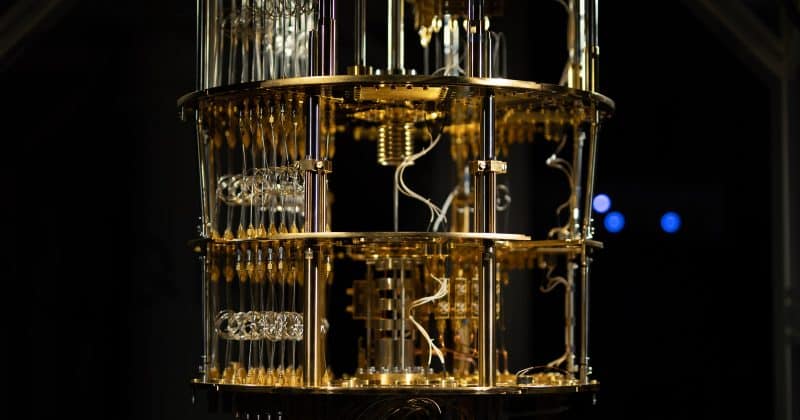
Hewlett Packard Enterprise just assembled what might be the most credible quantum computing consortium to date. The company launched the Quantum Scaling Alliance on November 10, bringing together eight organizations to build hybrid systems that combine high-performance computing, AI, and quantum processing on HPE’s Cray supercomputers.

The alliance is co-led by John Martinis from Qolab, a 2025 Nobel Laureate recognized for his contributions to quantum technology. The initiative is spearheaded by Dr. Masoud Mohseni, a notable figure in quantum systems design.

Who’s in the room

The founding members span every layer of the quantum computing stack: 1QBit, Applied Materials, HPE, Qolab, Quantum Machines, Riverlane, Synopsys, and the University of Wisconsin-Madison.

Advertisement

Applied Materials brings semiconductor fabrication expertise. Synopsys contributes chip design tools. Quantum Machines handles quantum control systems. Riverlane focuses on quantum error correction. 1QBit works on quantum software. Qolab, led by Martinis, specializes in qubit design. And the University of Wisconsin-Madison provides academic research muscle. The collective expertise spans qubit design, hybrid control systems, error correction, and application-specific software development.

What they’re actually building

The Quantum Scaling Alliance aims to integrate quantum accelerators directly with AI workloads on HPE’s Cray supercomputers, rather than operating quantum processors in isolation from classical computing infrastructure.

The alliance has identified quantum chemistry and semiconductor optimization as two primary application areas. HPE plans to showcase progress at its World Quantum Day event scheduled for April 14, 2026.

What investors should watch

The involvement of Applied Materials and Synopsys is particularly telling. These are companies deeply embedded in the semiconductor supply chain, suggesting the alliance is thinking seriously about manufacturing scalability, not just laboratory performance.

One detail worth noting: the alliance has explicitly distanced itself from cryptocurrency and digital tokens. The focus is entirely on quantum computing and HPC advancements.

Disclosure: This article was edited by Editorial Team. For more information on how we create and review content, see our Editorial Policy.

Hewlett Packard Enterprise partners with 8 quantum firms to build hybrid HPC, AI, and quantum platform

Hewlett Packard Enterprise partners with 8 quantum firms to build hybrid HPC, AI, and quantum platform

The new Quantum Scaling Alliance aims to merge quantum accelerators with classical supercomputing on HPE's Cray systems, with a Nobel laureate co-leading the effort

Hewlett Packard Enterprise just assembled what might be the most credible quantum computing consortium to date. The company launched the Quantum Scaling Alliance on November 10, bringing together eight organizations to build hybrid systems that combine high-performance computing, AI, and quantum processing on HPE’s Cray supercomputers.

The alliance is co-led by John Martinis from Qolab, a 2025 Nobel Laureate recognized for his contributions to quantum technology. The initiative is spearheaded by Dr. Masoud Mohseni, a notable figure in quantum systems design.

Who’s in the room

The founding members span every layer of the quantum computing stack: 1QBit, Applied Materials, HPE, Qolab, Quantum Machines, Riverlane, Synopsys, and the University of Wisconsin-Madison.

Advertisement

Applied Materials brings semiconductor fabrication expertise. Synopsys contributes chip design tools. Quantum Machines handles quantum control systems. Riverlane focuses on quantum error correction. 1QBit works on quantum software. Qolab, led by Martinis, specializes in qubit design. And the University of Wisconsin-Madison provides academic research muscle. The collective expertise spans qubit design, hybrid control systems, error correction, and application-specific software development.

What they’re actually building

The Quantum Scaling Alliance aims to integrate quantum accelerators directly with AI workloads on HPE’s Cray supercomputers, rather than operating quantum processors in isolation from classical computing infrastructure.

The alliance has identified quantum chemistry and semiconductor optimization as two primary application areas. HPE plans to showcase progress at its World Quantum Day event scheduled for April 14, 2026.

What investors should watch

The involvement of Applied Materials and Synopsys is particularly telling. These are companies deeply embedded in the semiconductor supply chain, suggesting the alliance is thinking seriously about manufacturing scalability, not just laboratory performance.

One detail worth noting: the alliance has explicitly distanced itself from cryptocurrency and digital tokens. The focus is entirely on quantum computing and HPC advancements.

Disclosure: This article was edited by Editorial Team. For more information on how we create and review content, see our Editorial Policy.