
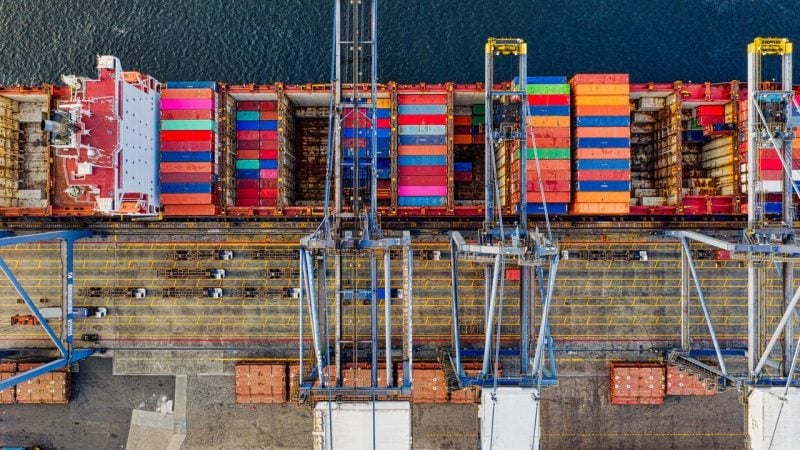
Photo: Tom Fisk / Pexels
Iran vows to keep Strait of Hormuz closed until Trump and Netanyahu are out of power
The chokepoint responsible for one-fifth of global oil shipments remains effectively shut as Tehran ties reopening to sweeping US and Israeli concessions.
Iran has made its position unmistakably clear: the Strait of Hormuz stays closed until the political landscape in Washington and Jerusalem looks fundamentally different. Supreme Leader Mojtaba Khamenei’s government is conditioning the reopening of the world’s most critical oil transit corridor on the removal of President Trump and Prime Minister Netanyahu from power, alongside a laundry list of demands that makes a quick resolution look somewhere between unlikely and impossible.
The strait, a narrow waterway between Iran and Oman that funnels roughly one-fifth of global oil and gas shipments, has been under effective Iranian control since US-Israeli strikes began on February 28, 2026. What was once a passageway handling approximately 130 vessel transits per day has been reduced to single-digit daily movements as of September 2026.
A chokepoint with global consequences
Brent crude has responded exactly as you’d expect. Prices have spiked near or above $100 per barrel, with brief surges touching around $110 per barrel during the most acute phases of the standoff. That represents a dramatic jump from the sub-$80 levels that prevailed before the conflict erupted.
Iran’s Supreme National Security Council laid out its conditions for reopening in August 2026. The demands include ending the naval blockade, lifting US sanctions, withdrawing American military forces from the region, compensating Iran for war damages, and releasing currently frozen Iranian assets. Tehran has described these terms as non-negotiable.
Khamenei first articulated this blockade-as-leverage strategy back in March 2026, shortly after assuming the role of Supreme Leader. The message to Washington and Tel Aviv was blunt: the strait is our card, and we intend to play it until the political math changes.
Macro, rates, and crypto—what moved markets and what matters next.
Daily. Free. Join 34,000+ readers across crypto, finance, and policy.
Diplomacy on life support
Efforts to broker even temporary solutions have repeatedly collapsed. Oman has served as a mediator, hosting talks aimed at establishing some form of interim arrangement, perhaps a memorandum of understanding that would allow limited shipping to resume. Those initiatives have gone nowhere.
Part of the problem is that maritime violence keeps interrupting whatever fragile momentum negotiations build. Disputes over vessel routing and who controls shipping management through the strait have poisoned the diplomatic well, making each successive round of talks harder than the last.
Iran’s explicit demand that Trump and Netanyahu leave power before the strait reopens suggests Tehran views these specific leaders as uniquely intransigent. Iranian rhetoric, however, repeatedly emphasizes the necessity for concrete policy changes over mere personnel adjustments, with Tehran insisting that a different American president who maintains the same sanctions regime and military posture would be equally unacceptable.
The energy market fallout
Seven months into this standoff, the reduction from 130 daily transits to single digits represents a near-total shutdown of one of maritime trade’s most vital arteries. Alternative routes exist, most notably the longer path around the Cape of Good Hope at Africa’s southern tip, but they add time, fuel costs, and insurance premiums that ripple through every supply chain that touches petroleum.