
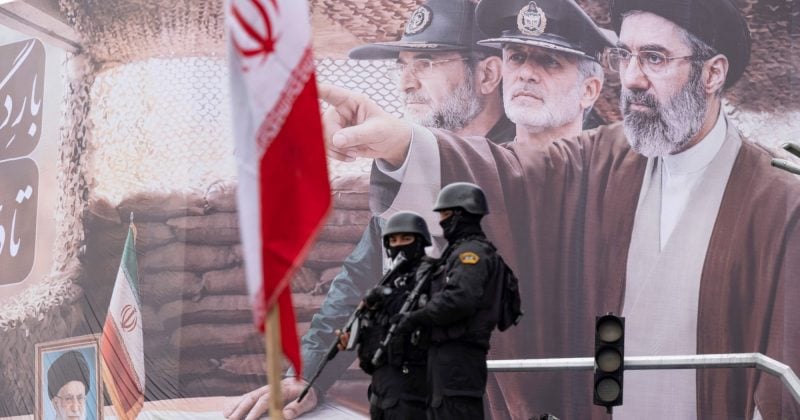
Iran’s IRGC targets US military assets in Jordan, Erbil amid rising tensions

https://theweek.com/world-news/iran-islamic-revolutionary-guard-corps

Iran’s IRGC targets US military assets in Jordan, Erbil amid rising tensions

US-Iran final nuclear deal

Iran’s Islamic Revolutionary Guard Corps (IRGC) has reportedly targeted U.S. military assets in Jordan and the Erbil region of Iraq, according to a report by @tenet_research. The strikes represent a significant escalation in the ongoing conflict between Iran and the United States, which has seen both nations engage in retaliatory attacks. This development comes amid heightened tensions in the region, with the IRGC’s latest actions marking an expansion of the conflict beyond Iranian territory, further complicating the prospects for a diplomatic resolution.

The markets tracking the likelihood of a U.S.-Iran final nuclear deal by August 13, 2026, appear to have been impacted by this escalation. Current pricing suggests a decrease in the probability of reaching a deal, as the aggressive military actions contradict the conditions necessary for negotiations. As of now, the market for a deal by the end of July shows nearly zero likelihood, while odds for August remain below 10%.

Advertisement

The escalation cycle has persisted, with the United States having previously conducted strikes on IRGC-linked targets. Iran’s use of missiles and drones reflects a direct approach in targeting military infrastructure, indicating a higher level of confrontation compared to previous proxy engagements.

Key Takeaways

  • The targeting of U.S. military assets by Iran’s IRGC appears to be a significant escalation in the ongoing conflict, suggesting decreased likelihood of a diplomatic resolution.
  • Current pricing in markets focused on a U.S.-Iran nuclear deal by August 13, 2026, suggests a low probability of such an agreement being reached amid ongoing tensions.
  • The expansion of conflict into Jordan and Erbil indicates a broader regional engagement beyond Iranian borders, consistent with a heightened state of confrontation.

What to Watch

Observers should monitor any statements from key political figures such as U.S. President Donald Trump or Iran’s Supreme Leader Ayatollah Ali Khamenei that could influence diplomatic efforts. Developments in military engagements or diplomatic talks involving Iran and the U.S. will be critical in shaping future market movements. Any announcements of negotiations or ceasefire agreements may alter the current trajectory suggested by market pricing.

Get live prediction-market analysis, powered by Vera. Sign up for Vera.

Disclosure: This article was edited by Estefano Gomez. For more information on how we create and review content, see our Editorial Policy.

Iran’s IRGC targets US military assets in Jordan, Erbil amid rising tensions

Iran’s IRGC targets US military assets in Jordan, Erbil amid rising tensions

US-Iran final nuclear deal

https://theweek.com/world-news/iran-islamic-revolutionary-guard-corps

Iran’s Islamic Revolutionary Guard Corps (IRGC) has reportedly targeted U.S. military assets in Jordan and the Erbil region of Iraq, according to a report by @tenet_research. The strikes represent a significant escalation in the ongoing conflict between Iran and the United States, which has seen both nations engage in retaliatory attacks. This development comes amid heightened tensions in the region, with the IRGC’s latest actions marking an expansion of the conflict beyond Iranian territory, further complicating the prospects for a diplomatic resolution.

The markets tracking the likelihood of a U.S.-Iran final nuclear deal by August 13, 2026, appear to have been impacted by this escalation. Current pricing suggests a decrease in the probability of reaching a deal, as the aggressive military actions contradict the conditions necessary for negotiations. As of now, the market for a deal by the end of July shows nearly zero likelihood, while odds for August remain below 10%.

Advertisement

The escalation cycle has persisted, with the United States having previously conducted strikes on IRGC-linked targets. Iran’s use of missiles and drones reflects a direct approach in targeting military infrastructure, indicating a higher level of confrontation compared to previous proxy engagements.

Key Takeaways

  • The targeting of U.S. military assets by Iran’s IRGC appears to be a significant escalation in the ongoing conflict, suggesting decreased likelihood of a diplomatic resolution.
  • Current pricing in markets focused on a U.S.-Iran nuclear deal by August 13, 2026, suggests a low probability of such an agreement being reached amid ongoing tensions.
  • The expansion of conflict into Jordan and Erbil indicates a broader regional engagement beyond Iranian borders, consistent with a heightened state of confrontation.

What to Watch

Observers should monitor any statements from key political figures such as U.S. President Donald Trump or Iran’s Supreme Leader Ayatollah Ali Khamenei that could influence diplomatic efforts. Developments in military engagements or diplomatic talks involving Iran and the U.S. will be critical in shaping future market movements. Any announcements of negotiations or ceasefire agreements may alter the current trajectory suggested by market pricing.

Get live prediction-market analysis, powered by Vera. Sign up for Vera.

Disclosure: This article was edited by Estefano Gomez. For more information on how we create and review content, see our Editorial Policy.