
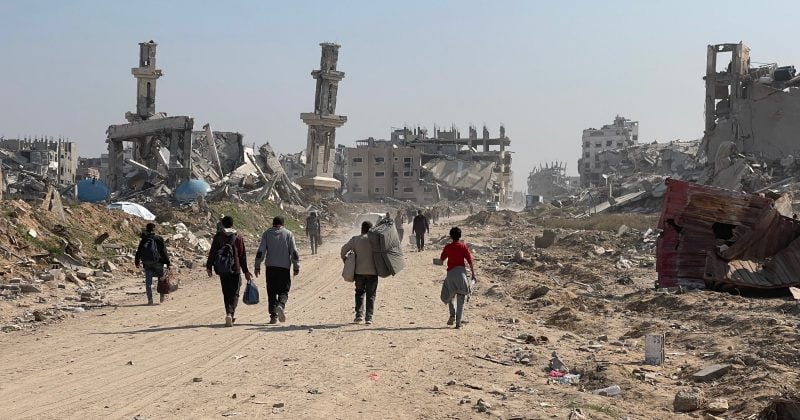
Photo: Jaber Jehad Badwan / Wikimedia Commons / CC BY-SA 4.0 (https://creativecommons.org/licenses/by-sa/4.0)
Israel escalates Gaza strikes as Hamas signals willingness to disarm under US peace plan
The fragile disarmament framework faces immediate stress as Israeli military operations intensify despite Hamas agreeing to consider phased weapons surrender.
Hamas agreed to consider laying down its weapons. Israel responded by picking up more of its own.
In the days following President Donald Trump’s announcement of a phased disarmament framework on July 30-31, 2026, Israeli forces have escalated strikes across Gaza, killing at least 17 people including children in early August.
The deal on the table
Trump unveiled the disarmament proposal during a meeting with what the White House calls the “Board of Peace,” a framework designed to gradually strip Hamas of its military capabilities in exchange for an end to Israeli operations and a withdrawal of forces from Gaza. Hamas characterized the plan as a “draft” but signaled openness to the concept, provided Israel actually stops shooting and pulls back its troops.
Israel has made it abundantly clear that pulling back is not on the menu until Hamas verifiably disarms. Hamas says it won’t disarm until Israel pulls back.
Israeli officials have communicated what they describe as “serious security concerns” to the White House. Their intelligence assessment suggests Hamas may be playing a longer game, using the disarmament framework as breathing room to rebuild military infrastructure rather than genuinely surrendering it.
Macro, rates, and crypto—what moved markets and what matters next.
Daily. Free. Join 34,000+ readers across crypto, finance, and policy.
Israel currently controls more than 60% of Gaza’s territory.
A pattern of false starts
A ceasefire agreement was signed back in October 2025, and its implementation has been bumpy. The core dispute has remained consistent: should Hamas disarm before Israel withdraws, or should both happen simultaneously?
The October 2025 ceasefire was supposed to create the conditions for exactly the kind of phased process Trump is now proposing. Instead, it produced months of haggling over sequencing while conditions on the ground deteriorated. The new framework attempts to thread the same needle with slightly different language, but the underlying trust deficit hasn’t changed.