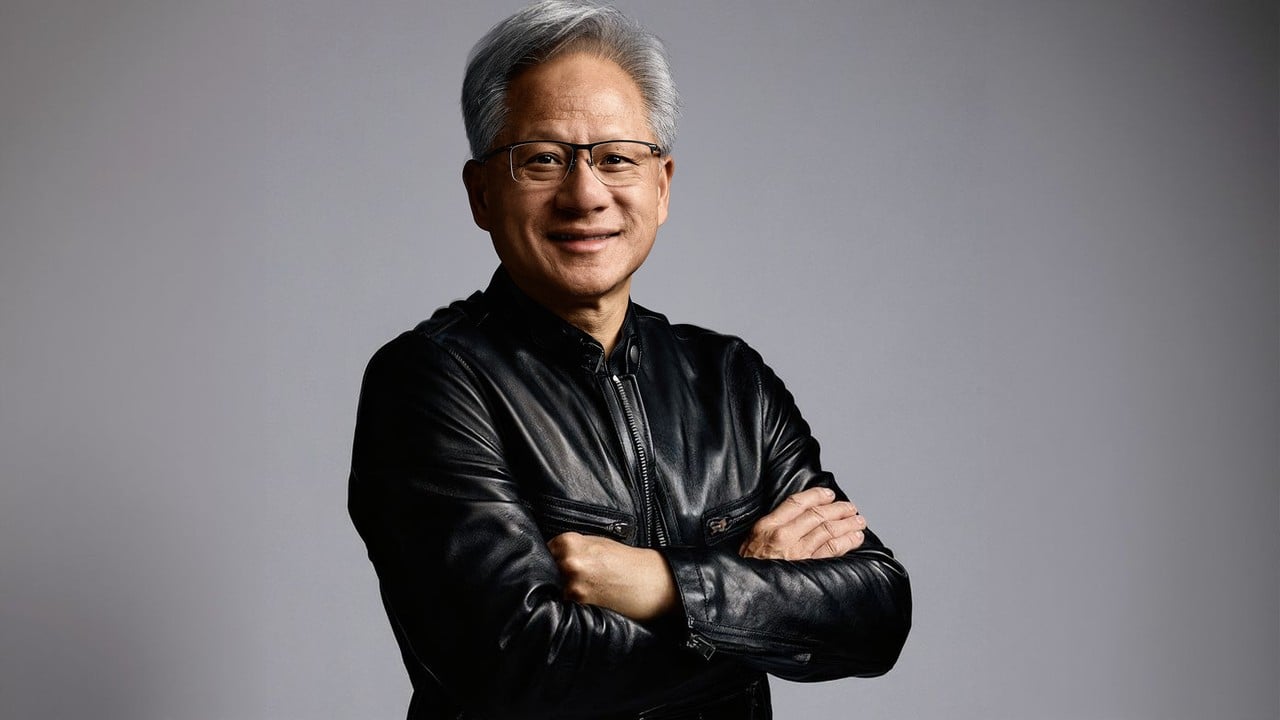
Jensen Huang warns a three-month data center delay burns $10 billion
NVIDIA official newsroom (nvidianews.nvidia.com/bios/jensen-huang)
Nvidia's outgoing chief puts a price on AI construction bottlenecks and pitches a factory-built fix called DSX POD
Jensen Huang has spent years telling the market that chips are not the only thing standing between the world and more AI. At Nvidia’s GTC Berlin event on October 21, 2026, he finally attached a price tag to the problem.
By his math, a three-month delay on a single large AI data center wipes out a $10 billion revenue opportunity. That is an expensive way to wait for a building permit.
The math behind the warning
Huang laid out the economics in simple terms. A 1-gigawatt AI data center costs approximately $50 billion to build.
Once running, that facility is projected to generate around $40 billion in annual revenue. Divide that by four and you get the figure that made the rounds: three months of downtime equals roughly $10 billion left on the table.
Huang’s point was that the bottleneck for AI has shifted. Chip supply was the headline worry for a long time. Now, according to Huang, the bigger constraints are power grid connections and plain old construction timelines.
Enter the data center in a box
Nvidia’s proposed answer is something called the DSX POD. It is a modular reference design for AI data centers that are built in a factory and shipped in containerized units.
The pitch is speed. Huang said these units can be operational in as little as 14 days once connected to existing infrastructure, compared with roughly six months under the traditional approach.
Each unit bundles the core pieces of an AI facility. That includes Nvidia’s next-generation Vera Rubin systems, networking gear, and liquid cooling, all integrated before the unit ever leaves the factory.
AI, tech, and the markets they move—in one daily briefing.
Daily. Free. Join 34,000+ readers across crypto, finance, and policy.
Nvidia plans a global rollout with 17 partners, including Dell, HPE and Lenovo. Global deliveries are expected to begin in early 2027.
One caveat sits in the fine print. The 14-day figure applies once the unit is hooked into existing infrastructure. If the power hookup itself is the problem, a faster box doesn’t make the utility move faster.
A leadership change at an awkward moment
The timing of all this is unusual. Huang resigned as CEO, effective November 12, 2026, only weeks after making the Berlin presentation.
The stakes are not small. Nvidia’s 10-Q filing as of July 26, 2026, disclosed $279 billion in supply and capacity commitments, mostly connected to data center infrastructure.
What this means for Nvidia and the AI buildout
For investors, the $10 billion figure reframes how to think about AI infrastructure risk. Demand forecasts get most of the attention. Huang is arguing that execution speed, meaning how fast capacity actually comes online, deserves equal weight.
The DSX POD is also a strategic move on Nvidia’s part. By offering a full reference design rather than just chips, Nvidia extends its reach deeper into the data center stack. Partners like Dell, HPE and Lenovo get a standardized product to sell, while Nvidia shapes how the whole facility is built.
The $279 billion in commitments cuts both ways. On one hand, it signals a deep pipeline and confidence in sustained demand. On the other, large commitments become harder to manage if deployments stall for reasons outside Nvidia’s control, such as grid access.
There are several things worth tracking from here. The first is whether DSX POD deliveries actually begin on schedule in early 2027. The second is whether real-world deployments match the 14-day timeline. The third is how Nvidia’s new leadership communicates about the $279 billion in commitments and the partnerships behind them.
Finally, the power grid question is not going away. Nvidia can shrink construction timelines with factory-built units. It cannot, by itself, speed up the utilities and permitting processes that decide when a 1-gigawatt facility actually switches on.
Disclosure: This article was edited by Diego Almada Lopez. For more information on how we create and review content, see our Editorial Policy.

